

On September 1, 2026, propellant developer CycloKinetics and hypersonic propulsion company Venus Aerospace announced the successful completion of initial hot-fire detonation tests using CycloRP fuel.
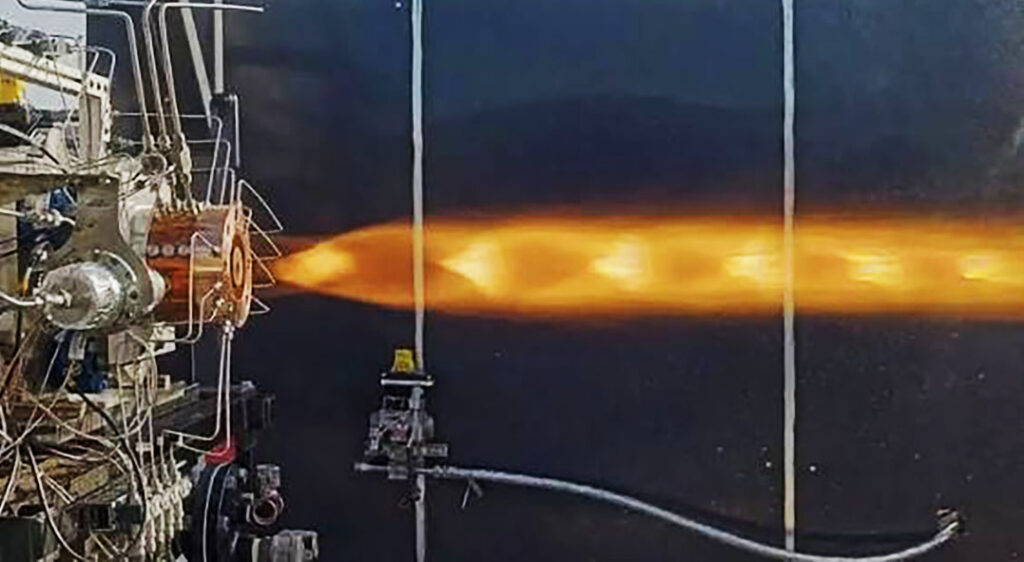
The test campaign evaluated CycloRP—a formulated drop-in replacement propellant for standard RP-1 and RP-2 kerosene—inside Venus Aerospace’s rotating detonation rocket engine (RDRE) hardware without requiring structural or injector modifications.
Propellant Specifications and RDRE Integration Architecture
Engineered as a drop-in replacement for standard RP-1/RP-2 rocket propellant, CycloRP is designed to improve combustion density and energy output in high-performance propulsion systems while remaining compatible with existing tanks, pumps, and fuel lines. During the hot-fire test, the fuel achieved successful supersonic detonation within Venus Aerospace’s RDRE combustion chamber, establishing a key milestone for non-modified hardware integration.
Unlike traditional liquid rocket engines operating on isobaric (constant-pressure) deflagration, rotating detonation engines utilize continuous supersonic detonation waves around an annular chamber. This pressure-gain combustion process extracts higher thermal efficiency from the propellant. Demonstrating successful detonation with CycloRP without altering injector geometries validates the fuel’s physical drop-in compatibility for hypersonic and space propulsion systems.
Program Context and Institutional Sponsorship
The joint test campaign was conducted under a research program sponsored by the Air Force Research Laboratory (AFRL). The initiative supports Department of Defense efforts to advance high-efficiency hypersonic flight and rapid-response rocket propulsion using existing logistics infrastructure.
The achievement builds on Venus Aerospace’s ongoing RDRE development program and aligns with broader defense interest in pressure-gain propulsion technologies, including NASA and commercial RDRE hot-fire campaigns.
Next Testing Phases and Flight Demonstration Roadmap
Following the initial detonation checkpoint, CycloKinetics and Venus Aerospace will analyze chamber pressure, thermal stability, and specific impulse metrics from the test fires. Subsequent phases of the AFRL-sponsored program will evaluate extended burn durations and feed system performance to mature CycloRP toward flight qualification.
