

On August 27, 2026, Arianespace successfully launched the MTG-I2 weather satellite aboard an Ariane 62 vehicle from Europe’s Spaceport in Kourou, French Guiana.
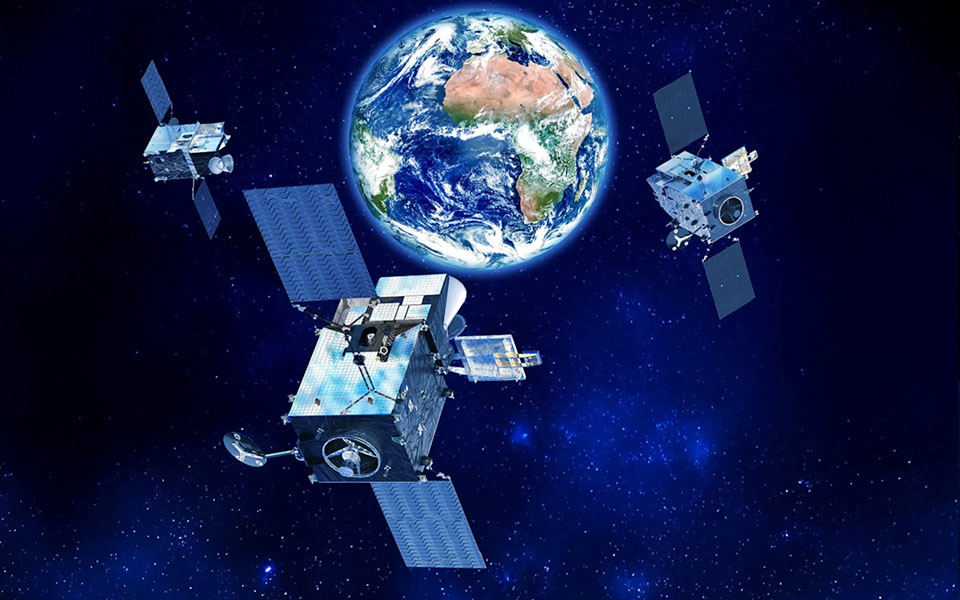
Built by prime contractor Thales Alenia Space in cooperation with OHB, the spacecraft represents the second imaging satellite within the Meteosat Third Generation (MTG) constellation, a joint program executed by the European Space Agency (ESA) and EUMETSAT.
Imager Capabilities and Orbit Specifications
Operating from a geostationary orbit 36,000 kilometers above the equator, MTG-I2 carries a nominal operational lifespan of 8.5 years. The platform joins Meteosat-12 (MTG-I1), which took over Europe’s prime geostationary service, and the MTG-S1 atmospheric sounder launched in July 2025. Operating in tandem with Meteosat-12, MTG-I2 delivers high-cadence imagery to advance near-real-time nowcasting and atmospheric modeling.
MTG-I2 is equipped with a Flexible Combined Imager (FCI) that captures full-disk imagery across 16 wavebands every 10 minutes, featuring an improved spatial resolution between 500 meters and 1 kilometer. The instrument includes a high-rate fast mode capable of delivering targeted meteorological images over the European continent every 2.5 minutes. The ground segment processing pipelines are delivered by Thales Alenia Space and Thales, while Telespazio manages Launch and Early Orbit Phase (LEOP) operations, command and control infrastructure, and data acquisition facilities for EUMETSAT.
Executive Leadership Viewpoint
“I’m delighted with the successful launch of the third satellite in the Meteosat Third Generation fleet, which will contribute to improved immediate weather forecasts and unprecedented anticipation of extreme weather events,” said Hervé Derrey, Chief Executive Officer of Thales Alenia Space. “Once the c is operational in orbit, Europe will benefit from the world’s most sophisticated meteorological services from a geostationary orbit.”
Constellation Architecture Outlook
The deployment of MTG-I2 completes the initial operational triplet for the Meteosat Third Generation program. By combining rapid imaging cadence with vertical atmospheric profiling, the system enables continuous tracking of severe weather phenomena and convective storms across Europe and Africa. The initial constellation will remain operational beyond 2030 before being superseded by a second tier of three replacement satellites scheduled for deployment no earlier than 2033.
