
On Wednesday, October 21, 2026, the U.S. Space Force confirmed it has transferred six National Security Space Launch missions from United Launch Alliance (ULA) to SpaceX as ULA’s Vulcan Centaur rocket remains grounded.
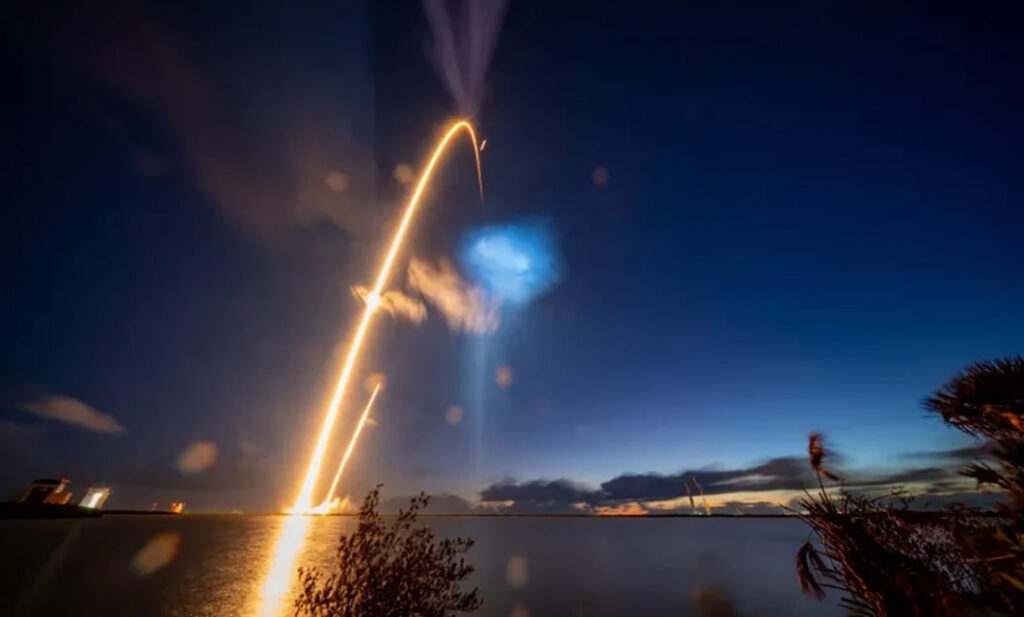
Space Systems Command (SSC) Commander Lt. Gen. Philip Garrant disclosed the manifest adjustments during an industry briefing, confirming that while the military remains confident in Vulcan’s return to flight, the ongoing technical investigation into a solid rocket booster anomaly has yet to establish an official return date.
Flight History and Booster Anomaly Lineage
Vulcan has remained grounded since February 12, 2026, when a solid rocket booster anomaly occurred during the USSF-87 mission. While the rocket successfully reached orbit, one of its Northrop Grumman GEM 63XL boosters suffered a visible nozzle failure shortly after liftoff, prompting a comprehensive technical review documented when a technical anomaly during the USSF-87 launch prompted a manifest review for ULA’s Vulcan. Because this represented the second nozzle-related irregularity in four flights following a similar observation during the vehicle’s Cert-2 demonstration in late 2024, military officials instituted a temporary suspension on operational defense payloads.
Mission Trade Framework and Manifest Swaps
To safeguard national security launch timelines without penalizing contractor revenue, Space Systems Command executed the reassignments under its contractual mission trade mechanism. Rather than canceling ULA’s launch contracts, the Space Force reassigned near-term, time-critical military payloads to SpaceX Falcon 9 and Falcon Heavy rockets in exchange for later national security missions that will fly aboard Vulcan Centaur once recertified.
The approach builds upon precedent established when the Space Force reassigned the final GPS III mission to SpaceX following the Vulcan anomaly to prevent critical positioning satellites from lingering in storage.
Return-to-Flight Horizon and Investigation Status
Garrant affirmed his confidence in the launch vehicle’s eventual recovery but declined to release interim findings from the joint Air Force-industry investigation board or define a firm launch target. ULA and propulsion contractor Northrop Grumman continue structural analyses and hot-fire validations to verify booster nozzle integrity before Space Systems Command clears Vulcan to resume operational defense launches.