
Targeting the engineering bottlenecks of adapting commercial optical hardware for orbital environments, U.K.-based optical specialist Resolve Optics Ltd. outlined, its rapid-production service for sensor-optimized, space-ready lenses.
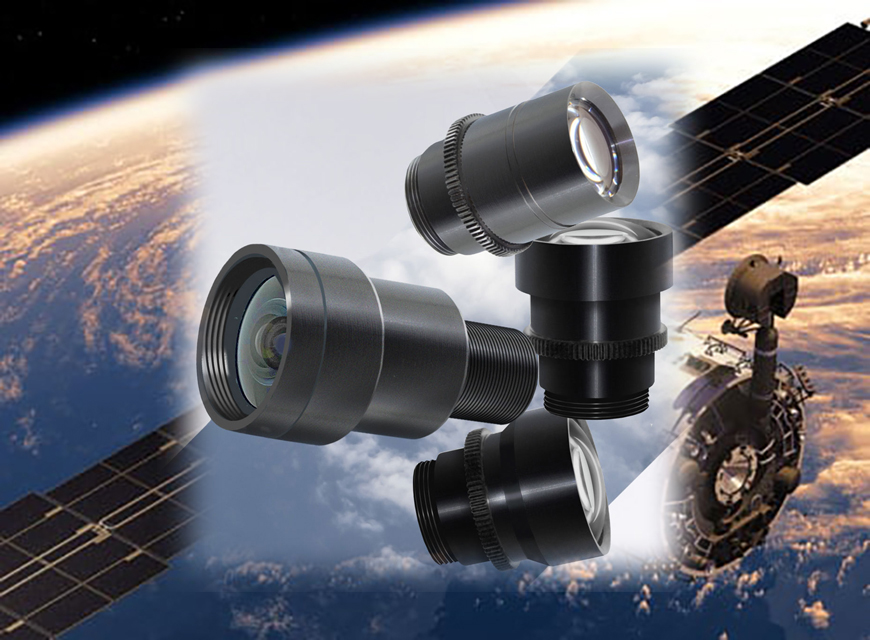
Drawing upon an extensive library of pre-existing radiation-resistant optical designs, the company modifies proven optomechanical architectures to withstand launch loads, thermal extremes, vacuum outgassing, and cosmic radiation without requiring ground-up optical development.
The company designing and produces optics for use in space is a highly specialised area where expertise and experience are critical, And have been supplying lenses and optical systems for space applications for over 15 years.
Optomechanical Ruggedization and Radiation-Hardened Materials
Standard terrestrial optical assemblies degrade rapidly once exposed to spaceflight conditions, where high-energy cosmic rays, protons, and solar ultraviolet (UV) radiation can turn conventional optical glass yellow, brown, or opaque within weeks or months. To prevent radiation-induced darkening and transmission loss, Resolve Optics constructs its space-qualified optical elements exclusively from cerium oxide-doped non-browning glass, synthetic silica, or reflective mirror architectures. These specialized materials enable lenses to endure cumulative radiation doses of up to 100,000,000 rad and operating temperatures exceeding 100°C without optical discoloration or degraded imaging performance.
Beyond radiation tolerance, Resolve Optics engineers ruggedize mechanical housings and optical assemblies to survive intense rocket launch shock and vibration. All optical elements and moving mechanisms are rigidly clamped or locked in place so internal components cannot shift or break loose during ascent. Once on orbit, spacecraft transition repeatedly between direct sunlight and Earth’s shadow, generating severe thermal expansion and contraction cycles. To prevent thermal defocusing, the company’s space-ready optical systems incorporate passive athermalization that keeps imagery sharp across wide temperature swings, while assembly processes rely exclusively on low-outgassing aerospace materials and vacuum-compatible coatings to prevent contamination in high-vacuum environments.
Over 15 Years of Flight-Ready Satellite Optics Heritage
Modifying pre-existing radiation-resistant lens baselines allows satellite manufacturers and payload integrators to compress procurement timelines compared to custom ground-up optical engineering. The company has spent more than 15 years supplying specialized optical assemblies across civil and commercial space programs, including recent deliveries of flight-ready lenses for low Earth orbit (LEO) satellites and custom radiation-resistant star tracker lenses for spacecraft attitude determination and control systems.
Supporting Rapid Constellation and Sensor Integration
As commercial constellation builders and Earth observation operators deploy increasingly compact imaging payloads on compressed schedules, adapting proven radiation-tolerant optical designs provides a repeatable path to flight qualification. By tailoring existing non-browning lens architectures to specific image sensor formats and mission profiles, Resolve Optics continues supporting satellite developers seeking reliable orbital imaging performance across multi-year missions.