

Building on regulatory proceedings initiated earlier this year to clear mid-band satellite frequencies for terrestrial broadband, the Federal Communications Commission (FCC) established final bidding procedures on Friday, Nov. 13, for Auction 115, scheduled to begin on April 27, 2027.
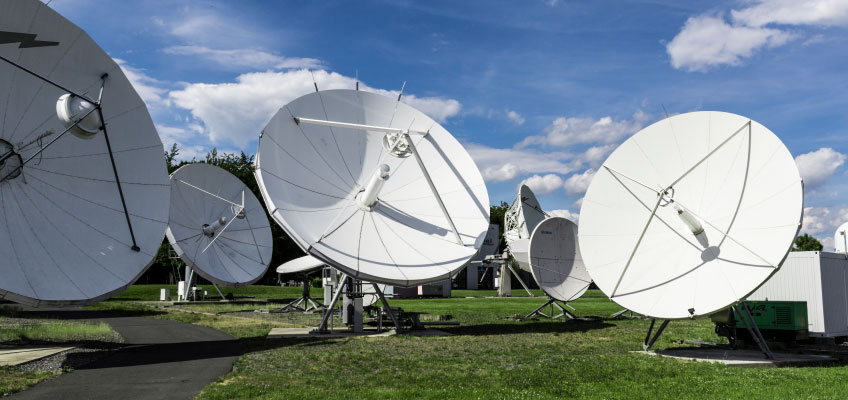
While the sale of 160 megahertz (MHz) of Upper C-band spectrum between 3.98 and 4.14 gigahertz (GHz) targets terrestrial fifth- and sixth-generation (5G/6G) wireless networks and primarily clears large geostationary orbit (GEO) broadcast satellites, the resulting regulatory rules and market shifts carry indirect operational consequences for small satellite (SmallSat) and low Earth orbit (LEO) operators.
Broadcast Migration and Spectrum Congestion Pressures
Because Auction 115 reallocates mid-band frequencies used for space-to-Earth broadcast downlinks rather than creating new allocations for small spacecraft, SmallSat operators receive no direct spectrum gains from the proceeding. However, the contraction of available C-band transponder capacity accelerates commercial demand for alternative orbital relay architectures. As television networks, radio programmers, and enterprise data users rethink legacy GEO distribution models ahead of wireless activation, non-geostationary orbit (NGSO) constellations operating in Ku-band, Ka-band, and optical frequencies stand to capture migrating media distribution and telecommunications backhaul traffic.
At the same time, clearing 160 MHz of C-band capacity intensifies competition across higher-frequency satellite bands. With GEO operators compressing existing services into remaining frequencies and deploying reconfigurable spacecraft, SmallSat and LEO developers face a more crowded coordination environment when securing feeder links, gateway frequencies, and terrestrial earth-station authorizations.
Regulatory Framework and Parallel Satellite Spectrum Rulemakings
The Nov. 13 auction notice implements the FCC’s July 2026 Upper C-band Report and Order, which structured incentive payments for incumbent GEO operators SES and Eutelsat to vacate frequencies across the contiguous United States. Alongside the C-band clearing framework, the commission—led by Chairman Brendan Carr—has advanced broader spectrum auction and satellite rulemakings designed to expand mid- and high-band access for NGSO constellations, direct-to-device connectivity, and hybrid satellite-terrestrial networks.
In parallel proceedings, regulators have moved to open additional uplink and downlink capacity in bands such as 12.7 GHz for NGSO fixed-satellite service systems while revising legacy interference-protection frameworks to accommodate modern beam-steering LEO constellations.
Multi-Orbit Coordination Ahead of 2027 and 2030 Milestones
As prospective wireless bidders prepare for the April 27, 2027 auction launch and incumbent GEO operators execute ground-station filter installations toward clearing deadlines in December 2030, SmallSat and LEO operators must navigate tightening interference protections and heightened scrutiny over spectrum efficiency. Successfully integrating commercial smallsat constellations into North American communications infrastructure will increasingly depend on agile frequency coordination across Ku- and Ka-band gateways as mid-band spectrum shifts permanently toward terrestrial mobile networks.
