

On Tuesday, October 20, 2026, Earth observation satellite operator Planet Labs PBC successfully launched its Pelican-12 spacecraft aboard SpaceX’s Bandwagon-5 rideshare mission from Cape Canaveral Space Force Station in Florida.
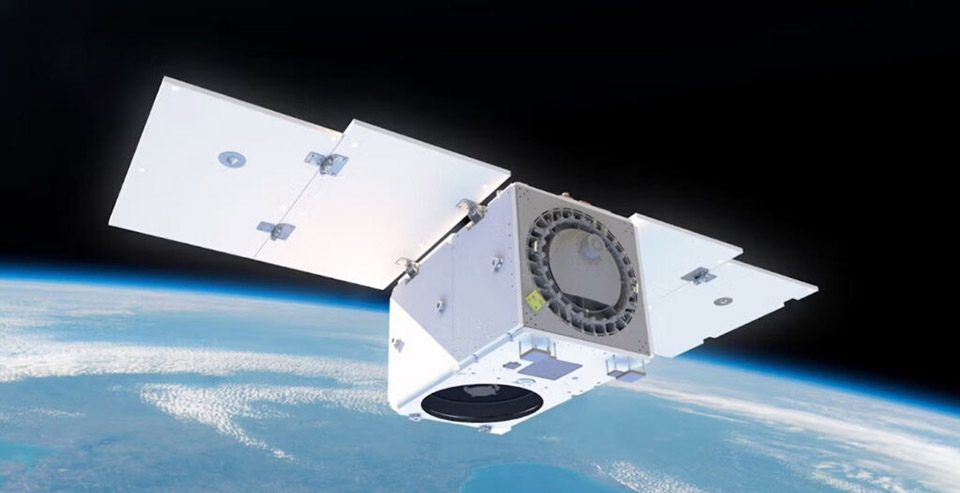
The launch represents the company’s 25th satellite deployed to orbit in 2026 across four missions and marks the fifth next-generation Pelican spacecraft launched this year, with ground controllers successfully establishing initial contact and commencing orbital commissioning.
Constellation Architecture and Delivery Lineage
The orbital insertion follows the spacecraft’s transit and integration processing after Planet Labs delivered Pelican-12 to Cape Canaveral in late September. Flying approximately three months after the Pelican-11 engineering pathfinder, the mission serves as an operational bridge between initial test articles and high-volume constellation replenishment. Second-generation Pelican satellites are engineered to capture up to 30-centimeter class imagery, providing a substantial resolution improvement over the 50-centimeter capabilities delivered by first-generation spacecraft.
In-Orbit Edge Compute and Intersatellite Relay Architecture
Pelican-12 incorporates advanced onboard avionics to test new operational architectures prior to fleet-wide integration. The spacecraft features an integrated NVIDIA Jetson module for space edge computing, enabling autonomous on-orbit artificial intelligence inferencing to detect ground objects and extract structured metadata before downlink. To address latency bottlenecks, the satellite carries an experimental communication package to validate space-to-space data relay for SES Space & Defense, transmitting imagery via SES’s O3b mPOWER satellite constellation to route intelligence directly to defense and civil operators.
Orbital Commissioning and Manufacturing Roadmap
Mission controllers have initiated maneuvers to lower Pelican-12 into its target mid-inclination operating orbit, where it will undergo sensor calibration and crosslink testing. Planet Labs plans to inaugurate full-scale Pelican serial assembly at its expanded manufacturing facility in Berlin, Germany, later this year, supporting recurring constellation launches scheduled across 2027.
