
Seeking to eliminate aerospace certification and regulatory barriers that have kept pharmaceutical and biotechnology companies out of orbit, Austrian testing institute Seibersdorf Laboratories and Vienna- and Delft-based space technology company Tumbleweed announced on Tuesday, Nov. 24, a partnership agreement to establish a joint end-to-end microgravity research and development (R&D) service.
Scheduled to conduct its first flight in the third quarter (Q3) of 2027, the commercial offering targets biopharmaceutical applications including protein crystallization and new drug formulation.
Integrating Orbital Flight Hardware With Certified Pharmaceutical Laboratory Workflows
Under the joint operating model, Seibersdorf Laboratories acts as the customer-facing service facilitator, integrating orbital microgravity experiments directly into the R&D programs biopharmaceutical clients already conduct at its facilities. Drawing on decades of European space radiation and hardware testing heritage alongside its contract research organization (CRO) and contract development and manufacturing organization (CDMO) operations, Seibersdorf oversees experimental design, sample preparation, good practice (GxP)-compliant documentation, radiation assessment, and pre- and post-flight laboratory analysis.
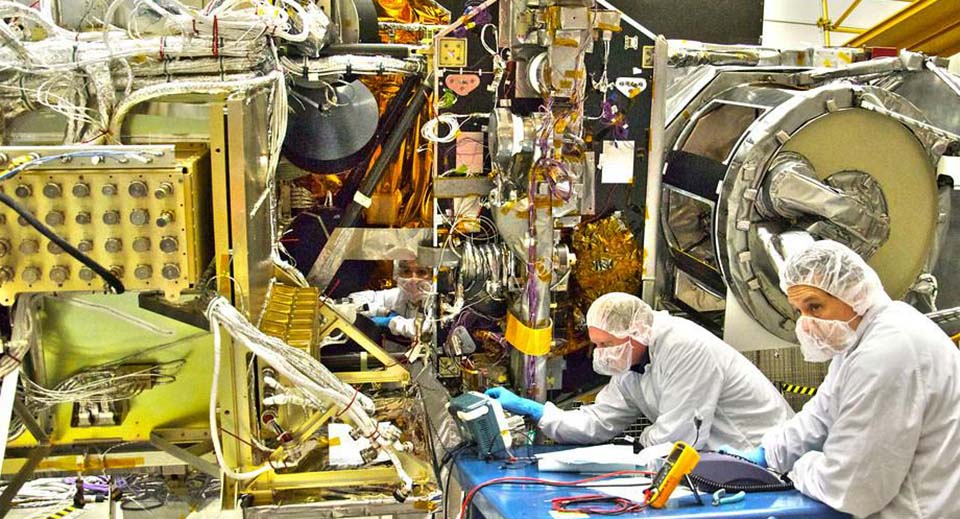
Tumbleweed manages the orbital flight segment through its pre-certified payload accommodation service. Customers house experiments inside Tumbleweed’s modular Pod payload container—which handles onboard power, data interfaces, and flight qualification—for deployment aboard the company’s free-flying Oasis orbital platform, which hosts Pods in low Earth orbit and returns samples to Earth.
Executive Perspectives on Space-Based Drug Formulation
“For the R&D pipeline of our pharma clients, microgravity becomes a strategic lever to optimize quality and speed-to-market,” said Markus Neumann, managing director of Seibersdorf Laboratories. “Seibersdorf Laboratories pools its expertise to offer end-to-end solutions together with value-add partners. Especially in the market of oncological precision medicine with radiopharmaceuticals, we bring decades of experience to the interface of Space and R&D.”
Julian Rothenbuchner, chief executive officer (CEO) and co-founder of Tumbleweed, noted that making microgravity broadly useful requires seamless integration into existing biopharmaceutical supply chains. “Minimizing adoption hurdles and optimizing unit economics for this supply chain at large is our mission, and it is great to see trailblazing companies like Seibersdorf adopting it so quickly, while bringing novel reformulation capabilities to their existing customer base,” Rothenbuchner said.
Building on Tumbleweed’s Seed Financing and Oasis Alpha Flight
The partnership follows recent commercial and technical milestones for Tumbleweed, which was founded in 2024 and employs 26 staff across Vienna and Delft. Earlier in November 2026, the company closed a €6.9 million seed funding round to scale its orbital laboratory infrastructure.
That financing followed the July 2026 orbital flight of Oasis Alpha, Tumbleweed’s first commercial satellite, which carried payloads exclusively for first-time space users and demonstrated its streamlined payload integration process.
Path to Q3 2027 Inaugural Mission and Recurring Commercial Service
Seibersdorf Laboratories and Tumbleweed will use the inaugural mission scheduled for Q3 2027 to validate end-to-end technical and commercial feasibility across pharmaceutical sample handling, orbital operations, and post-flight laboratory analysis. Upon completing the initial demonstration flight, the partners plan to open the microgravity service for recurring industrial customer projects.