
The Federal Communications Commission (FCC) adopted the formal schedule and bidding procedures for Auction 115, setting April 27, 2027, as the start date to auction 160 megahertz (MHz) of Upper C-band spectrum for next-generation terrestrial wireless services.
Covering frequencies between 3.98 and 4.14 gigahertz (GHz) across the contiguous United States, the proceeding establishes a timeline for commercial mobile deployments beginning in December 2030 and intensifies pressure on television and radio broadcasters to rethink their satellite distribution infrastructure.
Repurposing Satellite Capacity Under the Upper C-Band Order
The auction schedule implements the FCC’s July 2026 Upper C-band Report and Order, led by Chairman Brendan Carr, which allocated $5.6 billion in gross incentive payments to SES and $504 million to Eutelsat to vacate 160 MHz of satellite capacity. Combined with 280 MHz of lower C-band spectrum cleared in earlier federal proceedings, Auction 115 unifies a contiguous 440 MHz mid-band block for terrestrial 5G and 6G broadband while incorporating technical rules developed with the Federal Aviation Administration (FAA) to ensure coexistence with adjacent-band aviation safety systems.
License Inventory and Pre-Auction Procedural Milestones
Under Public Notice DA 26-1219, the FCC will offer 3,248 new flexible-use licenses across the 3.98–4.14 GHz segment. Prospective bidders must meet several pre-auction procedural deadlines ahead of spring 2027:
- Short-Form Applications: The filing window opens on Jan. 6, 2027, at 12:00 p.m. Eastern Time (ET) and closes on Jan. 20, 2027, at 6:00 p.m. ET, following the release of an application tutorial by Dec. 11, 2026.
- Upfront Payments and Mock Bidding: Qualified applicants must submit upfront payments by March 18, 2027, at 6:00 p.m. ET, followed by a mock auction on April 21, 2027, ahead of live bidding on April 27.
Broadcast Infrastructure Strain and Distribution Alternatives
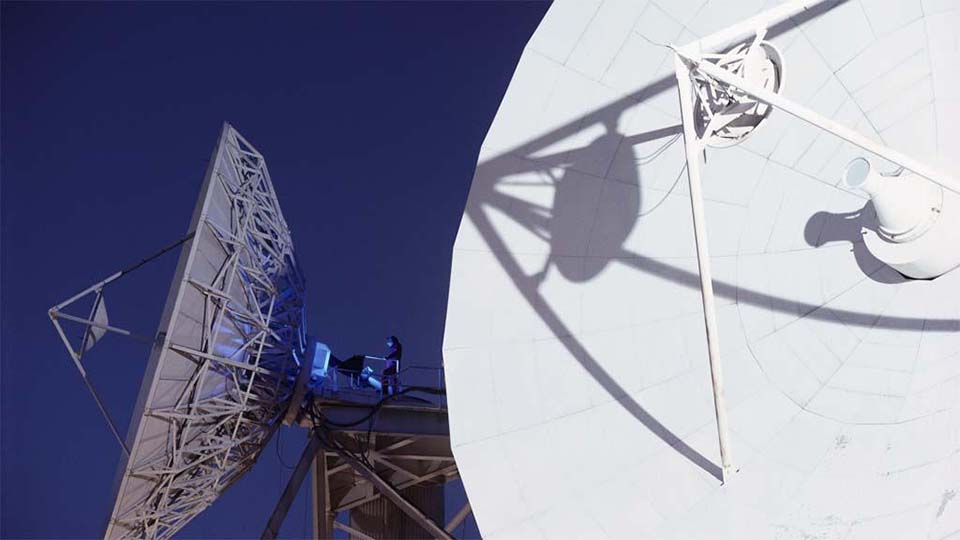
With winning wireless licensees positioned to activate commercial mobile networks starting in December 2030 across the top 75 U.S. markets, incumbent satellite operators must compress remaining media feeds into protected upper-band frequencies, reconfigure head-end architectures, and install ground-station filtering hardware. As available C-band transponder capacity narrows further, television networks, local stations, and radio programmers face mounting operational and financial pressure to evaluate hybrid internet protocol (IP) delivery networks, terrestrial fiber links, and Ku-band backup capacity to safeguard programming continuity.
Spectrum Clearing Deadlines Through 2030 and 2031
Following the April 27, 2027 auction launch, SES, Eutelsat, and affected ground segment operators must execute ground-station filter installations and transponder migrations to meet formal clearing deadlines in December 2030 and 2031. Meeting those milestones will determine full incentive payment eligibility under the FCC’s reimbursement framework while dictating how rapidly broadcasters must transition legacy C-band reception infrastructure across North America.