

On Monday, July 27, 2026, the Federal Communications Commission approved its Upper C-band Report and Order, clearing 160 MHz of satellite spectrum in the contiguous United States for next-generation flexible-use wireless services.
As part of the regulatory decision, the Commission authorized gross incentive payments of approximately $5.6 billion for SES and $504 million for Eutelsat, contingent on completing spectrum clearing ahead of established transition deadlines.
The order establishes a competitive bidding system to reallocate the upper-tier frequencies for advanced terrestrial broadband while authorizing full reimbursement for reasonable and necessary transition costs approved by the designated clearinghouse.
Operational Parameters and Spectrum Reallocation
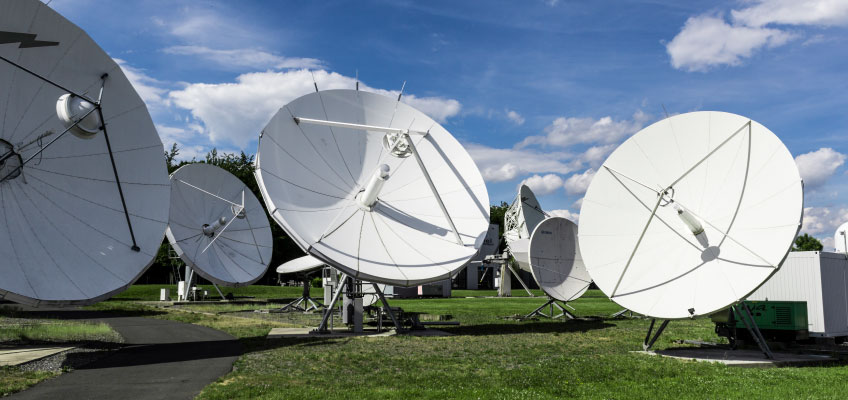
Under the approved transition plan, the FCC is repurposing 160 MHz of satellite capacity in the upper C-band segment. To execute the shift without interrupting existing service delivery, both SES and Eutelsat must reconfigure client head-end systems, adjust transponder ground allocations, and deploy specialized filtering hardware across client networks in the contiguous United States.
The technical reconfiguration builds upon earlier C-band clearing phases where satellite operators migrated primary television and radio distribution services into protected upper-band frequencies. The new framework allows satellite operators to maintain continuity for legacy media distribution while enabling terrestrial wireless providers to license the vacated spectrum for high-density 5G and 6G deployments.
Regulatory Context and Spectrum Transition Architecture
The current Report and Order aligns with congressional requirements mandating the auction of remaining upper C-band capacity. In previous years, satellite operators cleared 280 MHz of lower C-band spectrum under similar FCC incentive clearing programs.
Because high-reliability broadcast distribution requires extensive technical planning, media organizations have increasingly evaluated hybrid IP networks alongside Ku-band backups to mitigate capacity constraints during the upcoming upper C-band spectrum auction process. The FCC’s updated reimbursement framework covers technical equipment, filter installations, and engineering costs incurred by operators and ground station facilities during the frequency migration.
Executive Leadership Commentary
“We commend Chairman Carr and the FCC staff for their diligence, speed, and hard work,” said Adel Al-Saleh, Chief Executive Officer of SES. “We remain fully committed to working cooperatively with the FCC and all stakeholders as the process progresses. We are pleased that the incentive payments appropriately recognize the critical role SES will play in repurposing 160 MHz of Upper C-band spectrum for next-generation terrestrial wireless services, while ensuring C-band customers continue to receive substantially the same service. SES also appreciates the improved reimbursement process, which should support timely execution, minimise finance expenses, and help our partners move quickly.”
“We welcome the order published by the FCC, representing an important milestone for the US satellite and telecommunications industries,” said Jean François Fallacher, Chief Executive Officer of Eutelsat. “It establishes a clear framework that enables additional spectrum to be made available for advanced wireless services while safeguarding the continuity of satellite operations. Eutelsat is committed to working with the FCC and other stakeholders to ensure the transition is executed in a timely manner which is seamless for customers.”
Auction Timeline and Spectrum Clearing Deadlines
The FCC mandates that the competitive auction for the 160 MHz of Upper C-band spectrum must conclude no later than July 2027. To qualify for the full gross incentive payments, SES and Eutelsat must satisfy formal spectrum clearing deadlines set for 2030 and 2031, allowing commercial mobile networks to begin operations across the newly cleared frequency blocks.
