

On August 10, 2026, financial market analysis highlighted a projected shift in space launch economics as SpaceX transitions primary payload manifests from its operational Falcon 9 workhorse to the fully reusable Starship super-heavy launch vehicle.
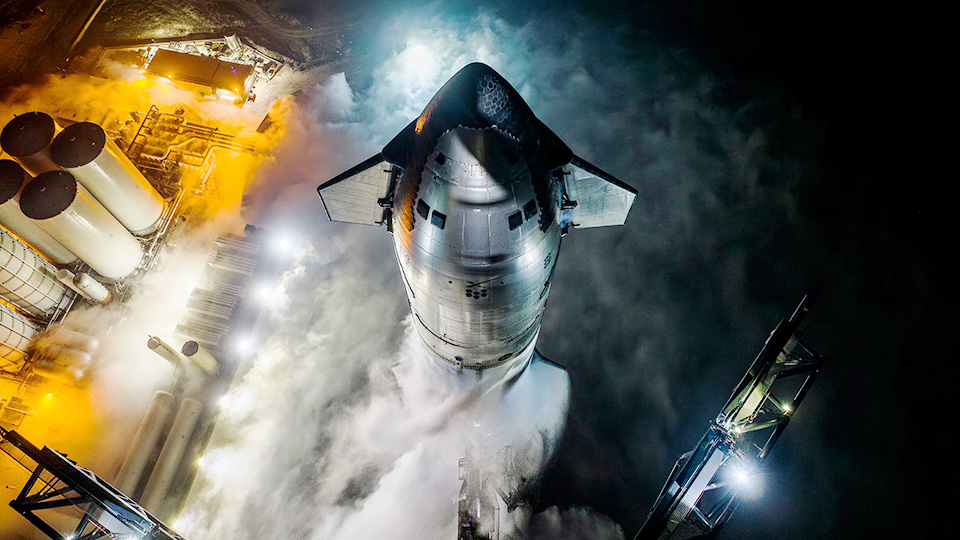
According to investment bank projections, migrating to Starship’s architecture is expected to reduce orbital transport costs from approximately $2,700 per kilogram on Falcon 9 down toward $100 per kilogram, while expanding net payload capacity into Low Earth Orbit (LEO) from 23 metric tons to over 100 metric tons per launch.
The projected drop in launch costs effectively converts Low Earth Orbit into a viable industrial infrastructure layer, lowering capital entry barriers for large-scale orbital deployments.
Fleet Migration and Capacity Expansion
The transition to Starship’s higher payload capacity directly addresses launch cadence constraints facing next-generation mega-constellations. While Falcon 9 maintained record flight rates through 2025 and early 2026, delivering second-generation Starlink V2 Mini satellites into orbit, the vehicle’s payload fairing volume and 23-metric-ton mass limits require dozens of individual launches to populate single orbital shells.
The capacity upgrade supports recent regulatory authorizations, including the FCC’s approval authorizing 7,500 additional Starlink Gen2 satellites to expand global gigabit broadband coverage. By delivering over 100 metric tons per launch, a single Starship mission can deploy complete satellite operational layers in a single launch, significantly reducing orbital insertion timelines and launch vehicle integration overhead.
Commercial Scaling Across Orbital Sectors
The reduction in cost per kilogram to orbit creates financial model viability across multiple space industry sectors that were previously constrained by transportation expenditure:
- Starlink Constellation Scaling: Accelerates the deployment of larger, full-scale Starlink V2 satellites equipped with direct-to-cell phase-array antennas and high-capacity optical inter-satellite links.
- In-Space AI Compute Nodes: Enables the orbit-based deployment of high-power data processing clusters, where heavy thermal radiator mass and solar array surface area are no longer constrained by strict payload weight limits.
- Defense and National Security Systems: Supports U.S. Space Force and Missile Defense Agency architectures requiring heavy radar apertures, space-based interceptors, and high-density tactical communications satellites.
- In-Space Manufacturing and Infrastructure: Provides the mass-budget headroom needed to launch heavy raw materials, orbital hab modules, and automated manufacturing facilities into sustained orbits.
This structural cost reduction aligns with broader banking sector forecasts published in financial analyses of LEO market consolidation, which noted that lower launch unit economics will allow dominant constellation operators to increase customer margins while expanding total subscriber capacity.
Strategic Market Outlook and Transportation Architecture
As SpaceX advances Starship orbital flight testing and scales manufacturing at Starbase and Kennedy Space Center Launch Complex 39A, the low-cost transportation layer is expected to shift commercial space investment away from basic launch access toward orbital payload applications. By establishing a high-mass, low-cost freight corridor to Low Earth Orbit, the architecture sets the economic baseline for long-term industrialization across the cislunar economy.
