
MOUNTAIN VIEW, Calif. — Google’s first data center satellite came online in late October, marking an initial step toward orbital computing, but the tech giant faces significant semiconductor and engineering challenges before the network can successfully scale.
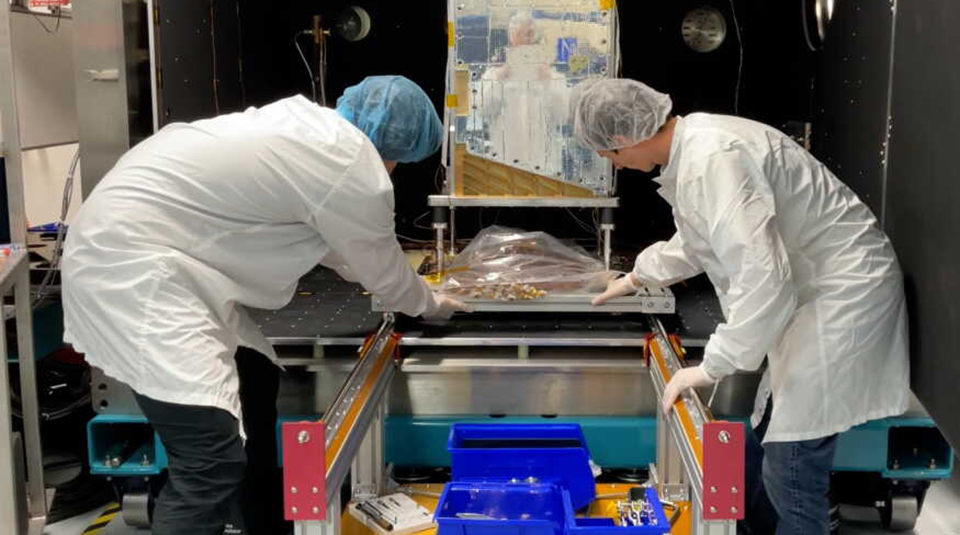
The deployment is part of Project Suncatcher, a long-term initiative to establish space-based data infrastructure and machine learning capabilities in orbit.
Hardware Limitations and Constraints
The initial orbital data center currently operates under severe physical and electrical limitations. The satellite generates only enough electricity to run one of its four onboard Tensor Processing Units (TPUs) for approximately 20 minutes at a time. Beyond basic power constraints, Google must resolve critical issues related to continuous radiation exposure and the transmission of massive amounts of data between orbiting satellites. In the harsh environment of space, standard commercial electronics are highly susceptible to radiation corruption, posing a threat to ongoing data processing.
Semiconductor Solutions for Orbital Computing
To resolve these bottlenecks, space-grade semiconductor manufacturers are advocating for specialized chip architectures to handle the unique demands of low Earth orbit. According to Tom Barber, Vice President of Data Center and Communications Infrastructure at GlobalFoundries, “Optical communications could enable satellites to exchange data at the high speeds Google requires while simultaneously keeping power consumption in check“.
GlobalFoundries, which already manufactures space-grade chips proven in Earth orbit and on missions beyond Mars and Jupiter, produces radiation-hardened components built to withstand environments that would otherwise corrupt ordinary electronics. To maximize a satellite’s limited electricity supply, the company utilizes Gallium Nitride (GaN) power chips, which reduce wasted energy. Additionally, GlobalFoundries is deploying silicon photonics chips that transmit data as light, providing high-speed transfers that remain resilient under heavy radiation exposure.