

DUBLIN — Space technology developer Ubotica Technologies demonstrated autonomous onboard observation scheduling aboard an operational satellite in low Earth orbit, the company announced on Wednesday, Nov. 4, 2026.
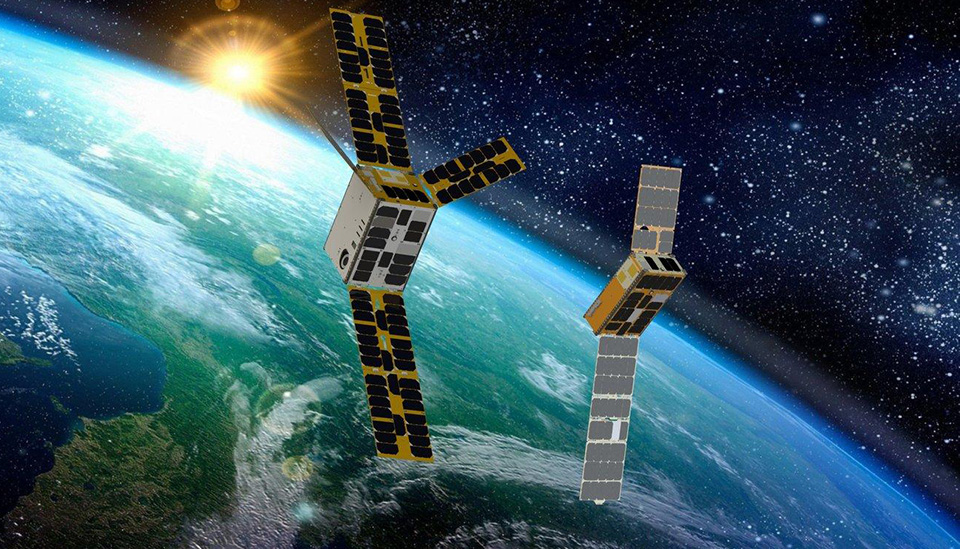
Using onboard artificial intelligence (AI), the satellite detected a maritime vessel in the Pacific Ocean and independently scheduled and executed a follow-up observation without receiving tasking commands from terrestrial ground stations.
Maritime Surveillance and Latency Mitigation
Conventional Earth observation architectures require satellites to downlink raw imagery to ground stations for processing, human analysis, and subsequent uplink tasking—a sequence that introduces latency delays ranging from 30 minutes to an entire day. By removing ground station intervention, autonomous orbital tasking accelerates maritime intelligence gathering for regional defense agencies confronting illicit shadow fleets, unflagged vessels, and security risks near subsea communication cables and offshore energy infrastructure.
The demonstration advances Ubotica’s Live Maritime Intelligence (LMI) platform, which received backing from an $11 million financing round in June to automate dynamic maritime risk monitoring.
CogniSAT-6 Architecture and On-Orbit AI Execution
The trial was conducted in early October using CogniSAT-6, an operational 6U CubeSat designed, built, and operated by Open Cosmos. Launched in March 2024 aboard SpaceX’s Transporter-10 rideshare mission, the satellite operates within the shared OpenConstellation mutual infrastructure and carries Ubotica’s CogniSAT-XE2 edge processing platform, building on earlier onboard AI validation flights.
During the orbital test, onboard computer vision algorithms scanned an initial image of the Pacific Ocean and identified a cruise ship. The flight computer independently calculated the spacecraft’s next orbital revisit opportunity over the target coordinates to verify if the vessel remained stationary. Two days later, CogniSAT-6 automatically imaged the same geographic location without ground command interaction, verifying that the vessel had departed.
Autonomous Constellation Coordination
“Autonomous Scheduling is about giving satellites the ability to interpret what they see and decide what to do next,” said David Rijlaarsdam, Director of Space System Engineering at Ubotica. “What we’ve demonstrated with one satellite becomes significant when scaled to a constellation. One satellite detecting something of interest at sea can alert another to independently determine when to capture a follow-up image, executing tip-and-cue without a ground station or human in the loop.”
Ubotica plans to integrate autonomous scheduling algorithms across multi-satellite constellations to support automated tipping-and-cueing workflows for civil, naval, and environmental monitoring applications.
Sources Ubotica Technologies – https://ubotica.com
