

Evaluating the capital efficiency of reusable space transportation systems requires examining the manufacturing, refurbishment, and operational cost structures underlying commercial launch services.
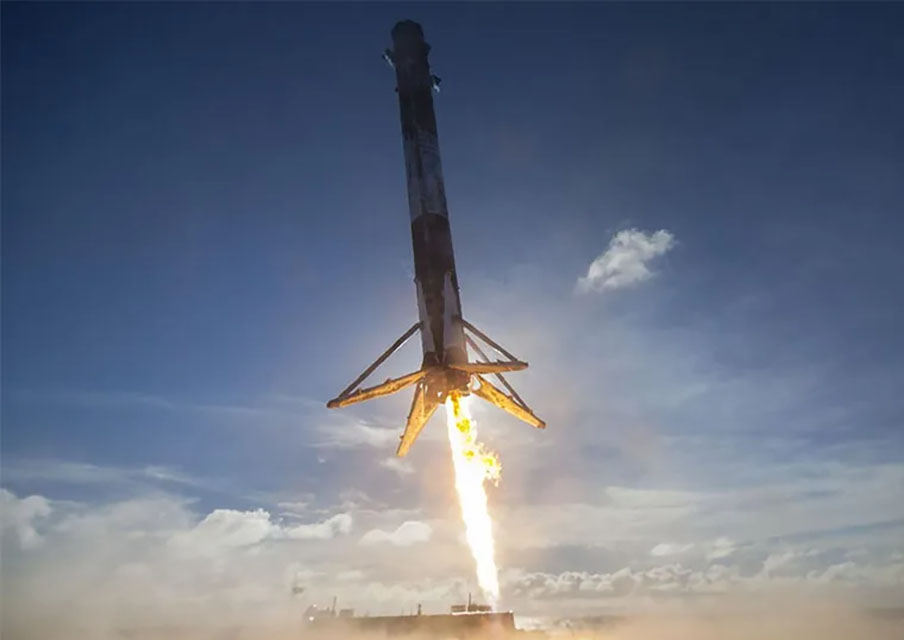
An independent cost analysis published by aerospace researcher Brian Basson on August 27, 2026, examines the unit economics of SpaceX’s Falcon 9 architecture, aligning closely with public disclosures and industry estimates.
Independent Verification of Booster Cost Dynamics
To evaluate the mathematical validity of the Falcon 9 booster cost model, the financial inputs must be calculated across the 25-flight accounting depreciation life defined by SpaceX:
- Initial Booster Capital Expenditure: Establishing a baseline new build cost of $30 million for a Falcon 9 First Stage booster.
- Cumulative Refurbishment Expenditure: Performing post-landing inspections, engine checks, ultrasonic and X-ray non-destructive testing, limited parts replacements, cleaning, and static fire tests incurs approximately $300,000 per recovery cycle. Over 24 refurbishment cycles (flights 2 through 25), cumulative maintenance costs equal $7.2 million.
- Amortized First-Stage Cost: Combining the $30 million initial build with $7.2 million in total maintenance yields a cumulative first-stage lifetime cost of $37.2 million across 25 missions. Amortized evenly, the first-stage asset contributes approximately $1.488 million per flight.
- Marginal Flight Cost Aggregation: Adding an expendable second stage ($8.0 million midpoint), liquid oxygen and RP-1 propellant ($250,000), amortized payload fairing recovery (~$1.0 million), and range, recovery, and ground operations (~$3.0 million) yields an estimated marginal launch cost of $13.738 million per commercial mission.
When compared against SpaceX’s standard commercial sticker price of $74 million per launch, the calculated cost structure yields a gross operational margin exceeding 80 percent per commercial mission once a booster passes its initial manufacturing amortization threshold. The step-by-step arithmetic confirms that the cost estimates published in the Basson model are mathematically accurate and consistent with aerospace engineering realities.
Fleet Reusability Metrics and Operational Milestones
The cost advantages of reusability depend on extending the operational flight life of first-stage hardware beyond its initial accounting baseline. SpaceX originally designed its Block 5 architecture for 10 flights without major overhaul, subsequently extending the baseline accounting depreciation schedule to 25 flights.
Field operations continue to exceed these baseline projections:
- Individual Booster Lifetimes: Active Block 5 boosters routinely achieve 30 to 35 flights.
- Fleet Benchmark: Booster B1067 completed its 37th orbital mission on August 25, 2026, marking a fleet turnaround record.
- Manufacturing Economies of Scale: High Merlin 1D engine output and vertical integration have reduced first-stage production costs from over $30 million to between $28 million and $30 million.
Commercial Launch Economics and Capital Reinvestment
The operational margins generated by commercial Falcon 9 launches serve as a primary internal capital source for SpaceX. Commercial satellite deployments, civil space agency missions, and national security launches priced at $74 million generate significant net cash flow per launch.
These profits, combined with recurring subscription revenues from the Starlink satellite broadband network, fund the multi-billion-dollar research, development, and orbital flight testing programs for Starship. By scaling its reusable Falcon 9 fleet, SpaceX finances its next-generation heavy-lift infrastructure through internal commercial operations.
This financial framework underpins SpaceX’s broader direct-to-cell strategy and the expansion of its Starlink constellation constellation architecture.
Operational Cadence and Launch Manifest Outlook
SpaceX launched 2,004 satellites through the first eight months of 2026 (up to August 22), eclipsing the full-year deployment totals recorded in 2023 and 2024. As booster turnaround times decrease and fleet maintenance routines standardize, SpaceX continues to maintain high launch cadences while driving down marginal launch costs across its operational infrastructure.
