

On Sept. 28, 2026, UK media infrastructure and telecommunications provider Arqiva submitted its formal response to the UK Government’s Green Paper on the future of television distribution, setting out a fully costed proposal for a managed phase-out of Digital Terrestrial Television (DTT) by 2044.
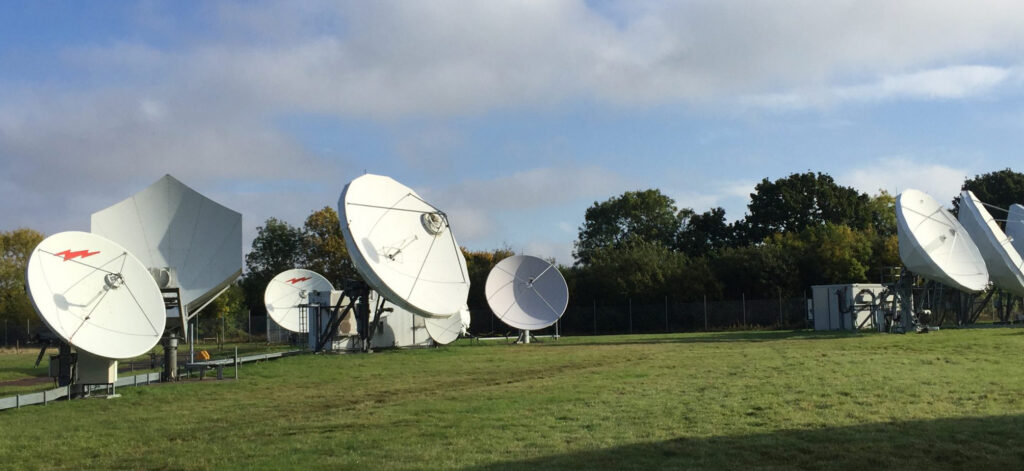
The submission addresses national strategy as viewing habits shift toward internet protocol (IP) networks and satellite-assisted distribution platforms.
Transition Specifications and Operational Efficiency Metrics
The strategic roadmap balances spectrum reallocation with public broadcast delivery across urban and rural coverage areas.
Under Arqiva’s proposed framework, maintaining terrestrial broadcast infrastructure through 2044 protects universal access to public service broadcasting while allowing telecom operators to expand IP streaming architecture. The gradual transition model reduces broadcaster transmission costs by up to 50 percent and cuts transmission network energy consumption by approximately 40 percent relative to legacy operational baselines.
The plan supports an early release of prime broadcast spectrum by 2034, freeing bandwidth for mobile communications and satellite-terrestrial hybrid networks without terminating linear Freeview broadcasts for traditional audiences.
Regulatory Trade-Offs and Network Resilience Rationale
Evaluating the transition timeline requires balancing digital network modernization against infrastructure vulnerability.
In its filing, Arqiva warned against an accelerated DTT switch-off targeted for 2034, noting that forcing a rapid migration to IP-only distribution risks disconnecting millions of viewers who depend on over-the-air Freeview signals. An accelerated shutdown would also overload terrestrial broadband networks, increase operational costs for shared RF infrastructure—including commercial radio networks—and compromise national communications sovereignty during internet outages or cyber disruptions.
By preserving DTT as a resilient broadcast backbone alongside satellite teleports and fiber backhaul, Arqiva argues the UK can execute a controlled, consumer-led migration to IP television over an extended timeline.
Broadcast Horizon and Legislative Next Steps
The UK Department for Culture, Media and Sport will evaluate Arqiva’s submission alongside feedback from public service broadcasters, satellite operators, and telecommunications providers throughout late 2026. The resulting policy framework will determine spectrum licensing schedules and network investment commitments through the 2034 intermediate milestone toward full IP transition in 2044.
