
On Wednesday, October 14, 2026, Chinese commercial launch provider LandSpace successfully launched a Zhuque-2E carrier rocket from the Jiuquan Satellite Launch Center, deploying 10 satellites into sun-synchronous orbit.
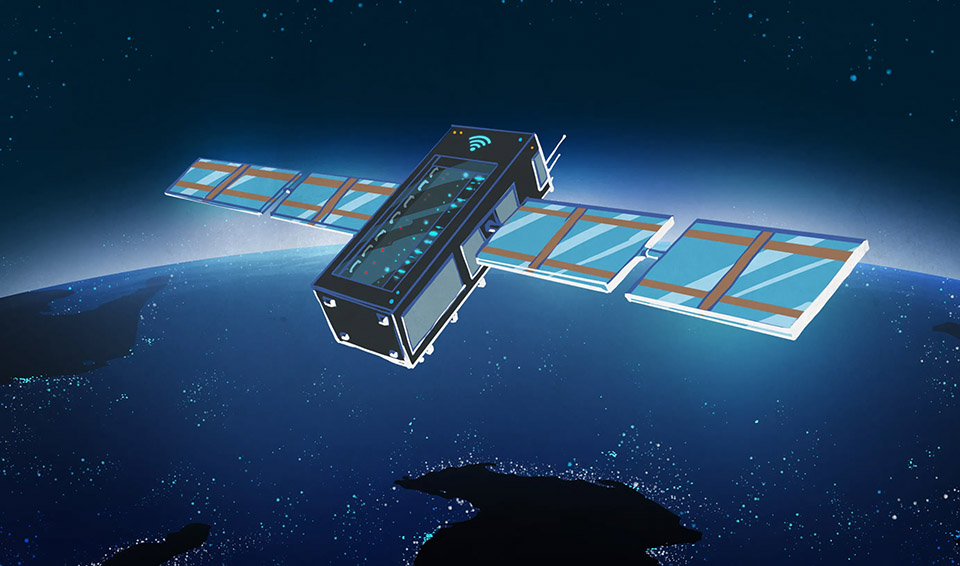
The vehicle lifted off at 7:40 a.m. Eastern (7:40 p.m. Beijing Time) from Launch Area 96A, placing eight orbital data center test spacecraft developed by ADAspace Technology alongside two secondary communications satellites into their planned orbital trajectories.
Strategic Expansion of In-Orbit Computing Networks
The mission highlights accelerating Chinese efforts to shift computational workloads directly into orbit, addressing terrestrial power constraints and ground station downlink bottlenecks examined in industry assessments on the rise of the orbital data center. By executing data processing and artificial intelligence inference natively in orbit, commercial operators aim to analyze Earth observation data in real time before transmitting synthesized intelligence to terrestrial nodes.
The deployment builds on Beijing’s push to support private space initiatives, as China’s commercial space sector accelerates investment to match western constellation cadence.
Launch Vehicle and Orbital Data Center Payload Specifications
The mission utilized LandSpace’s two-stage Zhuque-2E, a medium-lift rocket fueled by liquid oxygen and liquid methane (methalox), extending the operational lineage established when LandSpace achieved the world’s first orbital methalox launch with the Zhuque-2.
The primary payload manifest includes eight ADAspace spacecraft designed for dawn-dusk orbital regimes:
- High-Performance Compute Payloads: Onboard processing clusters engineered for in-orbit AI model training and algorithm execution.
- Active Thermal Management: Advanced 10,000-watt liquid-cooling loops paired with deployable radiative cooling panels to dissipate computational heat in the vacuum of space.
- Optical Crosslinks: High-throughput inter-satellite laser communications transceivers enabling mesh-network coordination across the orbital cluster.
- Earth Observation Suite: Integrated low-light sensors for autonomous night-imaging analysis.
The launch also deployed LandSpace’s proprietary Guangchuan-03 and Guangchuan-04 satellites, which serve as orbital testbeds for commercial LEO laser communications.
Constellation Demonstration Timeline
The eight ADAspace spacecraft represent the second technology validation group for the company’s proposed 2,800-satellite “Star Compute” network. Over the coming months, ADAspace flight controllers will evaluate the satellites’ thermal dissipation under continuous computational load and validate inter-satellite laser routing, paving the way for larger operational deployment tranches planned through 2027.