

On Sept. 23, 2026, SpaceX Chief Executive Officer Elon Musk forecasted that the Starlink low Earth orbit (LEO) satellite network could transport the majority of total global internet traffic within ten years.
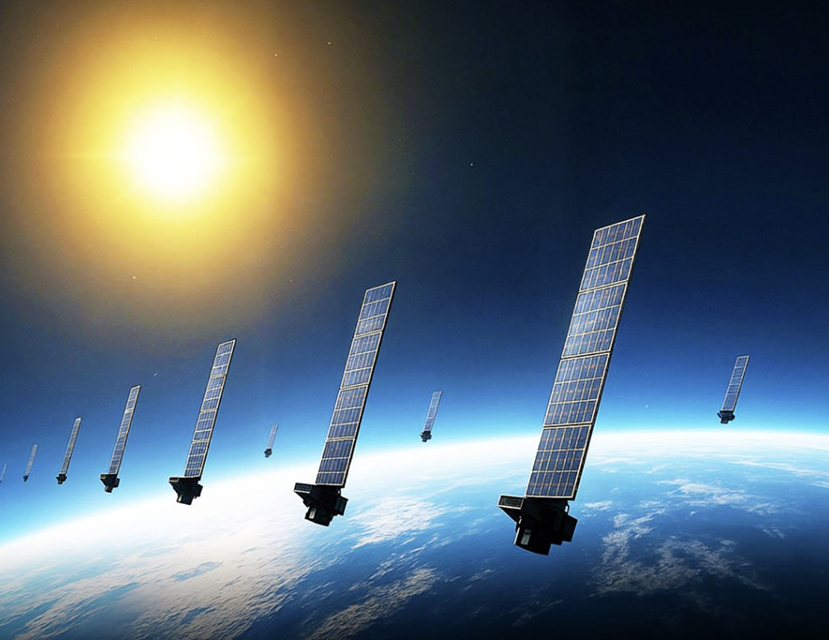
The long-term projection relies on scaling next-generation Starlink V3 satellites, including specialized Starmind orbital data center variants currently undergoing regulatory review by the Federal Communications Commission (FCC).
Constellation Scale and Enterprise Revenue Trajectory
The decade-horizon prediction coincides with rapid financial growth across SpaceX’s enterprise satellite division. Driven by corporate broadband contracts, aviation connectivity agreements, and maritime deployments, SpaceX’s enterprise revenue surged by 108 percent year-over-year.
To support expanding global internet demand, SpaceX has systematically scaled its low Earth orbit infrastructure. By maintaining high-frequency Starship launch campaigns alongside dedicated Falcon 9 rideshare flights, the operator has deployed thousands of operational spacecraft into low Earth orbit. This orbital density provides continuous broadband coverage across rural, maritime, and aerospace sectors previously underserved by terrestrial fiber networks.
Transitioning from localized consumer broadband to carrying a primary share of global internet traffic represents a structural shift in telecommunications architecture. Historically, international internet traffic has moved almost exclusively through subsea fiber-optic cables, with satellite links handling specialized backhaul and remote connectivity.
Next-Generation V3 Hardware Architecture and Starmind Capabilities
Achieving the projected traffic throughput depends on fielding SpaceX’s upgraded V3 satellite platform, which is engineered to deliver a 100-fold increase in usable network bandwidth compared to early-generation Starlink spacecraft.
The Starlink V3 architecture incorporates enlarged physical dimensions, high-capacity solar arrays, and optical inter-satellite laser links designed to route terabits of data directly through space without relying on intermediate ground stations.
A key subset of the V3 architecture includes the Starmind orbital platform. Designed as 4,000-kilogram (4 metric ton) orbiting data centers, Starmind satellites integrate high-density artificial intelligence compute hardware directly into space. By executing onboard data processing and intelligent traffic routing in orbit, Starmind platforms reduce latency and eliminate ground relay bottlenecks for enterprise and consumer network traffic.
SpaceX recently submitted detailed safety and thermodynamics documentation to the FCC to demonstrate that the 4-ton Starmind satellites meet NASA Debris Assessment Software standards for atmospheric demise upon operational retirement.
Executive Perspective
“Starlink will deliver the majority of the world’s internet within ten years,” said SpaceX Chief Executive Officer Elon Musk. “This scale will be driven by a 100x bandwidth increase from our V3 satellites, including the Starmind computing versions currently awaiting examination and approval by the FCC.”
Regulatory Roadmap and Infrastructure Deployment Horizon
SpaceX is coordinating with the Federal Communications Commission’s Space Bureau to secure final operational authorization for the Starmind V3 constellation tranche. Following regulatory clearance, SpaceX plans to initiate initial Starship flight integration campaigns for V3 hardware, expanding orbital transmission capacity and edge-computing infrastructure through late 2026 and 2027.
