
By Nick Warfield, Editorial Lead, SatNews
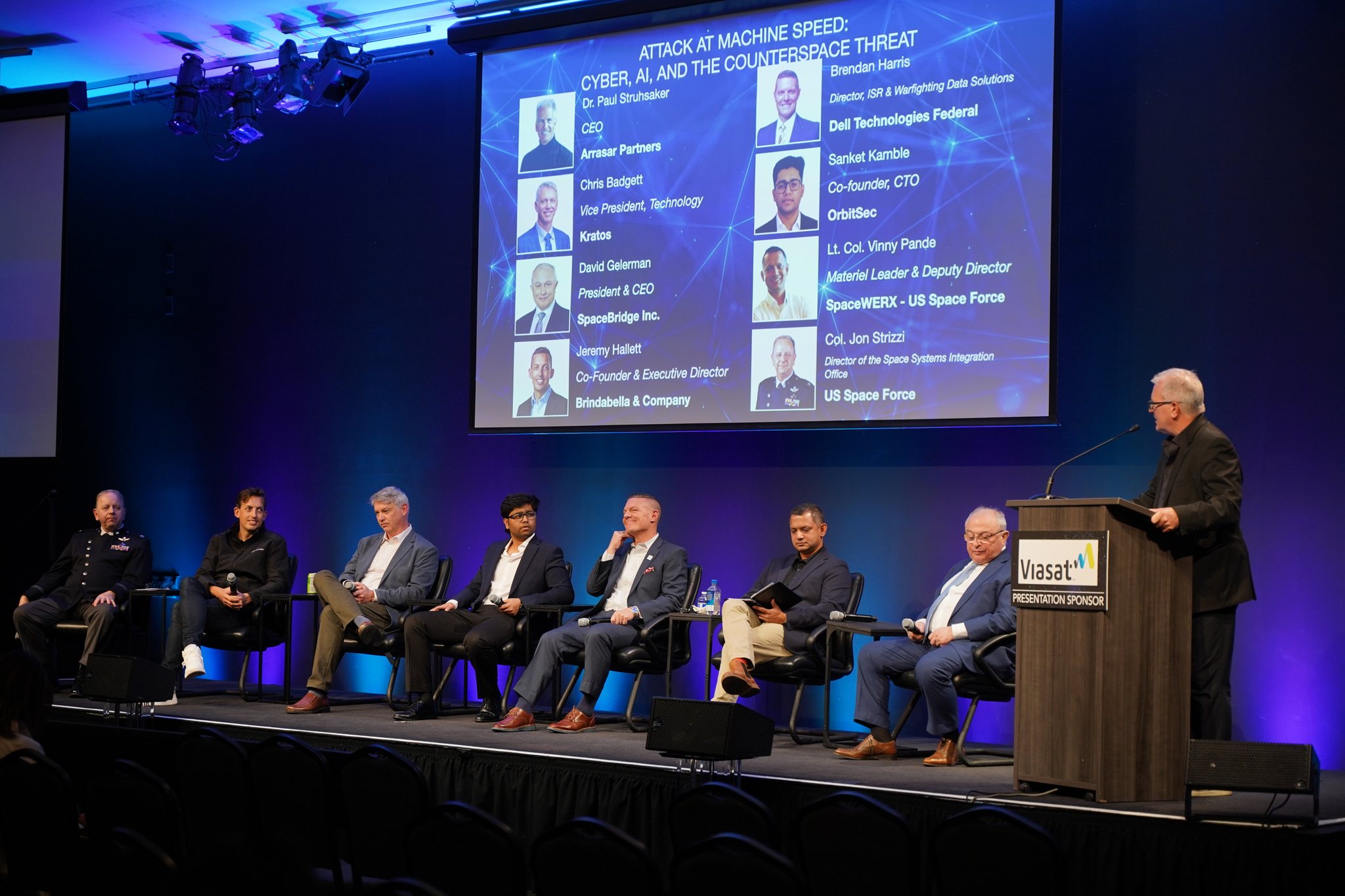
Federal deadlines for post-quantum encryption begin at the end of 2030. Commercial companies are moving faster than the government to meet them, a SpaceWERX official said.
On the government side, “we’re somewhat bound by the NSA Type 1 encryption standards,” Lt. Col. Vinny Pande, materiel leader and deputy director at SpaceWERX, said Thursday on the MilSat Symposium panel “Attack at Machine Speed: Cyber, AI, and the Counterspace Threat” at Silicon Valley Space Week. “On the commercial side, we’re seeing an incredible amount of companies that are already jumping” on the problem, he said. “The problem is we don’t quite have the mandate on the Space Force side to put money behind it because we have to trust the NSA and the intelligence community.”
SpaceWERX, which describes itself as the Space Force’s in-house venture arm, puts about $500 million to $700 million a year of non-dilutive capital into startups, he said.
Pande also had news for the companies in the room. SpaceWERX expects to put about $20 million on the market early next year, aiming for 10 to 20 awards, under a topic titled defensive cyber operations.
Start now, not in 2030
Moderator Paul Struhsaker of Arrasar Partners framed the problem: quantum computing is making the security keys in use today obsolete, and the federal government, he said, has told almost every company that by 2030 it needs to upgrade to post-quantum keys.
The date comes from an executive order signed June 22. It requires federal agencies to move their high-value assets and high-impact systems to post-quantum cryptography for key establishment by Dec. 31, 2030, and for digital signatures a year later. For contractors, the order calls for a separate federal contracting rule that would hold them to NIST’s standards, including its post-quantum algorithms, by the end of 2030.
Panelists said waiting for the deadline is already too late for satellites. Spacecraft fly for many years, the new NIST post-quantum standards are already out, and data encrypted at rest is likely already in adversaries’ hands, waiting for a quantum computer to break it. Security measures “have to be implemented today, not in 2030,” said David Gelerman, president and CEO of SpaceBridge, starting with post-quantum key exchange and authentication.
The government is still working through older problems. Col. Jon Strizzi of Space Systems Command’s Space Systems Integration Office said his office stood up a crypto management office about a year ago to get cryptographic gear through the government process and deployed on space and ground systems. That alone has been a huge challenge, he said.
The panel’s other subject was AI. Sanket Kamble, co-founder and CTO of threat-simulation company OrbitSec, warned that an attacker doesn’t have to compromise a satellite’s AI to destroy the mission. Manipulating the information fed to the AI can be enough, he said.
The panel also included Chris Badgett of Kratos, Brendan Harris of Dell Technologies Federal and Jeremy Hallett of Brindabella and Company.
SatNews produces Silicon Valley Space Week.
About the Author
A storyteller at heart, Nick Warfield covers space policy, satellite markets, defense, and the technologies reshaping how humanity operates beyond Earth. With a background in creative direction, brand strategy, and editorial storytelling, he brings a modern lens to complex subjects and a relentless curiosity about what comes next.