

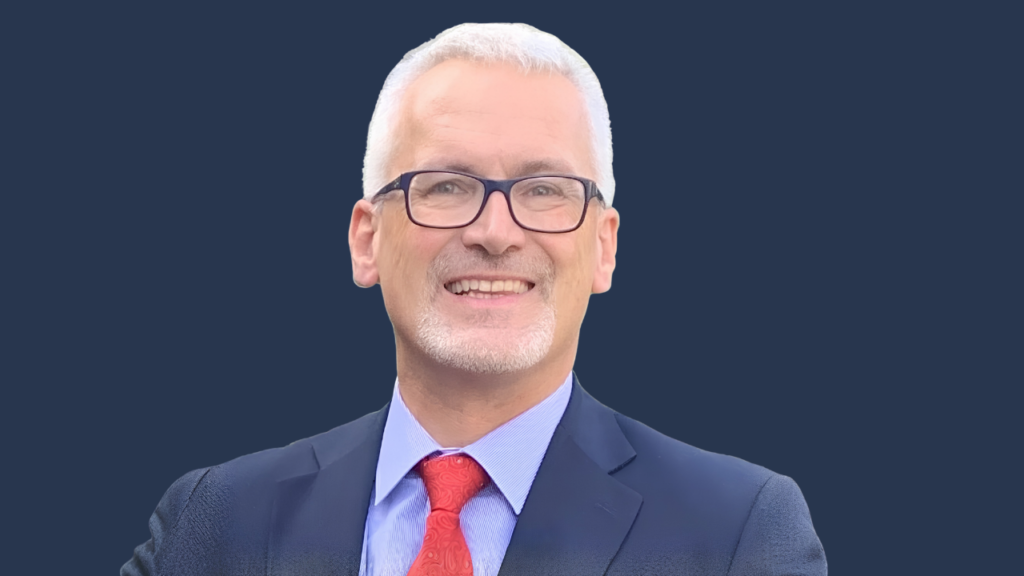
Last year at this conference Tim Farrar chaired the direct-to-device panel and asked the people on it whether their sector was getting more attention than it had earned. SatNews wrote the session up under a headline asking whether it was “Real-world, or Over-hyped?” In the twelve months since, SpaceX has agreed to take more EchoStar spectrum for Starlink Direct to Cell, and Amazon has filed for a direct-to-device constellation of its own. This year Farrar gets twenty minutes alone on what Starlink’s dominance means, and he takes the Satellite Innovation stage at Silicon Valley Space Week in October.
Dr. Tim Farrar is President of TMF Associates, the consultancy he has run since 2002 from the San Francisco Bay Area, and he has spent more than thirty years advising across the telecom and satellite industries in the United Kingdom and the United States. The firm specialises in the technical and financial analysis of wireless and satellite ventures, working for operators, suppliers and investors. He publishes research on the satellite industry focused on low Earth orbit broadband and direct-to-device, and he writes about satellite and spectrum questions on the TMF Associates blog. He holds a master’s degree and a doctorate in mathematics from Trinity College, Cambridge.
The program bills the brief as the implications of Starlink’s market dominance in broadband and direct-to-device. The word carrying the weight in that title is dominance, and the year has been spent testing it. SatNews reported in June that SpaceX would put EchoStar’s AWS-4 and H-block frequencies straight into next-generation Starlink Direct to Cell hardware, letting satellites reach handsets that have not been modified. That hardware now has numbers attached. Specifications disclosed on October 1 give each Gen3 satellite a 250 kilowatt power payload, ten terabits per second of capacity and an onboard Nvidia computer, the added power aimed at reaching phones inside buildings and in dense cities. On October 6, in order DA 26-1078, the FCC granted SpaceX’s application in part, clearing up to 15,000 satellites in very low Earth orbit for a dedicated direct-to-cell layer and waiving the rule requiring a spectrum-leasing deal with a ground-based mobile operator. Early testing over T-Mobile’s PCS band delivered 4 megabits per second; the architecture targets 150. On July 27, Amazon filed for a 5,105-satellite direct-to-device constellation. On October 2 the three largest American carriers, AT&T, T-Mobile and Verizon, formally established a joint venture to standardize direct-to-device connectivity. AT&T and Verizon work with AST SpaceMobile, while T-Mobile keeps its direct-to-cell beta with Starlink. SpaceX has been public since June, and its first quarterly report as a public company put total revenue up 92 percent to $7.8 billion, with Starlink at 12.0 million subscribers at the end of June, double a year earlier. A BNP Paribas note in February reported Farrar’s view that Starlink could target another doubling, toward 18 million by the end of 2026. The other question he put to his panel last year, whether mobile satellite service spectrum is what decides who wins, is still open.
Farrar gives “The Implications of Starlink’s Market Dominance in Broadband and D2D” on Tuesday, October 27, from 2:45 p.m. to 3:05 p.m. in the Hahn Auditorium at the Computer History Museum in Mountain View. He is the only speaker on it, and at twenty minutes it runs longer than the fifteen the program gives its other market briefs. It follows the ground infrastructure panel on capacity and the capital squeeze, and at 3:05 p.m. the room turns to Germany’s new space sector, with Planet’s president and chief financial officer.
Silicon Valley Space Week runs Tuesday, October 27 through Thursday, October 29 at the Computer History Museum, with Satellite Innovation across the first two days and the MilSat Symposium across the last two. Farrar has the middle of the opening afternoon. On the forecast that February note carried, Starlink could be approaching 18 million subscribers by the end of the year.
