

On Nov. 16, Thales Alenia Space, the joint venture between Thales (67%) and Leonardo (33%), signed two contract amendments with the European Space Agency (ESA) as prime contractor for the TeQuantS project.
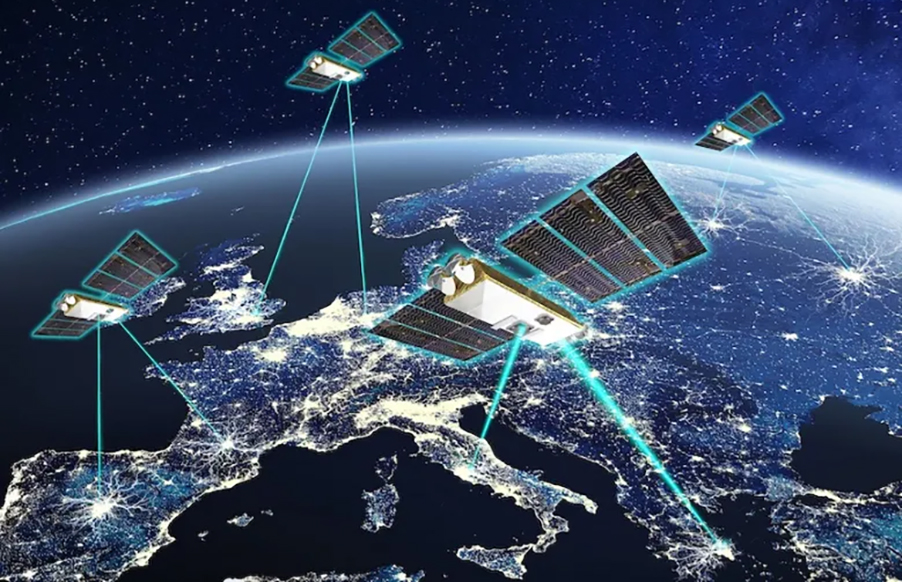
Supported by the French Space Agency (CNES), the initiative falls under the Industrial Competitiveness component of ESA’s Advanced Research in Telecommunications Systems (ARTES) program and focuses on developing quantum communication technologies between space and Earth.
Foundations of Europe’s Quantum Communications Architecture
Initiated in 2023, the TeQuantS project is structured to develop the orbital quantum technologies needed to construct a future long-distance quantum internet network. Earlier development phases yielded two primary hardware milestones: a compact ground station prototype and an initial engineering model of the space-based quantum communications system.
Optical Payload and Ground Synchronization Test Equipment
Entering the next phase of development, Thales Alenia Space and its project partners are establishing a dedicated quantum laboratory at CNES to validate space-to-Earth quantum links under simulated real-world operating conditions. The laboratory test campaign will evaluate three core subsystems: an entangled photon source, precision time-synchronization systems linking satellites and ground stations, and terrestrial photon analysis and detection equipment.
Simulated Link Testing at CNES Facility
Testing at the new CNES laboratory will focus on verifying end-to-end quantum signal transmission and timing accuracy across simulated orbital conditions, establishing the technical baseline required before advancing toward operational space-to-ground quantum network demonstrations.
