

On Nov. 13, Amazon Leo is scheduled to deploy 40 broadband satellites aboard a United Launch Alliance (ULA) Vulcan rocket from Cape Canaveral Space Force Station in Florida.
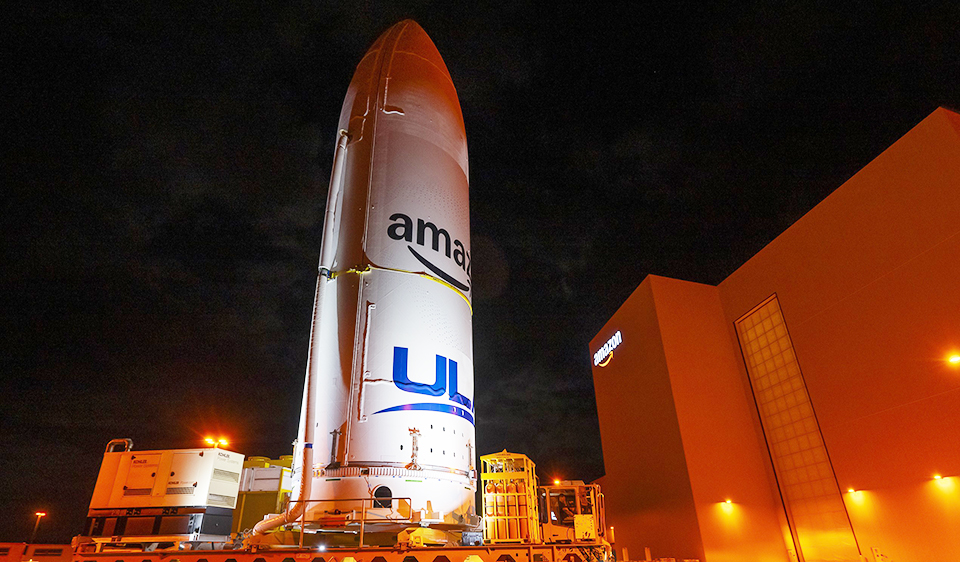
Designated Leo Vulcan 01, the mission marks the first flight of the constellation’s spacecraft on ULA’s heavy-lift launch vehicle.
Scaling Constellation Deployment Capacity
The upcoming flight initiates a broader multi-launch agreement between Amazon and ULA aimed at accelerating the deployment of Amazon’s low Earth orbit (LEO) broadband network. Under the partnership, ULA’s Vulcan rocket is booked for 38 launch missions dedicated to transporting more than 1,500 satellites into orbit for Amazon. Securing dedicated heavy-lift capacity across multiple launch vehicles enables Amazon to steadily expand network coverage and build out the orbital infrastructure required to deliver commercial satellite internet services.
Mission Configuration and Range Upgrades
Leo Vulcan 01 will carry 40 production broadband spacecraft in a single payload stack, representing a key operational milestone for both the satellite program and the Vulcan launch system. To support the high-cadence manifest of 38 flights, Amazon has invested directly in ground infrastructure modifications at Cape Canaveral. These site enhancements expand ULA’s vehicle integration and processing capabilities at the Florida launch range, allowing ground teams to prepare rockets in parallel and streamline turnaround operations between missions.
Multi-Mission Launch Cadence
Following the Nov. 13 liftoff of Leo Vulcan 01, Amazon and ULA will transition toward executing the remaining missions under the 38-launch manifest. As the upgraded Cape Canaveral processing facilities support dual-vehicle operations, subsequent Vulcan flights will systematically deliver the balance of the more than 1,500 contracted satellites into low Earth orbit.
