

On August 29, 2026, Firefly Aerospace Chief Executive Officer Jason Kim addressed the global supply-demand deficit in commercial and government orbital launch services.
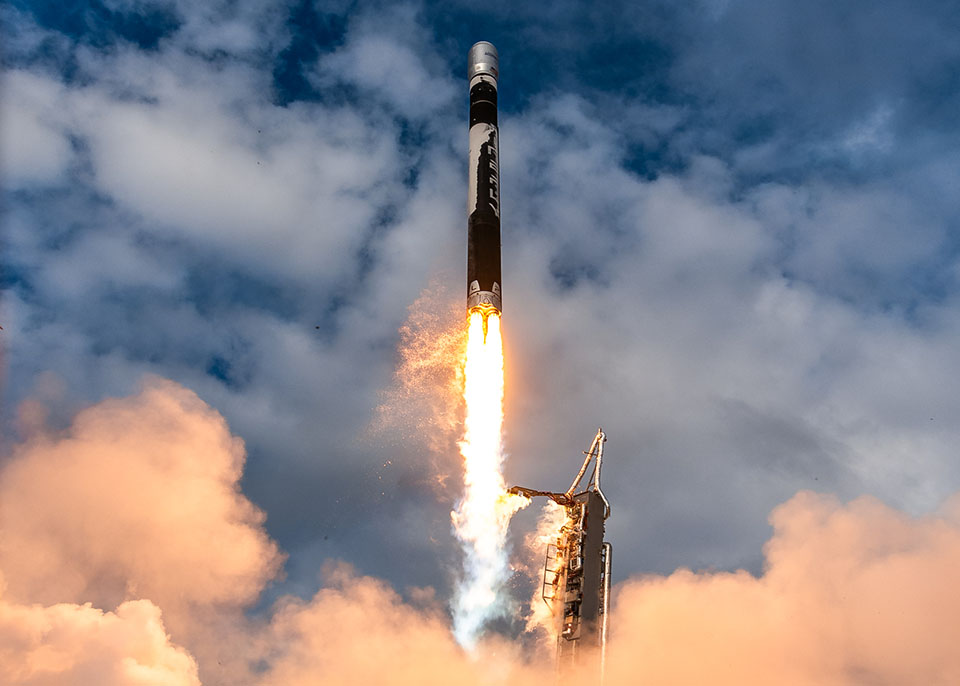
In an interview detailing state-of-the-market dynamics, Kim stated that despite high launch cadences maintained by market leader SpaceX throughout 2026, total available launch capacity continues to lag behind payload operator manifest demand across national security, civil space, and commercial constellation sectors.
Global Launch Deficit and Market Dynamics
The deficit in small-to-medium payload deployment capacity is driven by delayed operational entry across several next-generation heavy-lift platforms and expanding multi-satellite constellation manifests. While SpaceX’s Falcon 9 fleet carries a major share of total orbital mass, commercial satellite operators, defense agencies, and scientific institutions seek dedicated, flexible launch providers to mitigate single-point schedule dependencies and pad congestion at major launch sites.
The launch market strain has heightened interest in responsive launch capabilities. Federal initiatives, including the U.S. Space Force’s Tactically Responsive Space (TacRS) framework, mandate launch vehicles capable of moving from call-up to orbital insertion within tight operational windows, bypassing traditional multi-month integration schedules.
Vehicle Parameters and Payload Capacity
Firefly Aerospace continues to scale production of its flagship Alpha launch vehicle to address this small-payload supply gap. Engineered as a two-stage expendable rocket utilizing carbon-composite structures and RP-1/liquid oxygen engines, the Alpha platform is built to deliver dedicated orbital insertion for smallsats and rideshare payloads.
Key operational specifications of the Firefly Alpha launch architecture include:
- Payload Capacity: 1,000 kilograms to Low Earth Orbit (LEO) at 200 km altitude, and up to 630 kilograms to a 500 km Sun-Synchronous Orbit (SSO).
- Propulsion Systems: Four TapStar engines powering the first stage, with a single vacuum-optimized Miranda engine powering the second stage.
- Launch Infrastructure: Primary operations centered at Vandenberg Space Force Base Space Launch Complex 2 West (SLC-2W), with secondary pad development at Cape Canaveral Space Force Station Space Launch Complex 20 (SLC-20).
The operational expansion follows Jason Kim’s appointment as Chief Executive Officer of Firefly Aerospace, succeeding interim leadership structures established in late 2023.
Executive Overview on Launch Availability
“Even with the dominant position SpaceX holds in the market, there is still a fundamental shortage of rockets relative to the sheer volume of satellites waiting to get to orbit,” said Jason Kim, CEO of Firefly Aerospace. “Government and commercial customers require redundant, responsive launch options. Relying on a single launch architecture creates bottleneck risks for national security missions and commercial constellation deployments.”
Production Scaling and Manifest Outlook
Firefly Aerospace is accelerating manufacturing throughput at its Briggs, Texas production facility to increase the annual flight rate for the Alpha vehicle. Concurrently, the company is collaborating with Northrop Grumman to co-develop the Medium Launch Vehicle (MLV), a two-stage rocket designed to transport up to 16,000 kilograms to LEO, targeting initial flight operations in 2027 to capture medium- and heavy-lift payload manifests.
