

Updated September 7, 2026: Stellant Systems’ figures for its space traveling wave tubes have been revised to more than 4,800 in orbit and 360 million operating hours, matching SatNews’s current reporting. A sponsorship disclosure has also been added.
On August 19, Elve said its 100 watt millimeter wave space traveling wave tube amplifier had reached Technology Readiness Level 8, tested against NASA and U.S. Space Force standards under a Space Force Small Business Innovation Research Phase II contract. Traveling wave tube amplifiers are the devices that put usable power behind a satellite’s downlink, and the American supply of space-qualified ones has been narrow: Stellant Systems of Torrance, California describes itself as the only manufacturer of space-qualified traveling wave tubes in the United States, and says it has more than 4,800 of them in orbit and 360 million operating hours across its fleet. The founder and chief executive of the company behind the new qualification takes the Satellite Innovation stage at Silicon Valley Space Week in October.
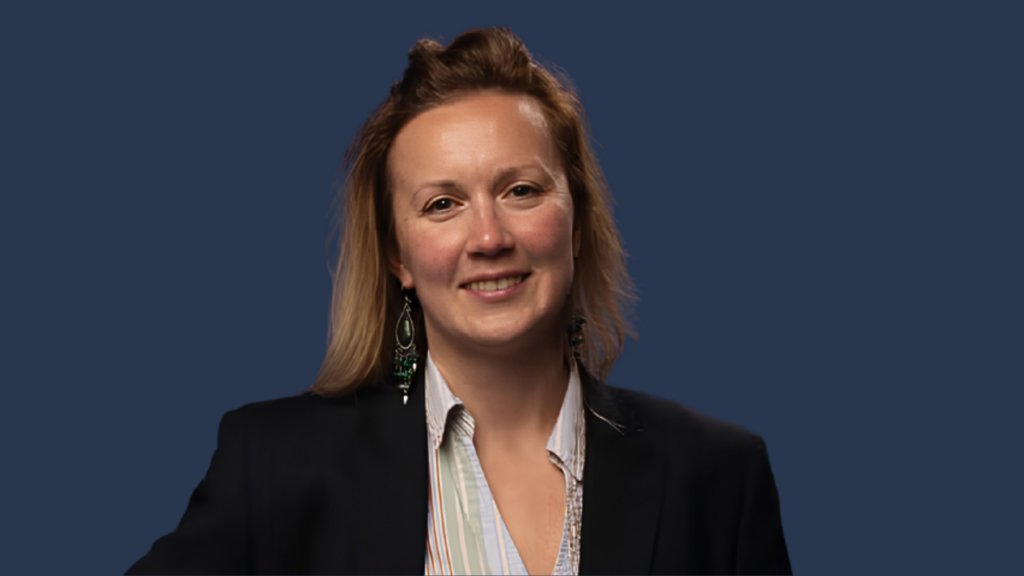
Dr. Diana Gamzina is Founder and Chief Executive Officer of Elve, which she started in 2020 in Half Moon Bay and moved to Davis, California in 2021. The company designs and manufactures traveling wave tube amplifiers at 25, 100 and 300 watts across the Ka, K, Q, V, E and W bands, and sells on volume manufacturing and delivery in months rather than the long lead times the devices have traditionally carried. Gamzina came to it from the laboratory. She was a staff scientist at the SLAC National Accelerator Laboratory and before that a development engineer at the University of California, Davis, where she led programs in advanced manufacturing and materials synthesis. She holds three degrees from UC Davis: a dual bachelor of science in mechanical engineering and materials science in 2008, a master of science in mechanical and aerospace engineering in 2012, and a doctorate in the same field in 2016. Elve credits her with 13 patents in vacuum electronic device manufacturing. She received the Vacuum Electronics Young Scientist Award at the IEEE International Vacuum Electronics Conference in 2022 and an Early Career Research Award from the Department of Energy, and she co-founded SAGE Journey, a program focused on gender diversity in STEM.
The session is about what the ground segment costs and who will fund it, and components sit underneath that question. Elve raised a $15 million Series A in February 2024 from TomEnterprise Private AB, Green Sands Equity, Yu Galaxy, Cambium Capital and Lockheed Martin Ventures, and In-Q-Tel has since taken a strategic position. What a qualification does and does not establish is the live question. TRL-8 records performance in ground testing against flight standards. “Our next focus area is space flight and operation in space environments,” Gamzina told SatNews. That is the point at which flight heritage starts to accumulate, and the incumbent’s 360 million hours are the measure of the gap.
Gamzina joins “The Ground Bottleneck: GSaaS, the SCN, and the Capital Squeeze” on Tuesday, October 27, from 2:00 p.m. to 2:45 p.m. in the Hahn Auditorium at the Computer History Museum in Mountain View. Steven Kaufman, Partner at Hogan Lovells US LLP, moderates. The other panelists are Dan Adams, Chief Executive Officer of KSAT; Ron Faith, President and Chief Executive Officer of RBC Signals; Chris Faletra, President and Chief Executive Officer of COMSAT; and Dr. Yonatan Winetraub, Founder of Aptos Orbital. The session follows lunch in the Grand Hall and precedes a market brief on what Starlink’s dominance in broadband and direct-to-device means for everyone else, with Dr. Tim Farrar of TMF Associates. COMSAT, whose chief executive is among the panelists, sponsors that lunch.
Silicon Valley Space Week runs Tuesday, October 27 through Thursday, October 29 at the Computer History Museum, with Satellite Innovation across the first two days and the MilSat Symposium across the last two. Gamzina’s panel comes on the opening afternoon. The orbital demonstration that would take her amplifier to TRL-9 has no announced date.
Elve and COMSAT, both represented on this panel, and Hogan Lovells, whose partner moderates it, are sponsors of Silicon Valley Space Week, which SatNews produces.
