

On Sept. 20, 2026, South Korean satellite manufacturer Satrec Initiative confirmed plans to construct four 10-centimeter-class optical observation satellites.
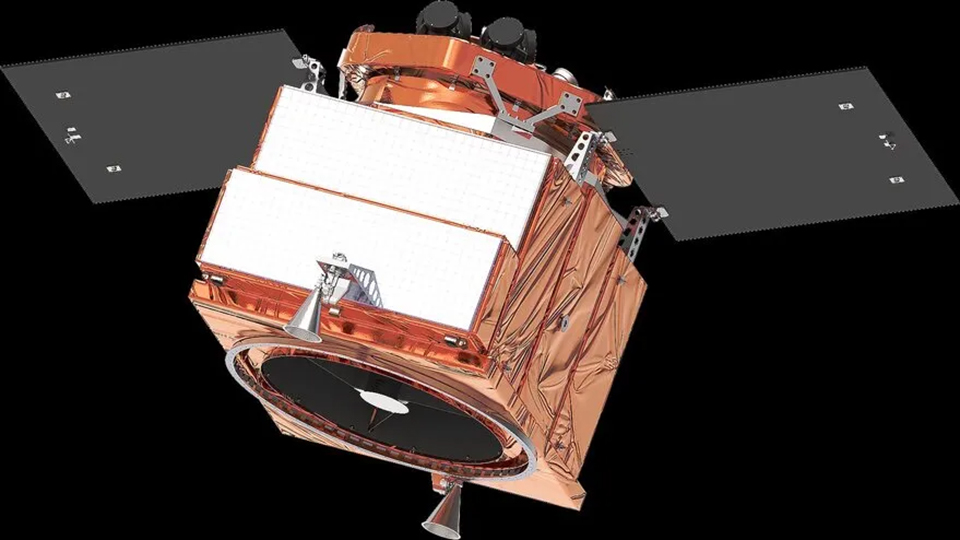
Developed in partnership with parent company Hanwha Systems, the spacecraft will operate alongside a planned synthetic aperture radar (SAR) network to support commercial, defense, and intelligence surveillance requirements.
Hardware Specifications and Integrated Sensor Architecture
The four optical spacecraft build upon Satrec’s current high-resolution imaging operations. Satrec and Hanwha Systems currently collect 25-centimeter spatial resolution optical imagery from SpaceEye-T, which achieved orbit in 2025.
The new 10-centimeter-class optical platforms will operate in coordination with Hanwha Systems’ planned 64-satellite radar constellation. By integrating high-resolution electro-optical platforms with all-weather synthetic aperture radar, the combined space segment allows defense operators to pair wide-area radar surveillance with precise optical target identification.
The multi-orbit network relies on an automated analytics layer supplied by Satrec subsidiary SI Analytics. The software platform applies artificial intelligence algorithms to incoming radar and optical datasets, automating feature identification, target classification, and change detection for national security customers.
Cross-Cueing Capabilities and Constellation Schedule
Pairing radar sensors with sub-meter optical payloads addresses environmental imagery limitations. While optical sensors capture high-fidelity spatial details during clear weather conditions, the radar network maintains continuous surface tracking through atmospheric cloud cover and during night-time passes.
Satrec Initiative and Hanwha Systems will proceed with payload fabrication and flight software integration over the coming years. The dual-sensor network is scheduled to achieve full operational capability by 2031, at which point the 64-satellite radar constellation will deliver a 30-minute global revisit interval over target areas of interest.
