

On Sept. 14, 2026, launch mission management provider Exolaunch announced its selection as the launch co-integrator for the German Space Agency at the German Aerospace Center (DLR) and NASA’s Gravity Recovery and Climate Experiment-Continuity (GRACE-C) mission.
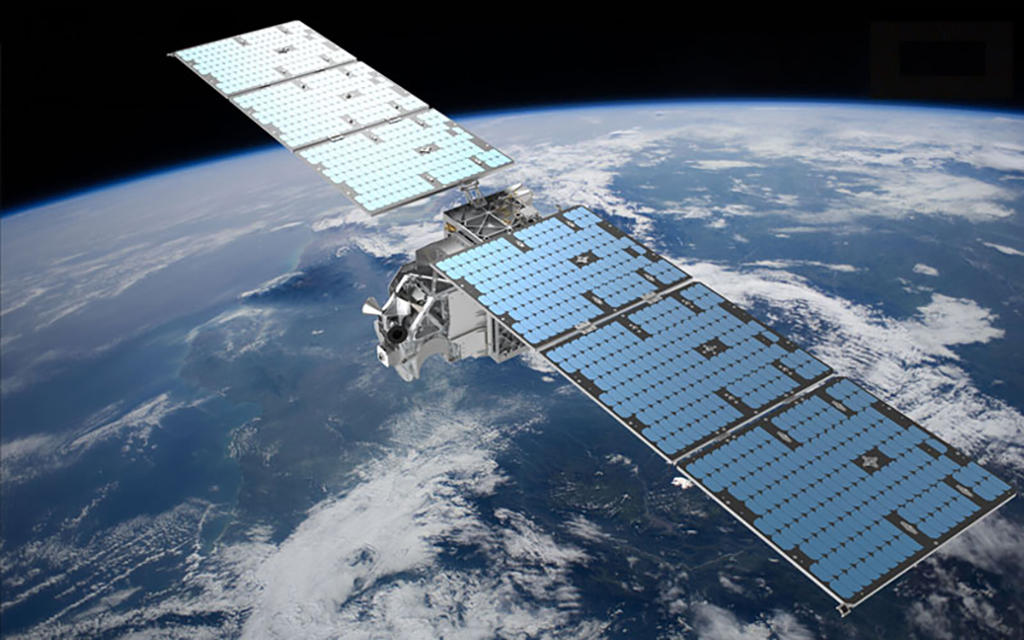
Under the agreement, Exolaunch will oversee launch capacity management, payload integration, and launch campaign execution for auxiliary rideshare payloads hosted alongside the primary spacecraft. The joint mission is scheduled to launch aboard a SpaceX Falcon 9 rocket no earlier than the fourth quarter of 2028.
To support payload mounting and structural requirements, Exolaunch will deploy a custom-configured instance of its universal modular EXOtube launch adapter. The adapter’s flexible architecture will mount the GRACE-C twin satellite stack and its primary separation system on top while accommodating secondary rideshare satellites within its internal volume.
The GRACE-C mission represents the operational successor to the GRACE and GRACE-Follow-On (GRACE-FO) climate research missions. Jointly led by NASA and the German Space Agency at DLR, the two-satellite constellation will monitor monthly variations in Earth’s gravitational field to track global water distribution. The resulting measurements measure changes in ice sheets, glaciers, groundwater levels, soil moisture, and sea level variations to maintain continuity in climate data records.
“Our contribution to the GRACE-C launch demonstrates how Exolaunch creates value for both flagship missions and the wider satellite community,” said Dr. Robert Sproles, CEO of Exolaunch. “By combining launch capacity management, deployment technologies, integration services and our modular EXOtube launch adapter, we can deliver an efficient solution for GRACE-C while opening up valuable access to orbit for satellite operators through our rideshare program.“
The contract expansion coincides with growth across Exolaunch’s commercial launch manifests, which include the Exo-1 and Exo-2 dedicated rideshare missions scheduled for 2027 and 2028. The company is also undergoing an acquisition by private equity firm EQT, aimed at funding further international expansion and technology development across its satellite separation and adapter product lines.
Initial integration activities for the secondary rideshare slots will take place at Ex
