

NASA said on July 31 that it had run a 1.2 percent scale model of SpaceX’s Super Heavy Version 3 booster through the Unitary Plan Wind Tunnel at Ames Research Center, from Mach 0.2 to Mach 1.4 in the transonic leg and Mach 1.55 to Mach 2.5 in the supersonic one. The runs were made in late 2025. The data feeds the flight software that will guide the booster back through the atmosphere and the load analysis that says whether the structure holds. “The unsteady pressure data helps engineers understand the environment around the rocket as it re-enters Earth’s atmosphere,” said Manish Mehta, the discipline lead engineer for the Human Landing System plume and aero environments team at NASA’s Marshall Space Flight Center. The director of the center that owns the tunnel gives the first talk of the second day at Silicon Valley Space Week.
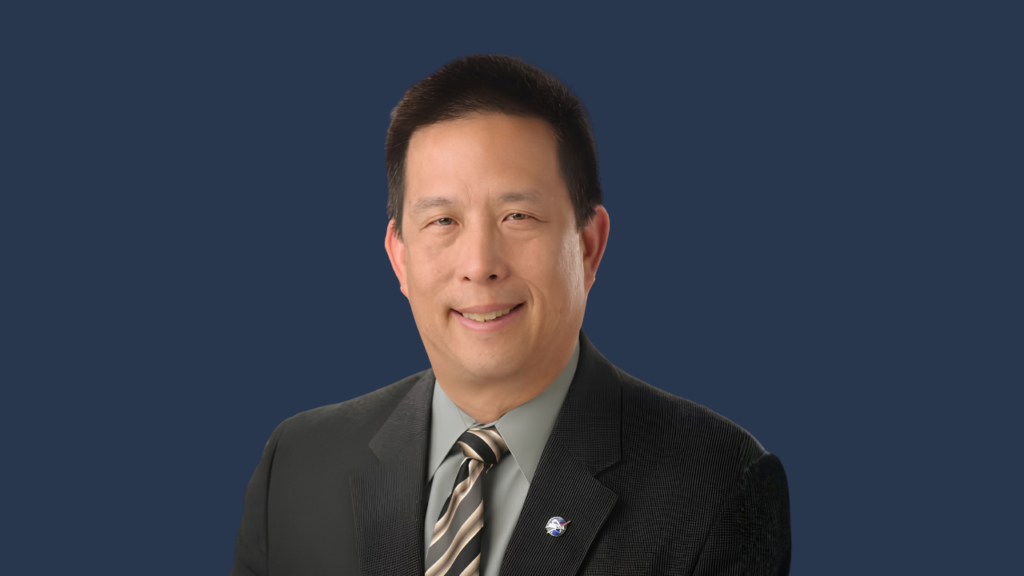
Dr. Eugene L. Tu has been Center Director of NASA’s Ames Research Center at Moffett Field since May 2015. Before that he was director of Exploration Technology at Ames, running four research and development divisions that included two of the agency’s critical infrastructure assets. He earned a bachelor’s degree in mechanical engineering from the University of California, Berkeley, in 1988, and a master’s and a doctorate in aeronautics and astronautics from Stanford University in 1990 and 1996. He is an Associate Fellow of the American Institute of Aeronautics and Astronautics. He received the NASA Outstanding Leadership Medal in 2000 and Presidential Rank Awards as a Meritorious Executive in 2009 and a Distinguished Executive in 2020.
The program frames the talk as what Ames will de-risk for industry, and the Super Heavy runs are a recent example of the center’s hardware being put to that use. They also show the shape of the arrangement. The testing was done for NASA’s Human Landing System program, under a contract NASA holds with SpaceX, in support of an Artemis III mission that no longer resembles the one originally planned. NASA Administrator Jared Isaacman overhauled the lunar campaign in February, and the agency has since detailed Artemis III as a low Earth orbit demonstration rather than a landing. What the talk’s title leaves open is what a company that is not already a NASA contractor gets, and on what terms. A wind tunnel booked against a federal program is a different proposition from one a startup can schedule. The same week, the commercial side of SpaceX is a separate question entirely, one a Tuesday panel takes up after its first quarterly report as a public company.
Tu speaks on Wednesday, October 28, from 8:45 a.m. to 9:00 a.m. in the Hahn Auditorium at the Computer History Museum in Mountain View. The program lists no interviewer and no other speaker. Fifteen minutes is the whole slot, and it runs alongside breakfast in the Grand Hall. At 9:00 the same room turns to sovereign constellations and the fragmenting market, a panel on what Europe’s and China’s government-backed networks do to American companies.
Silicon Valley Space Week runs Tuesday, October 27 through Thursday, October 29 at the Computer History Museum, with Satellite Innovation across the first two days and the MilSat Symposium across the last two. Tu’s keynote is the first talk on the Wednesday program. The Artemis III demonstration those wind tunnel runs support is scheduled for 2027.
