

On Sept. 20, 2026, defense prime contractor Northrop Grumman secured a award from the U.S. Space Force to design and construct a prototype satellite for the Geosynchronous Space Situational Awareness Program Hybrid Operations and Resilient Technology – Responsive (GHOST-R) mission.
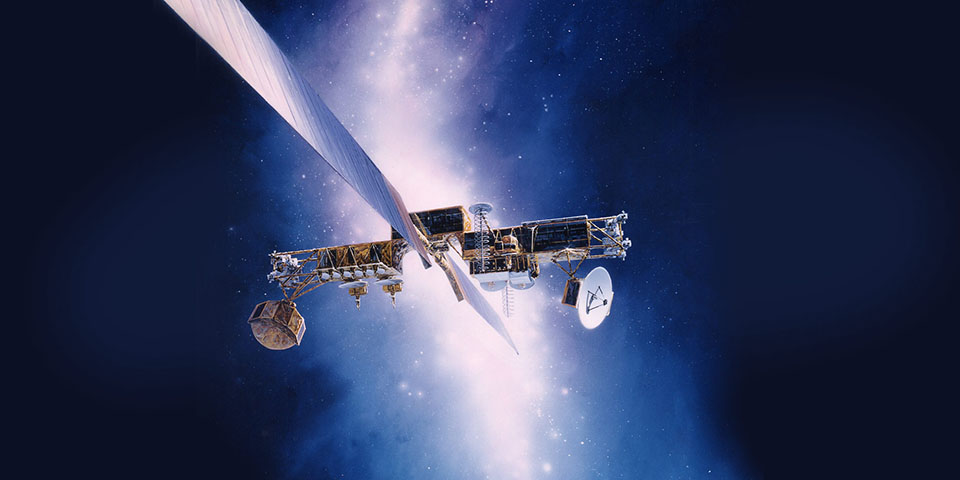
The space domain awareness program focuses on monitoring, tracking, and characterizing spacecraft and orbital debris across geosynchronous Earth orbit (GEO).
Program History and Geosynchronous Surveillance Context
The GHOST-R award builds upon established U.S. Space Force space domain awareness capabilities, including the operational Geosynchronous Space Situational Awareness Program (GSSAP) constellation. While baseline GSSAP satellites perform rendezvous and proximity operations to inspect objects operating near the geosynchronous belt, the GHOST-R initiative introduces responsive, hybrid architectures capable of rapid deployment.
Traditional military space surveillance assets require extended development cycles and custom-engineered satellite buses. Under the GHOST-R framework, the Space Force is shifting toward hybrid procurement models that blend commercial satellite bus manufacturing with specialized military optical and radio frequency sensors.
Hardware Architecture and Commercial Subsystem Integration
Northrop Grumman’s prototype satellite design leverages commercial smallsat bus manufacturing processes to accelerate assembly and testing schedules. The space vehicle incorporates high-resolution optical tracking payloads, onboard processing avionics, and software-defined communications arrays tailored for continuous object tracking in high-altitude orbits.
The prototype spacecraft is engineered to operate in or near geosynchronous orbit, roughly 35,786 kilometers above Earth’s equator. By utilizing commercial satellite production lines, Northrop Grumman reduces hardware procurement timelines while maintaining structural compatibility with standard commercial launch vehicle fairings.
The platform includes automated threat-detection algorithms to identify unexpected orbital maneuvers, secondary payload deployments, or radio frequency emissions from neighboring space assets. Integrating autonomous edge processing reduces signal transmission latency, allowing the vehicle to transmit processed domain awareness data directly to tactical defense networks.
Threat Environment and Strategic Rationale
The deployment of the GHOST-R prototype responds to increasing congestion and adversary activity in geosynchronous Earth orbit, a key orbital plane hosting strategic military communications, early-warning missile detection, and commercial broadcast satellites. Defense agencies require persistent tracking capabilities to counter unannounced close-approach maneuvers and protect critical national security assets from co-orbital threats.
Adopting proliferated, commercially derived satellite buses enhances constellation resilience by lowering unit replacement costs. Rather than relying on a small number of high-cost surveillance assets, defense planners can deploy modular prototype tranches that can be rapidly replaced or upgraded as orbital threats evolve.
Prototype Delivery Schedule
Northrop Grumman will execute platform integration, payload manufacturing, and ground segment testing at its primary space systems facilities. The prototype satellite will undergo flight qualification ahead of planned integration with a U.S. Space Force launch manifest to demonstrate responsive GEO surveillance capabilities in orbit.
