

On August 31, 2026, space situational awareness (SSA) provider NorthStar Earth & Space was selected by the European Space Agency (ESA) to lead the FALCON initiative, an international industrial and academic consortium focused on improving tracking precision for uncontrolled atmospheric reentries.
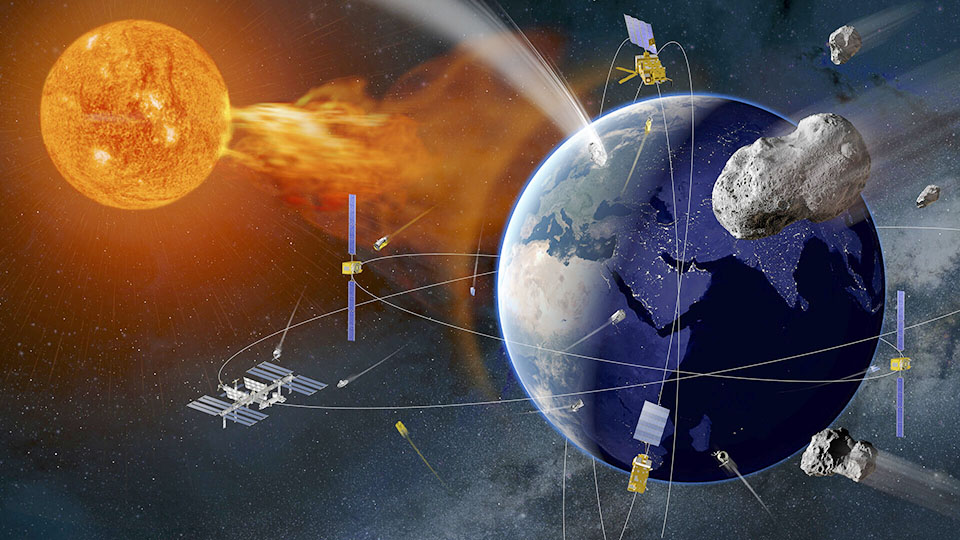
Project Architecture and SSA Specifications
The FALCON project will integrate commercial space-based optical tracking data with terrestrial sensor networks and atmospheric modeling algorithms to predict the trajectory, breakup point, and ground impact risk of decommissioned satellites and rocket upper stages.
Under the contract framework, the NorthStar-led team will develop computational models and observation pipelines designed to address key tracking parameters:
- High-Cadence Observation: Utilizing space-based optical sensors to monitor non-cooperative objects in Low Earth Orbit (LEO) during low-altitude orbital decay.
- Breakup and Fragment Modeling: Integrating thermomechanical atmospheric drag models to predict structural disintegration and fragment dispersion zones during uncontrolled reentry phases.
- Sensor Fusion: Combining space-based SSA data feeds with ESA’s ground-based radar and optical observation networks to narrow down impact prediction windows.
Program Context and Institutional Alignment
The selection advances ESA’s Space Safety program and Zero Debris initiative, which mandate precise tracking of space debris and high-mass orbital objects nearing atmospheric entry.
The FALCON award expands NorthStar’s operational SSA deployment in Europe, building on the initial orbit deployment of NorthStar’s SSA satellites built by Spire and launched via Rocket Lab and NorthStar’s foundational space system production partnership with Thales Alenia Space and LeoStella.
Integration Timeline and Operational Milestones
The FALCON consortium will initiate preliminary modeling and data-architecture integration over the next 12 months, leading toward live validation campaigns using active observation data from impending uncontrolled upper-stage reentries.
