

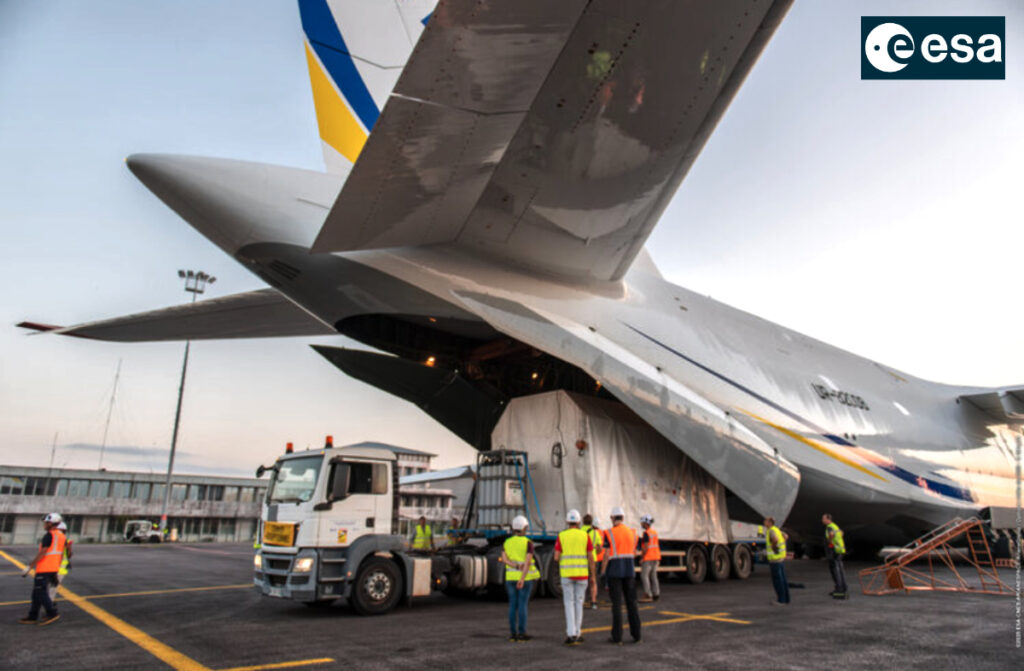
The fourth satellite for the Copernicus Sentinel-1 mission, Sentinel-1D, has arrived at Félix Eboué airport, the main airport in French Guiana. From there the spacecraft, safely stored in its protective casing, will be transported to launch preparation facilities at the European Spaceport in Kourou.
This is the start of a launch campaign that will lead up to the launch date, still to be announced. The satellite will reach its orbit on board an Ariane 6.
Meanwhile, the Sentinel-1 mission will continue to deliver a supply of radar images of Earth’s surface, performing in all weathers, day-and-night. It makes a key contribution to Europe’s Copernicus program by supporting a broad range of applications that help manage the environment, understand and tackle the effects of climate change and safeguard everyday lives.
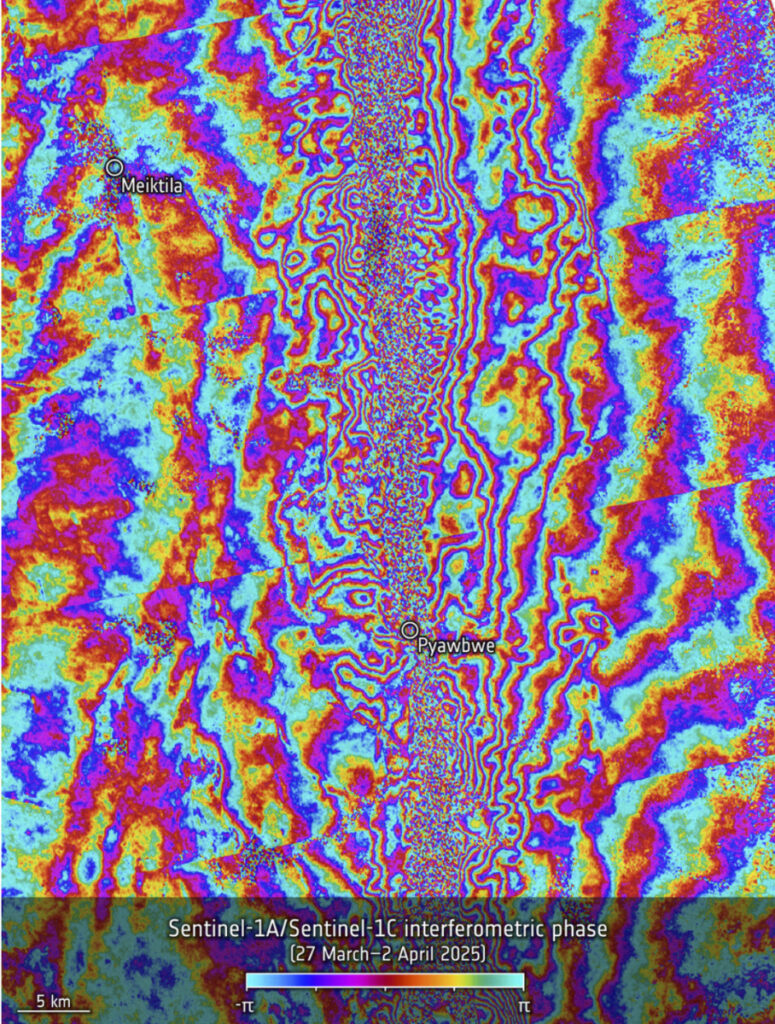
The Sentinel-1 mission has contributed data to scientific studies on a wide range of topics, including these recent examples:
- An analysis of flooding beneath the Greenland ice sheet
- Destructive fires in South America’s endangered forests
- Ground movement following a powerful earthquake
- Measuring one of the biggest ever methane releases related to human activity
Sentinel-1D will continue this work and will now undergo a series of launch preparation activities to ensure it is ready for liftoff.
The Copernicus Sentinel-1 mission is based on a constellation of two identical satellites flying in the same orbit but 180° apart, to optimize global coverage and data delivery for Copernicus.
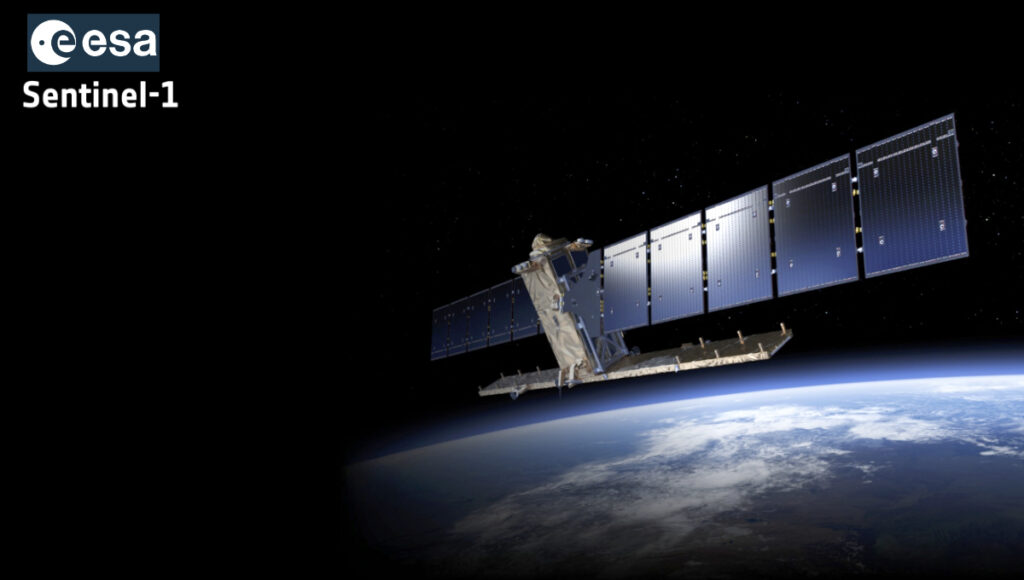
Sentinel-1A was the first satellite in the series, launched in April 2014, followed by the launch of Sentinel-1B in 2016. The Sentinel-1B mission came to an end in August 2022 after experiencing a technical fault that rendered it unable to acquire data. The satellite has been successfully de-orbited and will re-enter Earth’s atmosphere within 25 years. Sentinel-1C was launched in December 2024 to take over the role of Sentinel-1B.
Sentinel-1D will launch later this year.
Ramón Torres, Sentinel-1 Satellite Mission Director at ESA, said, “This time we are launching the fourth Sentinel-1 satellite, and last of the first generation, on an Ariane 6, which will be an important moment for the whole of our space community. To see this mission, the first of the Copernicus program family and a cornerstone of the Earth observation component of Europe’s space program, be lifted into orbit on Europe’s newest heavy lift rocket, feels quite momentous. I would like to thank and congratulate all Sentinel-1 team members and our partners who have worked so diligently to make this milestone a huge success.”
Simonetta Cheli, Director of Earth Observation Programs at ESA, said, “It is really a credit to the strong partnership between ESA and the European Commission that we are now preparing to launch another satellite for the Copernicus program. Sentinel-1 has provided vital radar data that has been used in emergency responses, in scientific studies and in climate observation – a range of use-cases that highlights just how invaluable Copernicus is to our society.”
