

• Skip to primary navigation
  • Skip to main content
  • Skip to primary sidebar
  • Skip to secondary sidebar
  • Skip to footer
  • NEWS:
  • SatNews
  • SatMagazine
  • MilSatMagazine
  • SmallSat News
  • |     EVENTS:
  • SmallSat Symposium
  • Satellite Innovation
  • MilSat Symposium
  • SmallSat Europe

SatNews

Satellite Industry Intelligence Since 1983

Subscribe
  • LATEST
  • SatNews Events
  • Magazines
  • Calendar
  • Subscribe
  • Missions & Constellations
    • Exploration & Science Missions
    • In-Orbit Servicing & Orbital Operations
    • LEO Constellations
    • Mission Autonomy & Onboard Systems
    • Mission Deployments & Manifests
    • Navigation & PNT
    • SmallSat
    • Spacecraft & Payload Technology
    View All in Missions & Constellations →
    Direct-to-Device Momentum: AST SpaceMobile Successfully Launches Giant Next-Gen BlueBird Satellites Atop SpaceX Falcon 9Direct-to-Device Momentum: AST SpaceMobile Successfully Launches Giant Next-Gen BlueBird Satellites Atop SpaceX Falcon 9
    Orbital Compute vs. Dark Skies: The Astronomy Crisis Behind SpaceX’s One-Million AI Satellite PlanOrbital Compute vs. Dark Skies: The Astronomy Crisis Behind SpaceX’s One-Million AI Satellite Plan
    Pittsburgh’s Moonshot: Astrobotic Unveils Griffin-1 Lander Ahead of Historic NASA ‘Moon Base II’ MissionPittsburgh’s Moonshot: Astrobotic Unveils Griffin-1 Lander Ahead of Historic NASA ‘Moon Base II’ Mission
    Rapid Deployment: ZeroUSV Streamlines Uncrewed Vessel Portability for Defense and Survey MissionsRapid Deployment: ZeroUSV Streamlines Uncrewed Vessel Portability for Defense and Survey Missions
  • Business
    • Contracts & Commercial Deals
    • Earnings & Financial Reporting
    • Events & Conferences
    • Funding & Venture Capital
    • Market Forecasts
    • Mergers & Acquisitions
    • Personnel Moves & Appointments
    View All in Business & Finance →
    Space Weather Forecasting: Momentus Secures Commercial Payload Contract for Vigoride-9 OSVSpace Weather Forecasting: Momentus Secures Commercial Payload Contract for Vigoride-9 OSV
    Sovereign Microgravity: Elethron and ATMOS Space Cargo Finalize Low-Earth Orbit Payload Engineering CampaignSovereign Microgravity: Elethron and ATMOS Space Cargo Finalize Low-Earth Orbit Payload Engineering Campaign
    Space-Quantum Convergence: INNOSPACE and Norma Partner for In-Orbit Quantum Computing DemonstrationsSpace-Quantum Convergence: INNOSPACE and Norma Partner for In-Orbit Quantum Computing Demonstrations
    Reusable Logistics: Dawn Aerospace Secures $25M Series B for Spaceplane and Orbital Refueling SystemsReusable Logistics: Dawn Aerospace Secures $25M Series B for Spaceplane and Orbital Refueling Systems
  • Defense
    • Counterspace & ASAT
    • Defense Budgets & Procurement
    • ISR & Reconnaissance
    • MILSATCOM
    • Missile Warning & Defense
    • National Security Programs
    • Space Domain Awareness
    View All in Military & Defense →
    Sovereign Space Expansion: Portugal Procures Dual ICEYE Radar Satellites to Broaden Maritime SurveillanceSovereign Space Expansion: Portugal Procures Dual ICEYE Radar Satellites to Broaden Maritime Surveillance
    Space Force Awards Lockheed Martin $514M to Build Resilient GPS IIIF SatellitesSpace Force Awards Lockheed Martin $514M to Build Resilient GPS IIIF Satellites
    Sovereign Electronic Warfare: Eviden and Hexadrone Partner to Integrate Tactical SIGINT onto Modular Drone FleetSovereign Electronic Warfare: Eviden and Hexadrone Partner to Integrate Tactical SIGINT onto Modular Drone Fleet
    Space Logistics Pivot: USSF Launches Challenge to Develop Multi-Orbit ‘Warehouses’ and Fuel DepotsSpace Logistics Pivot: USSF Launches Challenge to Develop Multi-Orbit ‘Warehouses’ and Fuel Depots
  • Gov
    • Export Controls & Compliance
    • International Space Agreements
    • National Space Policy
    • Space Law & Treaties
    • Space Sustainability & Debris Policy
    • Space Traffic Management / Debris Removal
    View All in Government & Regulation →
    Orbital Paperwork War: China’s Spectrum Squatting Reserves 244,000 Satellite Slots to Combat SpaceX’s LEO MonopolyOrbital Paperwork War: China’s Spectrum Squatting Reserves 244,000 Satellite Slots to Combat SpaceX’s LEO Monopoly
    The Next Arena: Why the WRC-27 Summit in Shanghai is the New Space Tech FrontlineThe Next Arena: Why the WRC-27 Summit in Shanghai is the New Space Tech Frontline
    American military space closed around one company in seven daysAmerican military space closed around one company in seven days
    Major opportunities for 2 GHz over EuropeMajor opportunities for 2 GHz over Europe
  • Launch
    • Launch Providers
    • Launch Schedule & Calendars
    • Launch Sites & Infrastructure
    • Rocket Technology & Vehicles
    View All in Launch →
    SpaceX’s Secret ‘Starfall’ Capsule Wins FAA Approval for Pacific Reentry TestsSpaceX’s Secret ‘Starfall’ Capsule Wins FAA Approval for Pacific Reentry Tests
    Breaking the TRL Bottleneck: Space Phoenix Systems Debuts Cost-Effective Space Test-and-Return ServiceBreaking the TRL Bottleneck: Space Phoenix Systems Debuts Cost-Effective Space Test-and-Return Service
    Twelve Scientific Payloads Experience Microgravity Aboard SubOrbital Express-5Twelve Scientific Payloads Experience Microgravity Aboard SubOrbital Express-5
    Amazon Leo Constellation Surpasses 330 Satellites Following Latest Atlas V LaunchAmazon Leo Constellation Surpasses 330 Satellites Following Latest Atlas V Launch
  • Software
    • Autonomous Ground Operations
    • Data Processing & AI/ML
    • Digital Twins & Modeling
    • Ground Segment & Teleports
    • Mission Planning & Simulation
    • Space Systems Software Engineering
    • Spectrum & Licensing
    View All in Software Automation & Ground Systems →
    Poland Sovereignty: GMV to Develop Core Ground Control Platform for CAMILA ConstellationPoland Sovereignty: GMV to Develop Core Ground Control Platform for CAMILA Constellation
    Software Over the Air: FatPipe Launches Acceleration Tool to Unclog Starlink and Amazon LEO LinksSoftware Over the Air: FatPipe Launches Acceleration Tool to Unclog Starlink and Amazon LEO Links
    Three LEO Operators Bet 2026 on a Supply Chain Built for 2027Three LEO Operators Bet 2026 on a Supply Chain Built for 2027
    NASA Advances Interoperable Space Networks with Successful PExT DemonstrationNASA Advances Interoperable Space Networks with Successful PExT Demonstration
  • Services & Apps
    • Climate & Environmental Monitoring
    • Disaster Response & Security Mapping
    • Earth Observation & Imaging
    • Maritime & Aviation Satcom
    • Satellite Communications
    View All in Services & Applications →
    U.S. viewership of the 2026 World Cup via satellite television is strong and easily accessibleU.S. viewership of the 2026 World Cup via satellite television is strong and easily accessible
    Space-Based Underwriting: Liberty and ICEYE Launch Satellite-Powered Parametric Wildfire InsuranceSpace-Based Underwriting: Liberty and ICEYE Launch Satellite-Powered Parametric Wildfire Insurance
    Eutelsat and Tototheo Global Forge Partnership to Deliver LEO Connectivity Across Maritime and Government SectorsEutelsat and Tototheo Global Forge Partnership to Deliver LEO Connectivity Across Maritime and Government Sectors
    Marlink Equips Groupama-FDJ Cycling Team with Hybrid Starlink and LTE NetworkMarlink Equips Groupama-FDJ Cycling Team with Hybrid Starlink and LTE Network

If You Thought Space Was Hard Try to Get Your Satellite On a Rocket

May 31, 2026

In the commercial space industry, there is a thriving ecosystem of companies that buy future payload capacity on rockets specifically to resell it on the open market.
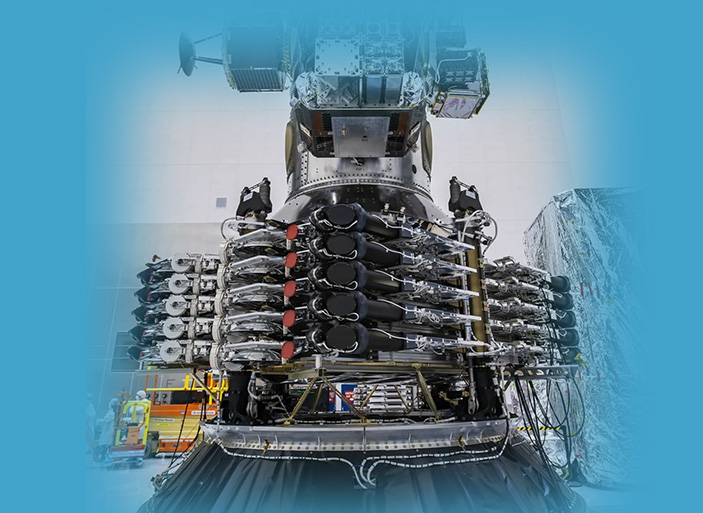

These companies are typically known as rideshare brokers, launch aggregators, or mission management providers. Their business model is very similar to how a freight forwarder or a logistics broker operates in the maritime shipping industry.

Satellite operators are increasingly feeling the squeeze between direct booking and the power of brokers, but the dynamic is shifting. for instance, while a broker could theoretically refuse to do business with an operator, “blacklisting” in the traditional sense is very difficult to maintain due to market competition and the direct-to-provider alternative.

Here is a closer look at the power dynamics at play.

Are Operators Being “Aced Out”?

The relationship between launch providers (like SpaceX) and brokers used to be highly symbiotic. SpaceX provided the rocket, and brokers dealt with the massive headache of managing 50 different small customers, integrating their hardware, and doing the paperwork.

However, as SpaceX has optimized its own operations, the dynamic has changed:

  • Direct Booking Has Become Easier: SpaceX essentially created the “Uber for Space” with its online direct-booking tool for its Transporter rideshare missions. Originally, you had to have a fairly large payload (around 200 kg) to book directly with SpaceX; otherwise, you had to go through a broker. Recently, SpaceX lowered that threshold to 50 kg. This cut out the middleman for many small satellite operators, allowing them to bypass brokers entirely.
  • The Squeeze on Brokers: Because SpaceX lowered the mass threshold, brokers have lost some of their leverage. To survive, brokers have had to pivot from just being “aggregators” to offering “extra-mile” services. They now sell specialized deployment hardware, complex orbital transfer vehicles (space tugs that take a satellite to a custom orbit after the rocket drops it off), and end-to-end regulatory compliance handling.
  • The Pricing Power of Monopolies: While direct booking is easier, SpaceX currently holds a near-monopoly on heavy-lift rideshare in the West (as competitors like Arianespace’s Vega and India’s PSLV face delays or capacity issues). Because they dominate the market, SpaceX has the power to raise prices. Over the last few years, the base price on a SpaceX rideshare has crept up from $5,000 per kilogram to over $6,000. Operators are not being “aced out” of direct negotiations, but they have very little leverage to negotiate price with the primary provider.

And About Those Operators

If a broker has a falling out with a satellite operator (due to missed payments, constantly delayed hardware, or contract disputes), they can absolutely refuse to work with them again. However, a true industry “blacklist” is highly unlikely for a few reasons:
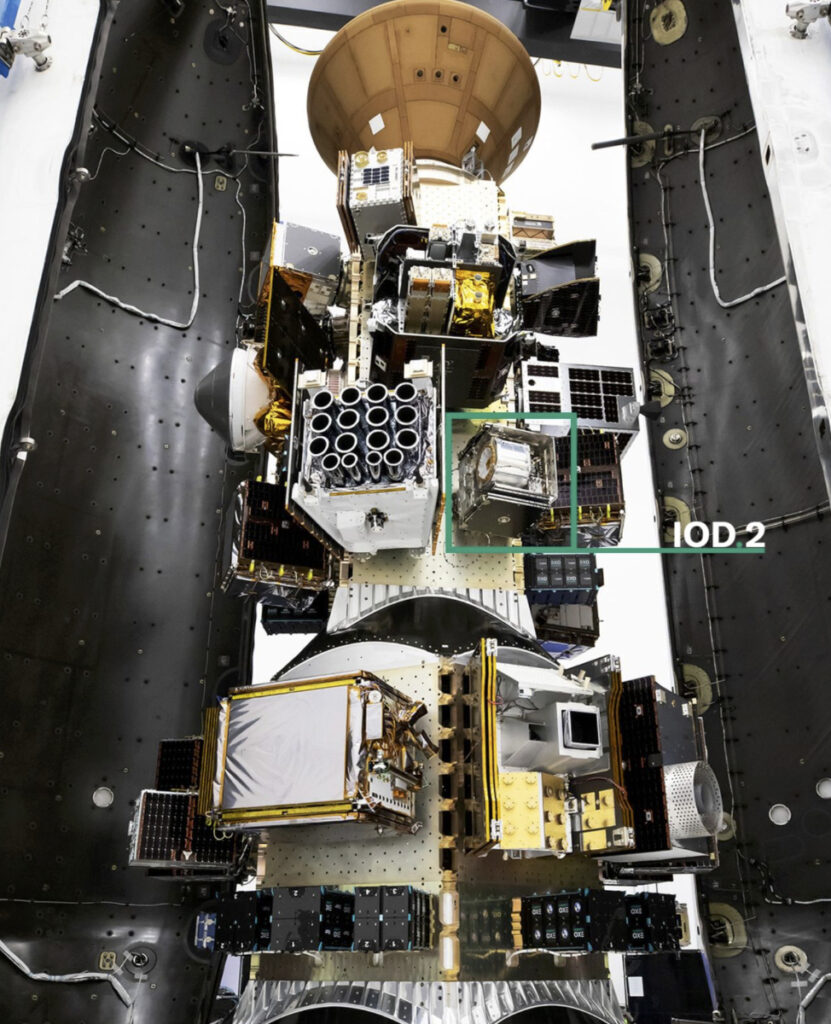
  • Fierce Competition Among Brokers: The brokerage market is crowded. Companies like Exolaunch, D-Orbit, Spaceflight (now part of Firefly), and ISISPACE are all fiercely competing to fill the capacity they bought from the launch providers. If one broker refuses to fly a customer, another broker will gladly take their money.
  • The Direct Alternative: As mentioned, if a payload is 50 kg or more, the operator can bypass the broker entirely and book directly through SpaceX’s online portal.
  • Marketplaces Provide Transparency: New digital platforms, such as RIDE! Space, act like Expedia for satellite launches. They allow operators to compare over 35 different launch vehicles and brokers simultaneously. This level of transparency makes it nearly impossible for a single broker to silently freeze an operator out of the market.

Ultimately, while brokers hold the keys to specific deployment hardware and orbital transfer services, they do not hold enough monopolistic power to permanently ground a satellite operator they dislike.

One of the most hotly debated issues in the commercial space industry right now are heavyweight contracts and bulk purchasing currently creating massive “squeezes” across the market, and it is drawing the attention of antitrust watchdogs.

However, the way the squeeze happens depends entirely on who is signing the hefty contract. Here are the three main ways aggressive contracting is currently choking out potential competition.

The Buyer Squeeze: Mega-Constellations Hoarding Rockets

When a massive buyer with incredibly deep pockets needs to launch a lot of satellites, they can literally buy out the entire market’s supply of rockets, leaving nothing for their competitors.

The most famous current example of this is Amazon’s Project Kuiper. To build its global internet constellation, Amazon bought roughly 83 upcoming heavy-lift rocket launches from United Launch Alliance (ULA), Arianespace, and Blue Origin.

  • The Squeeze: By buying up nearly all the available future launch capacity from these legacy rocket builders, Amazon effectively locked out other satellite operators. If a competing European or American satellite operator wants to launch a large payload in the next few years, they will find that ULA and Arianespace are fully booked by Amazon. This forces the competition to rely almost entirely on SpaceX (Amazon’s direct rival).

The Provider Squeeze: Locking Down the Satellite Operators

Launch providers who dominate the market can use their leverage to insert exclusionary clauses into their contracts to prevent satellite operators from taking their business to smaller, emerging rocket builders.

  • The Squeeze: There are growing antitrust concerns regarding SpaceX’s dominance. Reports have surfaced indicating that SpaceX has previously included “right of first refusal” or “right to match” clauses in its contracts with satellite operators. This means if a satellite operator finds a cheaper or more convenient launch with a smaller rival (like Rocket Lab or Firefly), they must give the dominant provider the chance to match the deal. Industry executives have argued this makes it incredibly difficult for smaller rocket companies to sign deals and catch up, as the dominant player can systematically undercut them to maintain a monopoly.

The Broker Squeeze: Cornering a Specific Orbit

A wealthy broker can buy up an entire rocket, or buy out all the capacity heading to a highly specific, high-demand orbit (like a sun-synchronous orbit that is perfect for Earth observation satellites).

  • The Squeeze: If a single broker purchases 100% of the rideshare capacity for a particular launch window, they become a localized monopoly for that specific flight. If an operator desperately needs to launch during that exact month to fulfill a government contract, they cannot go to the launch provider directly (because the rocket is “sold out”). They are forced to deal with the broker and pay whatever markup the broker demands. While the broker can’t permanently blacklist an operator from space, they can absolutely squeeze their profit margins on that specific mission.

The “Wild West” of Space Regulation

Historically, anti-competitive behavior like predatory pricing (selling launches below cost to kill competitors) or capacity hoarding would trigger immediate federal antitrust lawsuits in terrestrial industries like airlines or telecom.

However, the commercial space industry is still relatively new, and regulatory bodies like the Federal Trade Commission (FTC) are just beginning to investigate how traditional antitrust laws apply to orbital launch capacity. Until stricter regulatory frameworks are established, deep-pocketed buyers and dominant launch providers have immense power to financially starve their smaller competition.

Filed Under: Business & Finance, Launch Providers, Spacecraft & Payload Technology

Primary Sidebar

Coverage

  • Missions & Constellations
  • Business & Finance
  • Military & Defense
  • Launch
  • Software Automation & Ground Systems
  • Government & Regulation
  • Services & Applications

Most Read Stories

  • SpaceX Is Worth $1.75 Trillion. Only 7% of That Is Real.
  • SpaceX: 10,000 Launches Annually
  • American military space closed around one company in seven days
  • Analyst Projects Massive Subscription Growth for Starlink Ahead of Imminent SpaceX IPO
  • Public Capital for Multi-Planetary Infrastructure: SpaceX Unveils Record $75 Billion IPO

Secondary Sidebar

Footer


Satnews is a leading provider of satellite news, events, publications, research and other satellite industry information in both commercial and military enterprises worldwide.

Stories By Category

  • Business & Finance
  • Government & Regulation
  • Launch
  • Military & Defense
  • Missions & Constellations
  • Services & Applications
  • Software Automation & Ground Systems
  • Spectrum & Licensing
  • Startups & NewSpace Business

About Us

  • Leadership & Editorial Team
  • SatNews History
  • Free Satnews Subscription
  • SatNews Events
  • Magazines

Navigation

  • Latest Stories
  • Magazines
  • Events
  • Contact
  • Cookie & Privacy Policy for Satnews

We use cookies to ensure that we give you the best experience on our website. If you continue to use this site we will assume that you are happy with it.
x
Sign up Now (For Free)
Access daily or weekly satellite news updates covering all aspects of the commercial and military satellite industry.
Invalid email address
Notify Me Regarding ( At least one ):
We value your privacy and will not sell or share your email or other information with any other company. You may also unsubscribe at anytime.

Click Here to see our full privacy policy.
Thanks for subscribing!