

On August 12, 2026, Australian telecommunications operator Optus completed the initial phase of Project Aurora following the successful undocking of SpaceLogistics’ Mission Extension Vehicle from the Optus D3 geostationary communications satellite.
The operational milestone completes over a year of sustained on-orbit attitude control and station-keeping support supplied by the servicing craft, transitioning the program into its second phase.
The completion of Phase 1 prepares the Optus D3 spacecraft for the installation of an independent propulsion unit, which will extend the satellite’s operational life through the end of the decade.
Dual-Mission Architecture and On-Orbit Servicing Logistics
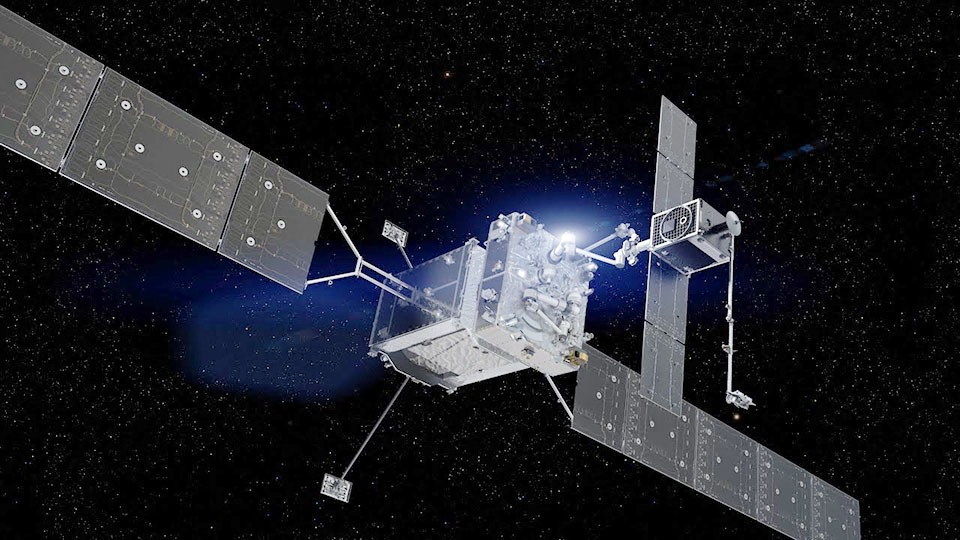
The transition to Phase 2 follows the recent launch of Northrop Grumman’s Mission Robotic Vehicle (MRV) and the Optus-designated Mission Extension Pod (MEP) aboard a SpaceX launch vehicle. Together, the two platforms form part of a commercial satellite life-extension architecture engineered to perform robotic servicing operations in geostationary orbit.
Deploying the initial Mission Extension Vehicle in May 2025 provided auxiliary propulsion and station-keeping support to Optus D3, maintaining active telecommunications service continuity while the secondary robotic vehicle and propulsion pod were prepared for launch. Following the successful undocking of the first servicing spacecraft, Optus D3 is now positioned for the rendezvous and docking phase of the mission.
Hardware Specifications and Propulsion Capabilities
The SpaceLogistics Mission Robotic Vehicle utilizes advanced robotic arms to perform high-precision mechanical operations in geostationary orbit, allowing it to service multiple client satellites over its operational lifespan. Rather than remaining permanently attached like earlier servicing craft, the MRV attaches smaller, specialized propulsion units directly to client spacecraft before uncoupling to perform subsequent missions.
The Mission Extension Pod is a low-mass propulsion augmentation system owned and controlled by Optus. Once attached to the liquid apogee engine structure of Optus D3, the pod will assume primary station-keeping and orbit-maintenance duties. The additional fuel resources provided by the MEP will extend the operational lifespan of Optus D3 by up to six years, securing commercial capacity into the 2030s.
“The successful undocking of the MEV from Optus D3 marks the completion of the first phase of Project Aurora and is a significant achievement in our mission to increase the resilience of our sovereign satellite fleet,” stated Harvey Wright, Executive General Manager of Satellite at Optus. “Combined with the recent successful launch of the MRV and Optus’ Mission Extension Pod, we are continuing to break new ground in satellite life extension in partnership with Northrop Grumman. These milestones demonstrate how innovative technologies can maximise the value of existing satellite assets while supporting long-term service continuity for customers.”
“Our decade of proven experience in satellite servicing shows that mission-extension technology is here,” added Cassie Wong, Director of Logistics and Servicing at Northrop Grumman. “This capability shows us a vision of how we can transform the industry as we know it today, with technologies that redefine the boundaries of resiliency and flexibility for in-space satellites.”
Fleet Continuity and Targeted Docking Schedule
Extending the operational lifespan of Optus D3 maintains core transmission capacity and network flexibility across Optus’s broader satellite fleet, supporting telecommunications, broadcasting, and government end-users across Australia and the Asia-Pacific region.
Following the successful launch and orbital positioning of the MRV and MEP payload stack, Northrop Grumman and Optus controllers are managing orbit-raising maneuvers and system checkouts. Rendezvous, proximity operations, and final installation of the Mission Extension Pod onto the Optus D3 spacecraft are scheduled to occur in late 2027.
