

ATHENS, Greece – August 3, 2026 – To expand national space infrastructure and domestic industrial capabilities, Greece’s Ministry of Digital Governance and Artificial Intelligence unveiled the Hellas-Space 2.0 national space programme on August 3, 2026, allocating a total budget of €350 million.
The capital investment is administered through the General Secretariat of Telecommunications and Post in coordination with the European Space Agency (ESA), drawing primary financial backing from the EU Recovery and Resilience Fund Greece 2.0.
Program Structure and Satellite Fleet Specifications
Hellas-Space 2.0 acts as the core pillar of Greece’s long-term space strategy, establishing dedicated funding for space infrastructure procurement, satellite data integration, domestic aerospace research, and technical workforce development.
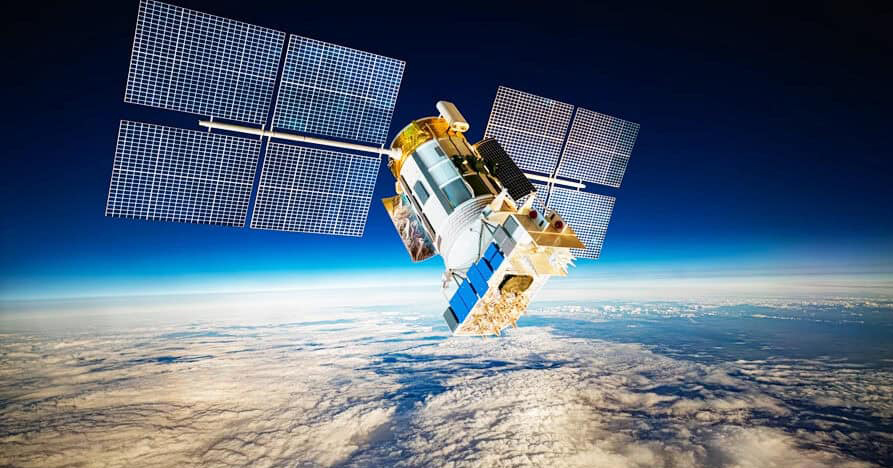
The operational architecture centers on the procurement and deployment of very high-resolution optical satellites to deliver precise geospatial intelligence. The constellation will also incorporate thermal imaging satellites specifically tailored for civil protection missions, wildfire detection, environmental monitoring, and maritime domain awareness across the Mediterranean region.
Building on SmallSat and Ground Segment Infrastructure Heritage
The capital deployment builds directly upon recent Hellenic space investments executed under earlier phases of the national strategy. In recent years, the ministry financed the ERMIS CubeSat constellation in partnership with OQ Hellas and the National and Kapodistrian University of Athens to validate secure space connectivity, Internet of Things routing, and 5G non-terrestrial networks.
These space segment assets complement newly commissioned ground segment hardware, including the operational activation of the Holomondas Optical Ground Station, which enables high-speed laser communications downlinks for sovereign orbital payloads.
Procurement Execution and Deployment Timeline
Following the official program announcement, ESA and the General Secretariat of Telecommunications and Post will issue open industrial tenders for payload development and spacecraft assembly. Prime contract awards and target launch windows for the initial thermal imaging and geospatial satellite batches will be finalized as procurement frameworks open throughout late 2026 and 2027.
