

On August 10, 2026, a Long March 7A rocket carrying the ChinaSat 4B communications satellite exploded approximately 85 seconds after liftoff from the Wenchang Space Launch Site in Hainan province.
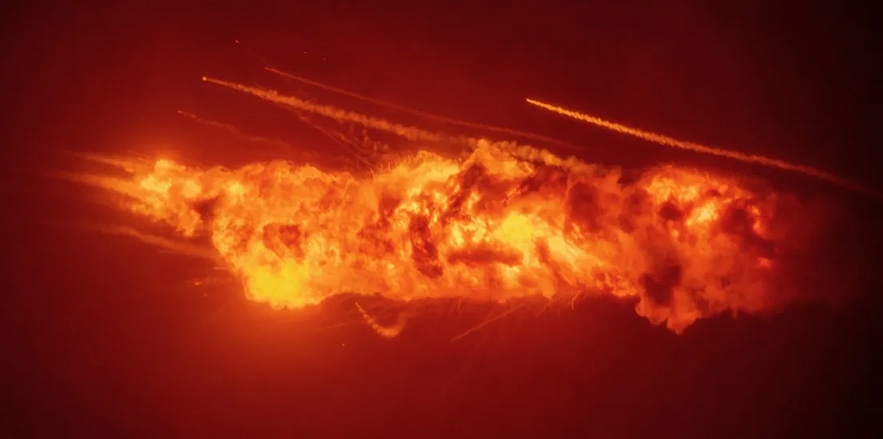
Launched by the state-owned China Aerospace Science and Technology Corporation (CASC) at 12:00 UTC (8:02 p.m. local time), the vehicle suffered a catastrophic in-flight break-up during its main stage ascent, resulting in a total loss of the rocket and payload.
Video footage and visual tracking confirmed a large explosion and debris cloud in the upper atmosphere well before first-stage burn completion.
Vehicle Specifications and Launch Architecture
The Long March 7A is a three-stage, liquid-fueled launch vehicle designed to transport up to seven metric tons of payload to Geostationary Transfer Orbit (GTO). The launcher measures 60.1 meters in length and utilizes four strap-on boosters alongside a kerolox core stage, supplemented by a modified cryogenic upper stage derived from the Long March 3B series.
Today’s mission marked the 18th operational flight of the Long March 7A variant. As previously reported by SatNews following China’s launch of the Shiyan-9 satellite in March 2021, the rocket’s inaugural launch in March 2020 also ended in failure due to an engine anomaly during first-stage separation. However, today’s incident occurred significantly earlier in the flight profile, prior to the scheduled separation of the four side boosters and core stage, which typically takes place nearly three minutes into flight.
Anomaly Timeline and Investigation Outlook
The explosion destroyed the ChinaSat 4B payload, a geostationary communications satellite intended to expand broadcasting and data transmission services for operator China Satellite Communications (ChinaSat).
CASC has not yet issued a formal technical statement regarding the root cause of the structural failure or propulsion anomaly. A formal failure investigation board is expected to review telemetry, propulsion pressure logs, and optical tracking data to isolate the failure mechanism before clearing remaining Long March 7A vehicles for flight operations.
