

Following the recent loss of the BlueBird 7 satellite, AST SpaceMobile has announced plans to launch its next three BlueBird spacecraft aboard a SpaceX Falcon 9 rocket, currently targeted for mid-June 2026.
The shift in launch providers comes as the company seeks to maintain its deployment momentum for space-based cellular broadband despite the setback of the Blue Origin New Glenn NG-3 mission on April 19, which left its previous payload in an unusable off-nominal orbit.
Response to the New Glenn Launch Anomaly
The June mission is a strategic recovery effort following the grounding of Blue Origin’s New Glenn vehicle by the Federal Aviation Administration (FAA). The April failure, attributed to an upper-stage engine thrust deficiency, resulted in the BlueBird 7 satellite failing to reach its intended trajectory and eventually burning up upon reentry.
By securing a near-term slot with SpaceX, AST SpaceMobile aims to fulfill its commitment to deliver “Supplemental Coverage from Space” (SCS) to its global partners. The company has over $1.2 billion in contracted revenue commitments and is under pressure to reach its goal of 45 to 60 operational satellites by the end of 2026 to provide continuous commercial service.
BlueBird Block 2 Technical Specifications
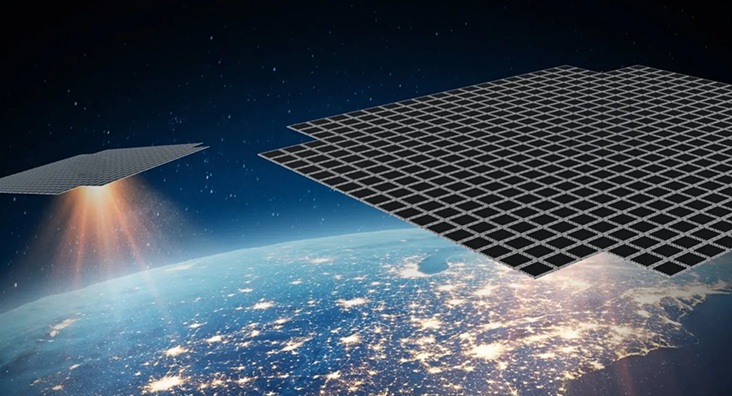
The three satellites scheduled for the June launch are “Block 2” units, featuring the largest commercial phased-array antennas ever deployed in Low Earth Orbit (LEO).
- Aperture: Approximately 2,400 square feet (223 square meters) per satellite.
- Processor: Proprietary AST5000 application-specific integrated circuit (ASIC).
- Throughput: Capable of supporting up to 120 Mbps peak data speeds.
- Compatibility: Designed to connect directly to standard, unmodified 4G and 5G smartphones.
Timeline for Direct-to-Device Commercial Service
The successful deployment of these three assets is critical for AST SpaceMobile’s competitive standing against SpaceX’s Starlink Direct-to-Cell service. While the New Glenn failure introduced a delay in the company’s “anchor” capacity, the upcoming Falcon 9 flight will serve as a validator for the company’s Midland, Texas, production line, which is now operating at a 95% vertical integration rate.
Following the June deployment, AST SpaceMobile is expected to provide a revised operational roadmap for the remainder of 2026, including the status of its multi-launch agreement with Blue Origin once the New Glenn is cleared for return to flight.
