

On August 13, 2026, commercial lunar intelligence provider Lunar Station Corp announced the integration of NASA environmental datasets and software models into its MoonStation analytical platform.
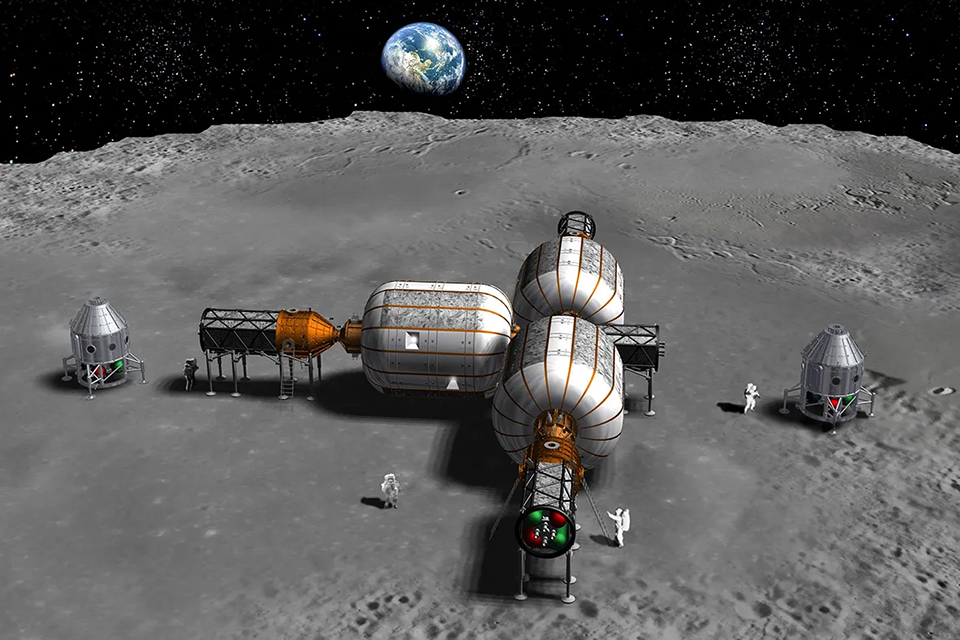
By converting public orbital and surface telemetry into predictive spatial intelligence, the company enables commercial lander operators, mining developers, and communications providers to analyze surface terrain, thermal flux, radiation levels, and resource accessibility prior to mission execution.
The initiative targets environmental uncertainty and surface operational risks facing upcoming commercial lunar payloads.
Analytical Engine Architecture and Dataset Integration
The MoonStation platform aggregates multi-mission lunar datasets supplied by NASA’s Lunar Reconnaissance Orbiter (LRO), Moon Mineralogy Mapper, and neutron spectrometer instruments. The software platform applies machine learning algorithms to high-resolution digital elevation models (DEMs) to generate localized simulations of surface conditions. Key technical capabilities within the processing engine include:
- Volatile and Ice Deposit Mapping: Identifies surface and subsurface water-ice concentrations across permanently shadowed regions (PSRs) at the lunar south pole.
- High-Resolution Topographic Modeling: Simulates slope angles, boulders, and regolith density to assist autonomous lander hazard avoidance systems.
- Solar Exposure and Thermal Profiling: Maps continuous sunlight availability and extreme temperature variations across the 354-hour lunar night to optimize surface power arrays.
- Radiation Risk Simulation: Computes galactic cosmic ray (GCR) and solar particle event (SPE) exposure levels to guide structural shielding design for long-duration surface habitats.
By processing raw orbital sensor data into standardized geospatial layers, the software reduces early-stage mission modeling costs for commercial space companies.
In-Situ Resource Utilization and Cislunar Commercial Growth
The deployment of commercial lunar analytical tools aligns with public and private sector investments in In-Situ Resource Utilization (ISRU). The capability builds upon broader shifts across the cislunar economy, such as NASA shifting focus toward a permanent lunar south pole base and commercial ventures like General Galactic developing ISRU water-powered propulsion networks.
Accurate modeling of surface water-ice distribution is required for harvesting hydrogen and oxygen to manufacture life support consumables and rocket propellants. By supplying standardized spatial intelligence, Lunar Station Corp aims to establish the analytical foundation for commercial power distribution, surface logistics, and telecommunications networks across cislunar space.
Platform Deployment and Service Roadmap
Lunar Station Corp will continue expanding the MoonStation analytical platform throughout late 2026, incorporating real-time data feeds from incoming Commercial Lunar Payload Services (CLPS) missions. Updated software modules for surface traffic coordination, power station site selection, and subterranean lava tube mapping will be deployed to commercial and institutional clients ahead of scheduled surface landing campaigns in 2027.
