

On August 12, 2026, industry reports highlighted the resilience and growth of California’s satellite manufacturing sector despite high-profile corporate headquarter relocations to states such as Texas, Florida, and Colorado.
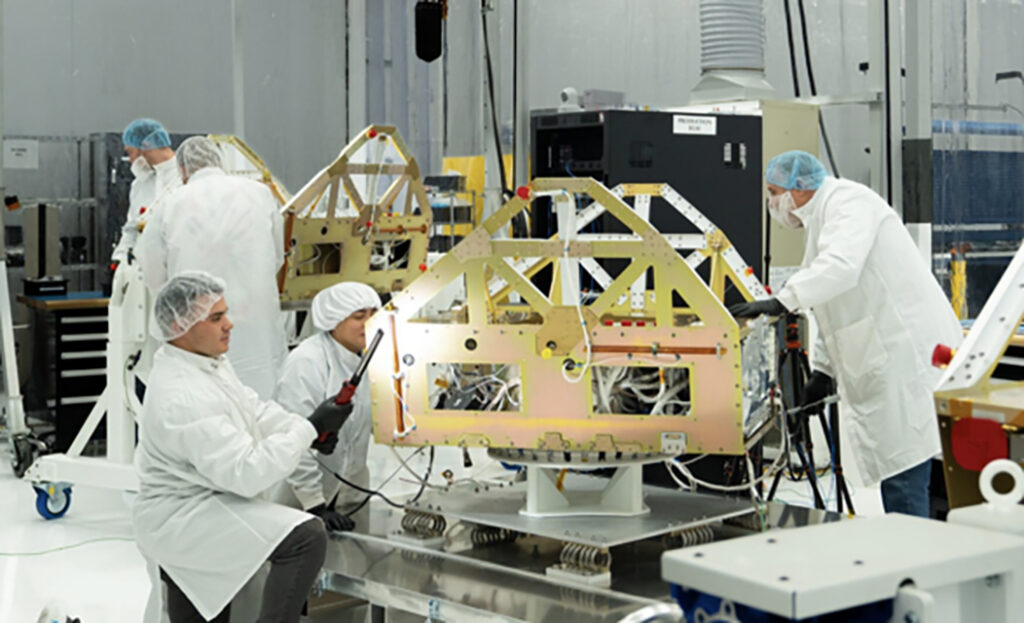
While high living costs, regulatory requirements, and tax incentives in rival aerospace hubs led prominent executives—including SpaceX CEO Elon Musk—to shift corporate registrations and operational facilities out of the state, California remains a primary hub for spacecraft engineering, component production, and advanced payload assembly.
The continued expansion of small satellite manufacturing facilities across Southern California and the San Francisco Bay Area underscores the state’s entrenched role as an industrial foundation for commercial and defense satellite constellations.
Regional Migration Trends and Regulatory Pressures
Over the past five years, state-level economic incentives offered by Texas, Florida, Colorado, and Washington attracted major capital investments from space hardware prime contractors. Corporate relocations were primarily driven by lower tax structures, streamlined environmental permitting, and state-backed manufacturing grants. SpaceX’s relocation of its corporate incorporation and primary launch development operations to Starbase, Texas, served as a high-profile example of this shift.
However, corporate office relocations have not resulted in a wholesale dismantling of California’s aerospace industrial footprint. Major aerospace entities continue to maintain large-scale manufacturing plants, research labs, and engine test facilities within the state, leveraging deep supply chains established over decades of defense and civil space contracting.
Supply Chain Infrastructure and Production Facility Density
The persistence of California’s satellite sector is demonstrated by new manufacturing facility openings across both established aerospace corridors and emerging technology hubs. Rather than contracting, total square footage dedicated to satellite bus assembly, payload integration, and environmental testing across California has grown.
For example, high-volume satellite broadband production remains heavily concentrated at SpaceX’s satellite manufacturing complex in Hawthorne, California, where Starlink satellite buses and optical inter-satellite links are produced at scale. Simultaneously, emerging commercial constellation developers are expanding local production lines, as demonstrated by Xona Space Systems opening an in-house satellite manufacturing plant in Burlingame, California to support its high-precision positioning, navigation, and timing (PNT) satellite fleet.
The state’s industrial network includes specialized suppliers providing space-qualified microelectronics, optical terminals, composite structures, and propulsion subsystems, allowing spacecraft integrators to source components locally without relying on extended international supply lines.
Talent Concentration and Defense Industrial Rationale
The primary factor anchoring satellite manufacturing in California is the state’s concentration of specialized aerospace engineering talent. The presence of major research universities, NASA’s Jet Propulsion Laboratory, Space Systems Command at Los Angeles Air Force Base, and established defense contractors maintains a deep pool of skilled systems engineers, software developers, and cleanroom technicians.
Additionally, proximity to defense innovation organizations—such as the Defense Innovation Unit (DIU) in Silicon Valley—drives ongoing contract awards for small satellite developers building proliferated Low Earth Orbit architectures for military intelligence, surveillance, and reconnaissance (ISR) applications. Commercial satellite startups frequently establish their initial prototyping and low-rate initial production (LRIP) lines in California to remain close to venture capital funding sources and technical design teams before evaluating out-of-state mass production facilities.
Sector Outlook and Distributed Manufacturing Models
The coexistence of California’s satellite manufacturing cluster with expanding aerospace hubs in Texas, Florida, and Colorado points toward a distributed national production model. While high-volume launch operations and heavy rocket assembly are increasingly centered near dedicated launch ranges in coastal Florida and southern Texas, high-density payload engineering, specialized component fabrication, and complex satellite bus integration remain firmly rooted in California.
As commercial mega-constellations and sovereign defense networks drive demand for rapid satellite replenishment through late 2026 and 2027, California’s satellite manufacturing ecosystem is positioned to maintain steady output, balancing regional cost pressures with high technical specialization.
