

On Thursday, October 1, 2026, British Earth observation company SatVu launched its HotSat-3 thermal imaging satellite aboard SpaceX’s Transporter-18 rideshare mission from Vandenberg Space Force Base in California.
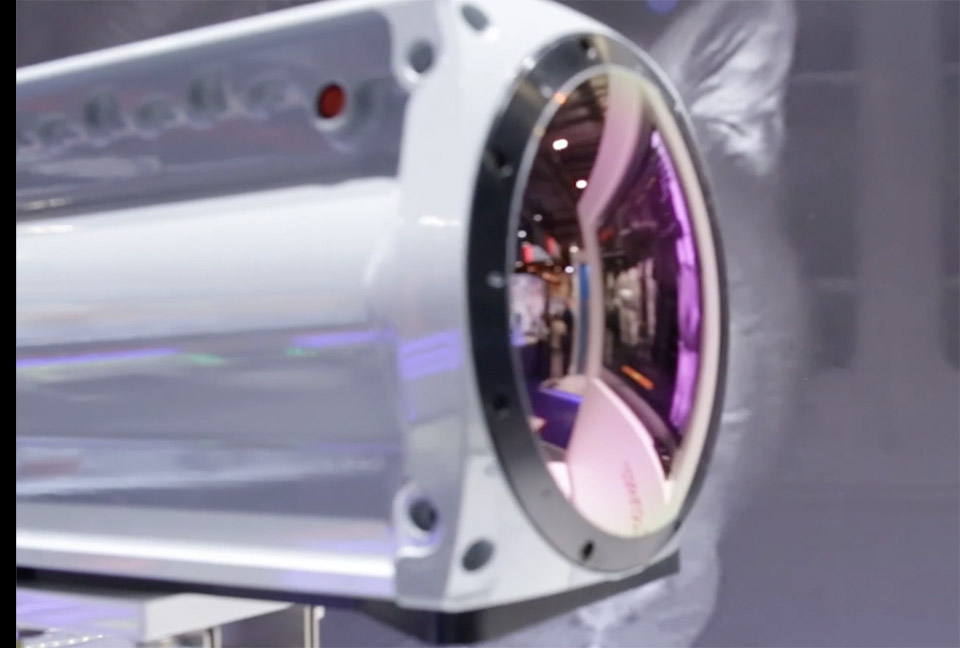
The spacecraft carries an ultra-sensitive infrared detector developed by aerospace contractor Leonardo at its Southampton facility, returning British thermal sensor technology to orbit to map heat emissions from buildings and infrastructure worldwide.
Thermal Constellation Lineage and Operational Heritage
The launch marks the third spacecraft in SatVu’s planned commercial thermal imaging fleet. The mission builds upon technology pathfinders demonstrated when SatVu released first light thermal imagery from HotSat-1 in 2023, followed by HotSat-2 in March 2026.
HotSat-3 doubles the company’s active collection capacity after SatVu initiated commercial operations for HotSat-2 earlier this year. Previous imaging campaigns demonstrated the utility of spaceborne thermal sensing, tracking localized refining in Cuba, monitoring operational adjustments at major petroleum processing hubs in India, and verifying continuous output at liquefied natural gas facilities in Australia.
SuperHawk Infrared Detector Architecture
At the core of the satellite’s payload is Leonardo’s SuperHawk infrared detector, engineered at the company’s Southampton site. Rather than attempting optical penetration through physical structures, the mid-wave infrared sensor detects radiated thermal energy escaping from industrial rooftops, walls, pipelines, and exterior ventilation ducts. Because the system registers emitted heat rather than reflected light, it conducts imaging passes continuously through day and night, converting subtle surface temperature variations into detailed thermal maps.
Executive Perspective on Thermal Intelligence
Leonardo leadership underscored the intelligence value of mapping invisible thermal dissipation from space.
“Every building leaves a thermal footprint,” stated Matthew Hicks, Space Capability Manager at Leonardo UK. “With this technology, we can read those signals in remarkable detail, turning invisible energy into concrete insights. We’re detecting the heat buildings give off, and that tells a story about how they’re being used. It’s a completely new way of understanding activity on Earth, developed right here in Southampton.”
Commercial Service Delivery and Constellation Expansion
SatVu provides subscription-based thermal monitoring to commercial enterprises, energy operators, and government defense customers seeking independent verification of industrial activity, energy efficiency, and emissions. Following orbital commissioning, SatVu plans to launch additional satellites to expand global revisit frequency.
