

Impulse Space has successfully closed a $500 million Series D funding round, co-led by 137 Ventures and BANNER VC, with additional participation from Founder’s Fund, Lux Capital, and Linse Capital.
Scaling the Post-Launch Economy
This massive capital injection brings the in-space mobility company’s total funding to over one billion dollars. As launch costs have decreased and flight frequency has increased over the past decade, a new bottleneck has emerged in the orbital economy: the inability of spacecraft to move quickly, precisely, and affordably once they are dropped off by a launch vehicle.
Impulse Space is utilizing this new capital to directly address this constraint by expanding its manufacturing capacity and scaling its workforce to build purpose-built mobility infrastructure, including specialized transfer vehicles and orbital propulsion systems.
A Flight-Proven Fleet and Expanding Propulsion Architecture
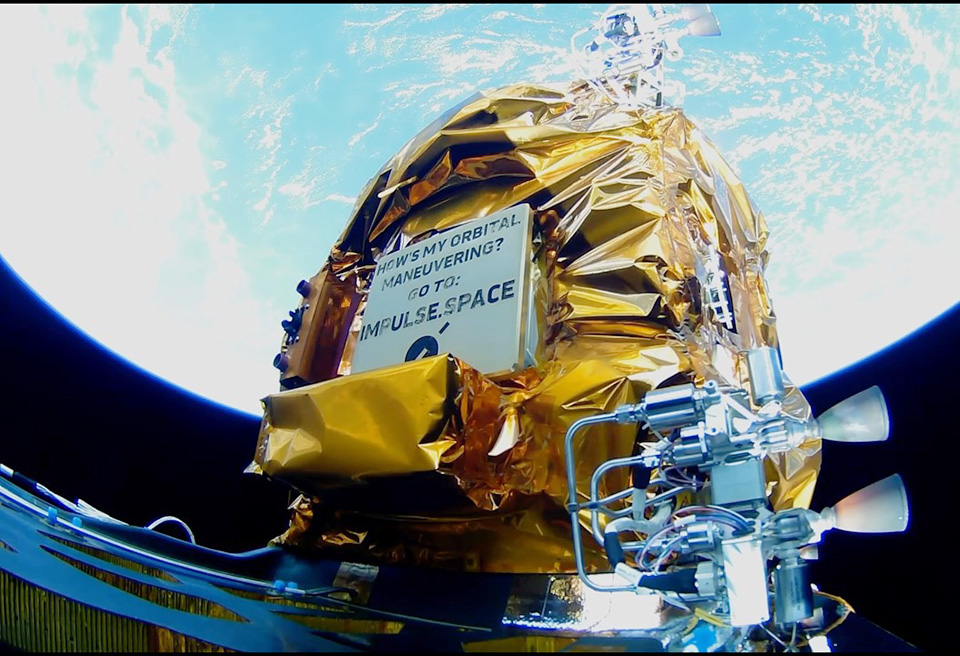
The company has already proven its core technology on orbit with its Mira spacecraft, which executes precision maneuvering, rapid orbital transfers, and complex rendezvous and proximity operations.
Looking forward, the manufacturer is preparing for the 2027 inaugural flight of Helios, a high-energy kick stage designed to deliver payloads to distant orbits much faster and more affordably than traditional methods. To support these vehicles and its commercial Caravan rideshare program, Impulse is actively developing a tailored family of propulsion systems. This includes the Saiph thruster for precision repositioning, the Deneb engine for high-energy long-distance transport, and the throttleable Rigel system designed for responsive maneuvers and potential lander applications.
Aggressive Expansion to Meet Growing Demand
The Series D round reflects growing investor confidence that post-launch mobility is a critical strategic layer required for the next phase of the commercial, civil, and defense space sectors. To meet the surging demand for these post-launch capabilities, Impulse Space has more than doubled its headcount over the past year and currently has over two hundred open roles spanning avionics, autonomy, spacecraft systems, and mission operations.
To support this rapid scaling without compromising execution speed, the aerospace manufacturer has significantly expanded its physical footprint, opening new facilities in Redondo Beach, California; Boulder, Colorado; and Washington, D.C., alongside a rapidly growing dedicated testing enviro
