

On August 14, 2026, space consulting and market intelligence firm Novaspace published its latest In-Orbit Services Markets report, forecasting that emerging in-orbit satellite services will generate approximately $3 billion (€2.59 billion) in cumulative service revenues over the coming decade.
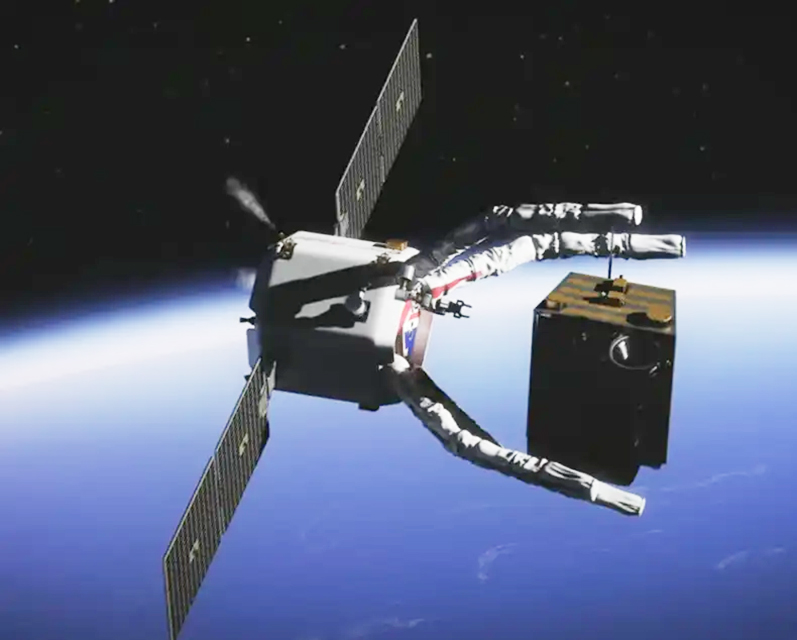
The report highlights an operational transition across the satellite communications and space logistics industries as government agencies and commercial operators adopt satellite life-extension, refueling, and orbital maneuver services to enhance fleet resilience.
The findings build upon earlier market research published by Novaspace analyzing space safety and sustainability drivers, which identified growing orbit congestion and debris mitigation requirements as primary drivers for commercial space situational awareness and servicing technologies.
Revenue Distribution and Service Segment Metrics
Novaspace’s market analysis segments the $3 billion cumulative market opportunity across several core operational capabilities:
- Satellite Refueling: Projected to become the largest single revenue-generating segment, accounting for $1.2 billion in service market value over the 10-year forecast period. Demand is primarily driven by defense agencies adopting Dynamic Space Operations (DSO) to maintain high orbital maneuverability.
- Backpacking Life-Extension: Estimated to generate $860 million in cumulative revenue, utilizing auxiliary propulsion pods and servicing vehicles to manage station-keeping for geostationary communications satellites.
- Active Debris Removal and Orbital Transfer: Accounting for the remaining segment value, supported by government-backed demonstration missions and commercial upper-stage logistics services.
“Growing congestion, competition, and uncertainty in space are pushing satellite operators to seek greater operational resilience and flexibility,” stated Gabriel Deville, Manager at Novaspace. “The sector is developing in-orbit services to address these challenges, but the market remains at varying levels of maturity, ranging from concepts to early commercial operations.”
Defense Logistics Alignment and Commercial Scalability
According to the report, national defense and security organizations serve as the primary catalyst for market commercialization by funding early-stage technological maturity and establishing predictable procurement pipelines. As commercial satellite refueling interfaces and standardized docking mechanisms achieve flight qualification through late 2026 and 2027, the sector is expected to expand from isolated demonstration flights into a structured space logistics ecosystem serving low Earth orbit and geostationary networks.
