

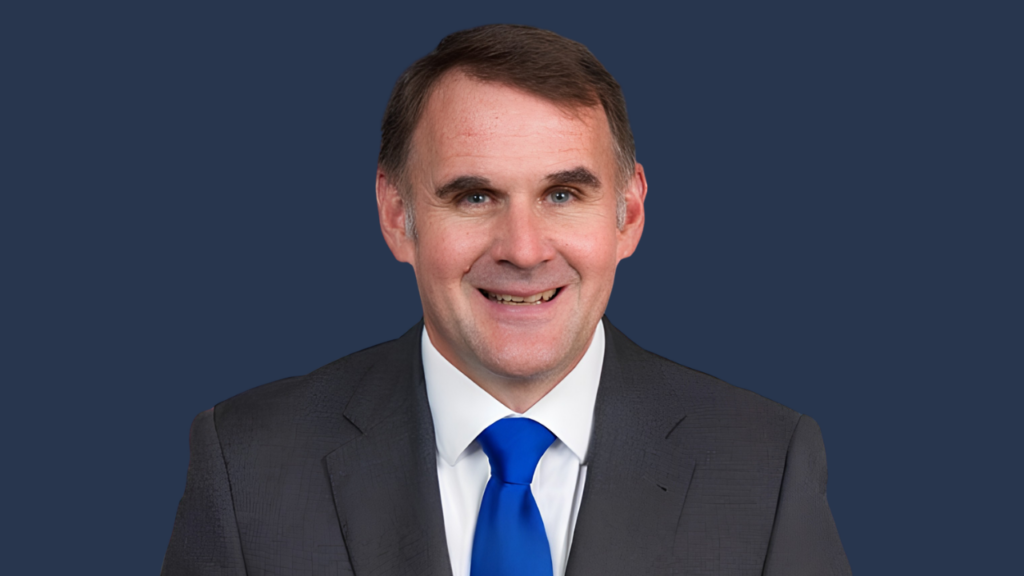
On June 24, U.S. Space Command ran 225 people from 91 companies through a tabletop exercise on maneuver warfare in Colorado Springs. It was the second of four Commercial Integration exercises in the command’s quarterly Apollo Insight series, planned by its J8, and 37 of the companies were new since March. Gen. Stephen Whiting has described the Apollo initiative as modeled on the Louisiana Maneuvers of 1941, the Army exercises that validated mechanized warfare before the Second World War. The command’s chief scientist takes the MilSat Symposium stage at Silicon Valley Space Week in October.
Dr. David Denhard is Chief Scientist and Technical Advisor at Headquarters U.S. Space Command at Schriever Space Force Base in Colorado. A Senior Technical Executive, he directs the Space Command Technical Analysis Group and is principal advisor to the command’s deputy commander on the planning, conduct and coordination of space-related science and technology. He has more than 35 years in the Defense Department as an acquisition and research and development program manager and an operational analyst, and served 26 years as an Air Force officer. His assignments run across Air Education and Training Command, Air Force Materiel Command, Pacific Air Forces, the Missile Defense Agency, U.S. Central Command, U.S. Northern Command and the Air Staff, and his work covers missile defense and hypersonic defense, aircraft and space program management, and joint technology research. He holds a bachelor of science in mechanical engineering from Carnegie Mellon University, and a master of science and a doctorate of philosophy in operations research from the Air Force Institute of Technology.
His command has pressed the case for this capability. At the Space Mobility Conference in Orlando in January, Whiting argued for moving off a launch-centric model toward what SPACECOM calls Dynamic Space Operations, and said he wanted systems that could operate until the mission was complete rather than until the fuel they launched with ran out. At the Space Symposium in April he said a satellite locked in a predictable orbit “is fighting from a fixed position, and it’s a target.” Space Access, Mobility and Logistics is now a line item in the annual defense policy bill: the fiscal 2025 budget allocated $20 million to it, and the fiscal 2026 defense authorization act, signed in December 2025, dedicates $14.5 million. The Space Force did not request fiscal 2027 money for servicing, mobility and logistics, the two on-orbit demonstrations meant to prove the concept have slipped to early 2027, and acquisition leaders have not settled whether to buy dedicated refueling spacecraft or contract for the service.
Denhard joins “Building Warfighter-Ready Space Systems: Autonomy, Logistics, and On-Orbit Servicing” on Wednesday, October 28, from 2:00 p.m. to 2:45 p.m. in the Hahn Auditorium at the Computer History Museum in Mountain View. Prof. Andy Kwas, NG Fellow at Northrop Grumman, moderates. The other panelists are Dr. Robert Antypas, Space Access, Mobility, and Logistics Mission Area Lead at the Air Force Research Laboratory; Erik Daehler, Senior Vice President of Defense Technology at Sierra Space; and John Rood, Chairman of the Board, President and Chief Executive Officer of Momentus. The program describes the session as a look at how the military is trying to change its orbital architecture “from fragile, stationary targets into a dynamic, sustainable fleet.” It precedes Col. Timothy Trimailo’s fireside interview on space superiority and the commercial question, in the same room at 2:45 p.m.
Silicon Valley Space Week runs Tuesday, October 27 through Thursday, October 29 at the Computer History Museum, with Satellite Innovation across the first two days and the MilSat Symposium across the last two. The symposium opens Wednesday at noon with a market brief and a keynote, and Denhard’s is its first panel. The thread continues Thursday, when a MilSat session on space control as a market takes up RG-XX and the limits of commercial combat support.
