

Updated September 7, 2026: Jeff Chiow of Greenberg Traurig has since been added to this panel and is now named in the roster below. A sponsorship disclosure has also been added.
The Space Force’s first on-orbit refueling demonstration is now targeted for early 2027, having slipped from late 2026. The client satellites belong to the Air Force Research Laboratory. Astroscale U.S., under a $25.5 million contract, will fly its Provisioner servicer to an AFRL Tetra-5 vehicle and transfer fuel, return to an Orbit Fab depot to take on more itself, then rendezvous with the client again. Col. Scott Carstetter, who directs servicing, mobility and logistics at Space Systems Command, laid out that sequence in May. The mission area lead who runs AFRL’s launch, in-space propulsion and servicing portfolio takes the MilSat Symposium stage at Silicon Valley Space Week in October.
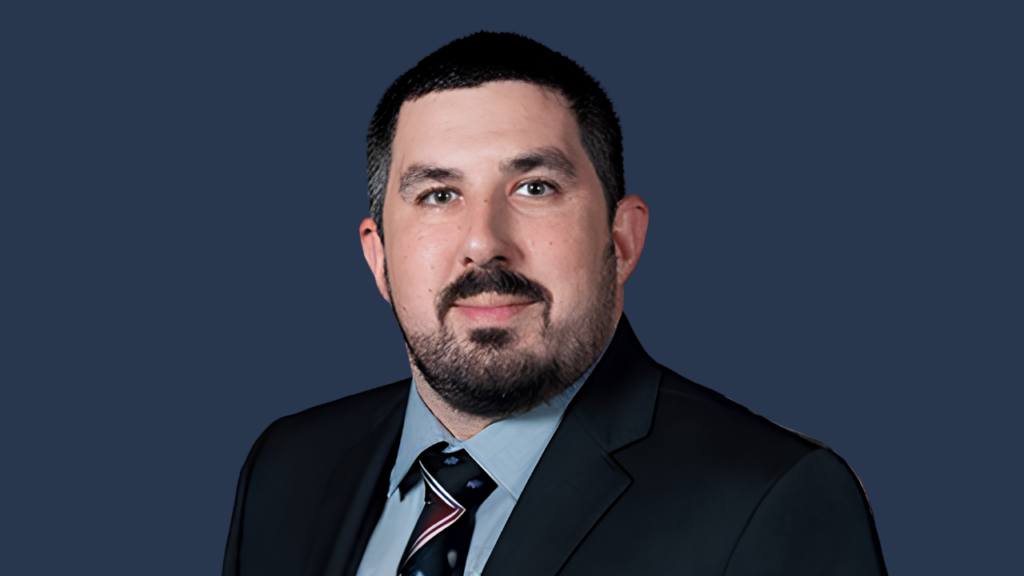
Dr. Robert Antypas leads the Space Logistics, Access and Mobility mission area at the Air Force Research Laboratory, one of five space mission areas AFRL created to integrate and execute Space Force science and technology needs. The conference program lists him as Space Access, Mobility, and Logistics Mission Area Lead. The portfolio covers launch, in-space propulsion and the servicing of future spacecraft. Antypas coordinates customer engagement and technology alignment across the Space Force, Space Operations Command and Space Systems Command, and leads its partnerships with the Defense Department, the intelligence community, industry and academia. He was commissioned by the Air Force Academy in 2007 and spent his first four years on active duty at AFRL, leading development and test of rockets for hypersonic boost. From 2011 to 2014 he served at the Space and Missile Systems Center, where he led teams of program managers on software programs valued between $140 million and $230 million for what is now the Space Force. He then worked electric propulsion research and program management in AFRL’s Propulsion Directorate, and served as interim Electric Propulsion Group Lead in the In-Space Propulsion Branch before taking the mission area job.
Space Systems Command plans two on-orbit tests in 2027: the refueling sequence, and an augmented maneuver demonstration using Starfish Space’s Otter, contracted at $37.5 million, which grapples satellites built without docking fixtures. Both are funded from prior-year money, and the Space Force did not request fiscal 2027 funding for servicing, mobility and logistics. RG-XX, the next-generation space domain awareness program, is the first Space Force program written with a refueling requirement, and acquisition leaders have not settled whether to buy a refueling spacecraft or contract for the service. In June, Space Systems Command and SpaceWERX opened a $20 million challenge for orbital warehouses and fuel depots. AFRL also sponsors PUMA, the refuelable modular propulsion unit Flight Works is building under a contract worth more than $5.7 million, running on the low-toxicity ASCENT propellant. It is manifested on STP-5, a Vulcan Centaur flight no earlier than 2027.
Antypas joins “Building Warfighter-Ready Space Systems: Autonomy, Logistics, and On-Orbit Servicing” on Wednesday, October 28, from 2:00 p.m. to 2:45 p.m. in the Hahn Auditorium at the Computer History Museum in Mountain View. Prof. Andy Kwas, NG Fellow at Northrop Grumman, moderates. The other panelists are Jeff Chiow, Shareholder at Greenberg Traurig; Erik Daehler, Senior Vice President of Defense Technology at Sierra Space; Dr. David Denhard, Chief Scientist and Technical Advisor at U.S. Space Command; and John Rood, Chairman of the Board, President and Chief Executive Officer of Momentus. The program describes the session as a look at how the military is trying to change its orbital architecture “from fragile, stationary targets into a dynamic, sustainable fleet.” The forty-five minutes follow lunch in the Grand Hall and precede Col. Timothy Trimailo’s fireside interview on space superiority and the commercial question, in the same room at 2:45 p.m.
Silicon Valley Space Week runs Tuesday, October 27 through Thursday, October 29 at the Computer History Museum, with Satellite Innovation across the first two days and the MilSat Symposium across the last two. Antypas’s panel sits in the middle of the symposium’s opening day. The refueling demonstration his laboratory supplies the client satellites for is set for early 2027.
Greenberg Traurig and Momentus, both represented on this panel, are sponsors of Silicon Valley Space Week, which SatNews produces.
