

Updated September 7, 2026: The start time of Trimailo’s second session has moved from 4:30 p.m. to 4:20 p.m. on the conference agenda. The article has been updated, and a sponsorship disclosure has been added.
No later than September 2026, the U.S. Space Force expects its first commercial companies under contract in the Commercial Augmentation Space Reserve, the point at which a wartime call-up framework for private satellites stops being a pilot program and becomes an operational capability. The officer responsible for delivering it takes the stage twice at the MilSat Symposium at Silicon Valley Space Week.
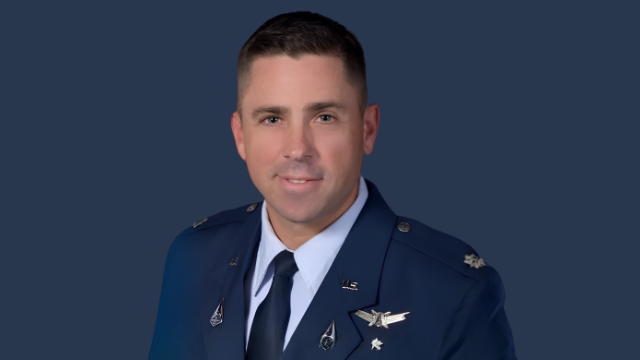
Col. Timothy Trimailo is the Director of the Commercial Space Office (COMSO) at Space Systems Command, Los Angeles Air Force Base — an office established in 2023 to integrate commercial capabilities into the Space Force architecture. Commissioned in 2005 after graduating from the United States Air Force Academy, Trimailo built his career in satellite command and control at Schriever Air Force Base, led Wideband Global SATCOM operations and sustainment at the Space and Missile Systems Center, deployed to Southwest Asia in support of Operations Enduring Freedom and Iraqi Freedom, served as MILSATCOM staff director on the Air Force space PEO staff, and held assignments with the Space Development Agency and the National Reconnaissance Office. He was selected for promotion to colonel in July 2025, after 20 years of service.
The program defining his tenure is CASR, modeled on the Air Force’s Civil Reserve Air Fleet. Now out of its pilot phase, the reserve has a $7.5 million fiscal 2026 request to fund contracts with as many as 10 companies. The first tranche, focused on space domain awareness, is due on contract no later than September 2026, with remaining Phase 2 awards planned by the end of the year. SatNews reported in January that the Space Force had set the September timeline to operationalize the reserve. Two days later, U.S. Space Command announced it would integrate commercial firms into classified nuclear-threat wargames, a signal of how far commercial integration now reaches into war planning.
Trimailo’s first appearance comes Wednesday, October 28 at 2:45 p.m.: the fireside keynote “Space Superiority and the Commercial Question,” with Milbank LLP partner Dara Panahy conducting the interview. The title names the tension COMSO exists to manage: how much of a warfighting architecture commercial industry can be expected to supply, before and during a conflict. CASR makes the question concrete. Who carries the loss if a requisitioned commercial satellite is attacked? That indemnification issue remains publicly unresolved as the program approaches operational capability. The fireside format gives the industry one of its few extended, on-record conversations with the office that decides what the Space Force buys.
At 4:20 p.m. he returns for “Buy What We Can vs. the Build-First Budget,” moderated by Quilty Space co-CEO and President Chris Quilty. The session title echoes the service’s own 2024 Commercial Space Strategy, which committed to buying what it can and building only what it must, and asks what happens when that commitment meets the appropriations process. The panel, which also includes the National Reconnaissance Office’s Justin Langlois, Amazon Leo Government’s Rich Pang and Voyager’s Bob Pescatore, puts one of the industry’s most-cited market analysts opposite the officer whose office turns commercial strategy into contracts. Both sessions run on the MilSat Symposium track in the Hahn Auditorium at the Computer History Museum in Mountain View.
The reserve’s first contracts are due by the end of September. The unresolved questions come to Mountain View a month later.
Milbank, whose partner conducts the fireside interview, and Voyager Technologies, whose products general manager joins the later panel, are both sponsors of Silicon Valley Space Week, which SatNews produces.
