

On Sept. 29, 2026, defense aerospace contractor L3Harris Technologies received an undefinitized contract valued at over $6 billion from Lockheed Martin.
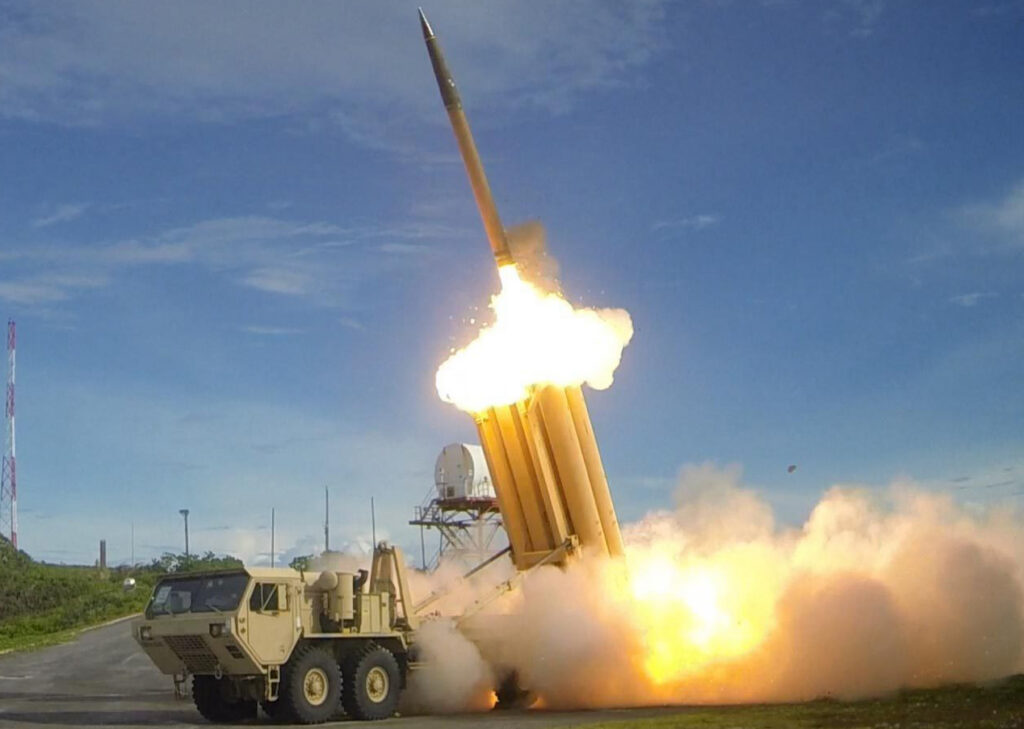
The seven-year award finances a multi-facility manufacturing expansion to scale solid and liquid propulsion production for the Terminal High Altitude Area Defense (THAAD) ballistic missile interceptor system.
THAAD System Context and Production Rationale
The contract follows a strategic framework agreement established between L3Harris, prime contractor Lockheed Martin, and the U.S. Department of Defense to quadruple production throughput for THAAD propulsion subsystems.
Designed to intercept short-, medium-, and intermediate-range ballistic missile threats in their terminal phase—both inside and outside the Earth’s atmosphere—the THAAD system serves as a critical tier within the broader United States Ballistic Missile Defense System. Rising global security threats and depleted regional interceptor stockpiles have driven defense procurement agencies to expand manufacturing pipelines for high-altitude missile defense systems.
The $6 billion propulsion expansion aligns with parallel industrial investments across L3Harris’ solid rocket motor portfolio, including recent capacity expansion awards for the PAC-3 Missile Segment Enhancement (MSE) program.
Propulsion Subsystem Specifications and Industrial Expansion
Under the seven-year contract, L3Harris will construct specialized manufacturing infrastructure to build THAAD Solid Rocket Boost Motors alongside Liquid Divert and Attitude Control Systems (DACS).
The solid rocket boost motor provides the initial kinetic thrust required to launch the interceptor out of its transport canister and accelerate the airframe to hypersonic velocities toward endo-atmospheric or exo-atmospheric target vectors. Once the booster separates, the liquid-fueled Divert and Attitude Control System executes high-precision, sub-millisecond thruster firings to position the kinetic kill vehicle directly into the flight path of incoming warheads, achieving target destruction through hit-to-kill kinetic energy.
To meet the quadrupled output targets, L3Harris will construct a dedicated solid rocket boost motor manufacturing facility while expanding advanced chemical mixing, casing assembly, and DACS fabrication lines across company sites in Huntsville, Alabama; Los Angeles, California; and Camden, Arkansas.
Executive Perspective
“This contract underscores L3Harris’ demonstrated ability to quickly deliver critical defense technologies at the scale and speed required by the Department of War,” stated Ken Bedingfield, President of Missile Solutions at L3Harris Technologies. “Our planned facility expansions, along with ongoing investments across our propulsion portfolio, will ensure we remain ready to support the nation’s most important missile defense missions and continue to enable a wartime footing.”
Production Horizon and Final Terms
L3Harris and Lockheed Martin will continue finalizing definitive pricing terms and delivery schedules for the undefinitized contract over the coming months. Construction work on the new solid rocket motor production facilities in Alabama, California, and Arkansas will proceed immediately, establishing expanded propellant casting capacity to support elevated THAAD interceptor deliveries through 2033.
