

Helsinki, Finland — On Thursday, October 1, 2026, Finnish satellite manufacturer ICEYE and telecommunications infrastructure provider Nokia announced a strategic partnership to develop sovereign, high-performance broadband low Earth orbit (LEO) satellite communications systems tailored for defense, civil protection, and emergency management customers.
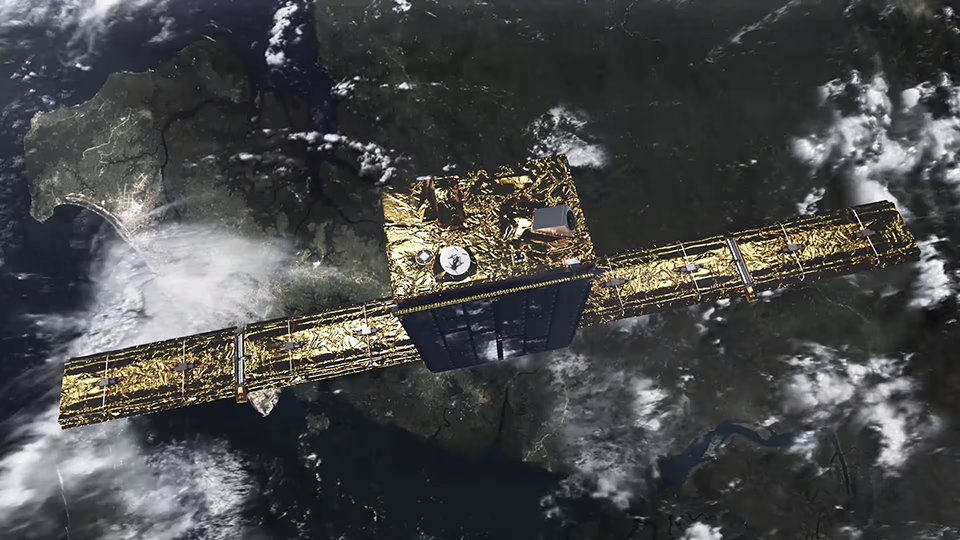
The joint initiative expands ICEYE’s established model of selling nationally owned space infrastructure into the satellite communications market, allowing government clients to acquire, possess, and operate dedicated spaceborne communications networks rather than depending on commercial lease arrangements.
The systems will combine ICEYE’s spacecraft manufacturing and mission operations capabilities with Nokia’s secure IP, optical, and core networking technologies. Under the agreement, purchasing nations will maintain complete ownership and control over the space segment, ground stations, and end-user terminals.
Expansion of the Sovereign Space Procurement Model
The joint venture adapts the procurement template ICEYE created within the synthetic aperture radar (SAR) Earth observation sector, where governments purchase turnkey hardware constellations operated directly by national defense authorities. The approach follows ICEYE’s delivery of the four-satellite POLSARIS constellation to the Polish Armed Forces in under twelve months, establishing a precedent for rapid hardware transfers to European defense ministries.
By extending this framework into LEO communications, ICEYE and Nokia target a growing requirement among defense organizations for assured, low-latency data links that operate independently of third-party commercial network providers or foreign regulatory jurisdictions. The systems are engineered to complement existing military communications networks and commercial satcom services, adding dedicated transmission capacity and network resilience over high-priority operational theaters.
Hardware Integration and Core Infrastructure Specifications
The joint architecture integrates ICEYE’s small satellite design and manufacturing capabilities with Nokia’s network security software and defense hardware portfolio. The platform will deliver high-throughput, low-latency connectivity to ruggedized end-user terminals designed for multi-domain deployment across land, maritime, and aerial forces.
The spaceborne payloads and ground infrastructure will utilize Nokia’s secure networking protocols to ensure end-to-end data encryption and resilience against jamming or signal interception. The combined platform aims to maintain critical command-and-control (C2) pathways and real-time situational awareness feeds when terrestrial fiber or mobile networks are disrupted by military action or natural disasters.
Defense Leadership Perspectives on Operational Autonomy
“Together with Nokia, we are building on our proven space intelligence expertise and delivering sovereign, high-performance satellite communications,” said Rafal Modrzewski, CEO and Co-founder of ICEYE. “Nations must be able to fully own and control their communications, without dependency on a foreign commercial operator’s terms of service. We delivered Poland its own radar satellite system in under a year. Partnering with Nokia lets us move at a similar speed for satellite communications, on the timelines nations need.”
“Sovereign operations depend on the ability to sense, decide and act in real time,” said Justin Hotard, President and CEO of Nokia. “Physical AI makes that possible, but only with secure, resilient connectivity across land, sea, air and space. By bringing together Nokia’s trusted networks with ICEYE’s proven sovereign space capabilities, we will deliver a satellite communications capability—complementing existing terrestrial networks, and giving nations the situational awareness, connectivity, and control they need to operate with confidence in contested environments across all domains.”
Platform Deployment Schedule and Industry Public Appearance
Initial launch activities for the sovereign satcom constellation are planned to begin in 2028, following joint hardware integration testing and system validation. Executive leadership from both companies, including Modrzewski and Hotard, are scheduled to present the operational scope of the partnership at the Helsinki Security Forum on October 2, during a policy panel focused on European technological sovereignty.
