

Elche, Spain — On Thursday, October 1, 2026, Spanish launch service provider PLD Space signed a bilateral agreement with the French Space Agency, Centre National d’Études Spatiales (CNES), to advance commercial launch infrastructure at the Guiana Space Centre in Kourou, French Guiana.
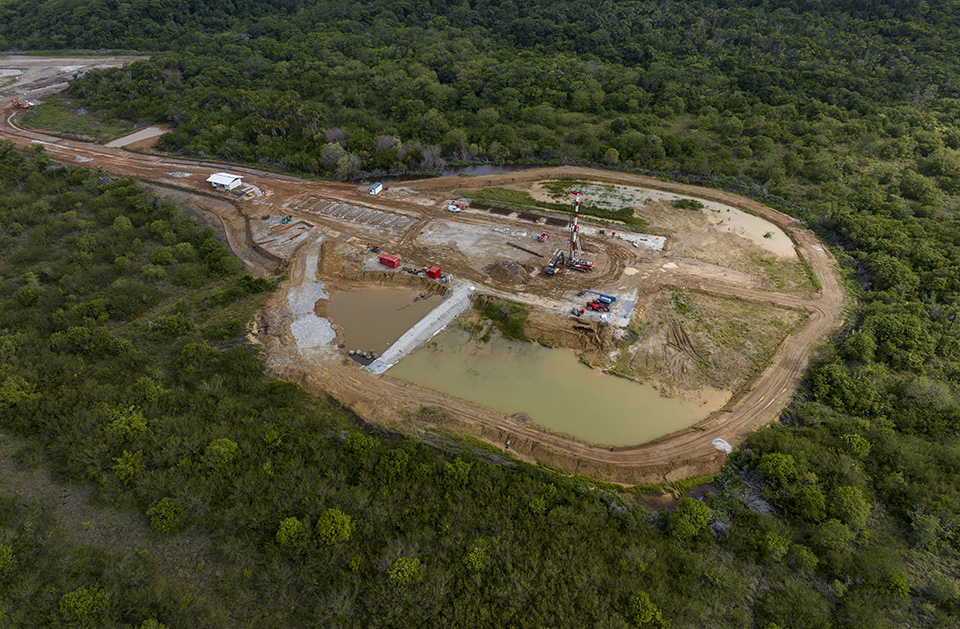
The partnership establishes a joint technical framework to assess the feasibility of adding a second launch pad at the ELM-Diamant complex to support flight operations for PLD Space’s MIURA 5 and MIURA 9 orbital launch vehicles.
The joint initiative aligns with European Space Agency (ESA) efforts under the European Launcher Challenge to diversify access to orbit by integrating commercial launch providers into Europe’s primary spaceport. By expanding launch capacity at ELM-Diamant, CNES and PLD Space aim to increase mission throughput, lower spaceport operational bottlenecks, and establish a multi-user gateway capable of handling both European government payloads and commercial constellation deployments.
Institutional Context and Spaceport Modernization
The infrastructure agreement follows PLD Space’s previous commit of capital to establish a dedicated operational presence in French Guiana. PLD Space expanded its launch site footprint through a €35 million investment at Guiana Space Centre, becoming the first commercial provider to secure a dedicated footprint at the historic ELM-Diamant site.
+-------------------------------------------------------------------------+
|                PLD Space Launch Infrastructure at CSG                   |
+------------------------------------+------------------------------------+
|         Pad 1 (In Progress)        |          Pad 2 (Feasibility)       |
|       Dedicated MIURA 5 Pad        |   Shared MIURA 5 & MIURA 9 Pad    |
+------------------------------------+------------------------------------+
|      Operational Target: Scaled Orbital Cadence from Kourou             |
+-------------------------------------------------------------------------+
The expansion also builds upon PLD Space’s selection under the European Space Agency’s European Launcher Challenge program, an institutional effort designed to foster competitive launch options across member states. The joint feasibility study with CNES ensures that ground segment logistics, propellant storage, cleanroom integration facilities, and range safety protocols scale alongside PLD Space’s expanding rocket architecture.
Vehicle Architecture and Orbital Capacity
The feasibility study evaluates ground infrastructure requirements for two distinct vehicle classes within PLD Space’s launcher family.
The MIURA 5 is a two-stage, partially reusable orbital rocket designed to transport up to 1,000 kilograms of payload into low Earth orbit. The vehicle utilizes liquid oxygen and kerosene propulsion, with a reusable first stage engineered for ocean recovery and refurbishment.
The larger MIURA 9 concept represents a heavy-lift evolution intended to support higher payload masses and multi-satellite constellation deployments. Accommodating both vehicles at ELM-Diamant requires secondary launch stand configurations, updated umbilical towers, and expanded propellant loading systems capable of managing increased mass flows during launch operations.
Space Leadership Perspective on European Autonomy
“This agreement with CNES reinforces PLD Space’s long-term commitment to the Guiana Space Centre and to Europe’s autonomous access to space,” said Ezequiel Sánchez, Executive President of PLD Space. “By advancing the MIURA launch vehicle family together with the infrastructure and operations required to scale from French Guiana, PLD Space is contributing to the CSG’s evolution as the world’s leading spaceport for the next generation of launch services. This strategic advance reinforces a roadmap designed to provide Europe with real, competitive and resilient launch capacity.”
Infrastructure Timeline and Flight Schedule
Following initial site surveys and civil engineering assessments with CNES, PLD Space will finalize ground pad specifications while continuing preparations for the maiden orbital flight of MIURA 5. Civil construction and ground integration work at Kourou will proceed in parallel with engine testing at the company’s Teruel facilities in Spain, supporting a long-term goal of scaling launch cadences from French Guiana as commercial operations mature.
