

On Sept. 29, 2026, details presented during the Advanced Maui Optical and Space Surveillance Technologies (AMOS) Conference revealed that the U.S. Space Force’s Mission Delta 2 is building software systems to accelerate satellite tracking across all orbital regimes.
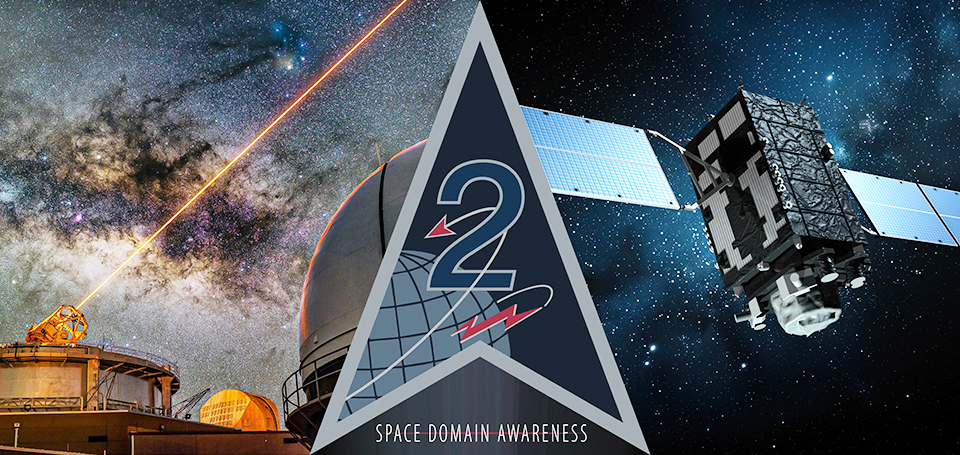
The initiative marks an operational pivot within Space Domain Awareness (SDA), prioritizing high decision velocity and rapid contact updates over waiting for fully refined, highly precise orbital telemetry.
Space Domain Awareness Context and Mission Delta 2 Mandate
The software development effort represents a structural shift in how the Department of Defense monitors objects operating in low Earth orbit (LEO), medium Earth orbit (MEO), and geostationary Earth orbit (GEO).
Historically, military orbital tracking relied on high-fidelity observations from the Space Surveillance Network (SSN) to generate precise Two-Line Element (TLE) sets and orbital state vectors. While highly accurate, filtering raw sensor data to eliminate measurement noise often introduced multi-hour processing delays, leaving military space commanders with outdated situational awareness during rapid satellite maneuvering events.
Mission Delta 2, the operational unit responsible for executing the Space Force’s day-to-day SDA mission, is developing algorithmic tools to ingest multi-source data streams continuously. By prioritizing rapid data ingestion, the unit aims to detect trajectory changes, orbital transfers, and proximity operations moments after they occur, supporting broader Tactically Responsive Space (TacRS) operational doctrines.
Software Architecture and Commercial Data Integration Specifications
The software framework incorporates probabilistic tracking algorithms designed to process heterogeneous, non-standardized observation inputs.
Rather than relying solely on dedicated military radar installations and optical telescopes, the system continuously ingests raw sensor feeds from commercial radar networks, optical tracking arrays, and passive radio frequency (RF) sensors. The software applies automated data-fusion algorithms to fuse low-confidence or noisy observation points into predictive orbital corridors.
This approach allows ground control systems to generate immediate positional alerts when an orbiting asset executes an unexpected maneuver. By maintaining continuous track custody through predictive probability models, the software updates target state vectors automatically as additional ground or space-based sensor observations become available.
Decision Velocity and Orbital Deterrence Rationale
Transitioning toward rapid, probabilistic tracking reflects the changing threat environment in low Earth orbit and deep space.
Modern adversary satellites increasingly incorporate high-delta-v propulsion systems capable of executing unannounced rendezvous and proximity operations (RPO), shadow positioning, or anti-satellite maneuvers. Waiting for definitive, low-error tracking sets before alerting theater commanders reduces reaction time during potential orbital engagements.
By accepting slight measurement uncertainties in exchange for immediate situational updates, the Space Force enhances operational decision velocity. Rapid maneuver detection strengthens orbital deterrence, signaling to potential adversaries that spacecraft movements will be detected and characterized in near real time regardless of atmospheric or sensor coverage limitations.
Software Deployment Horizon and Network Integration
Mission Delta 2 will continue testing and refining the software architecture across active Space Command and Control (Space C2) ground nodes throughout late 2026. The software algorithms will be integrated directly into operational operational centers in 2027, automating commercial data ingestion and providing continuous tracking capabilities across proliferated military and civil satellite constellations.
