

On Monday, May 11, 2026, Northrop Grumman Corporation (NYSE: NOC) announced the official release of the LR-450, a compact and lightweight positioning and navigation system designed to support a wide spectrum of space missions. Utilizing the company’s milli-Hemispherical Resonating Gyroscope (mHRG) technology, the system provides precise tracking and orientation for spacecraft without the need for external satellite signals.
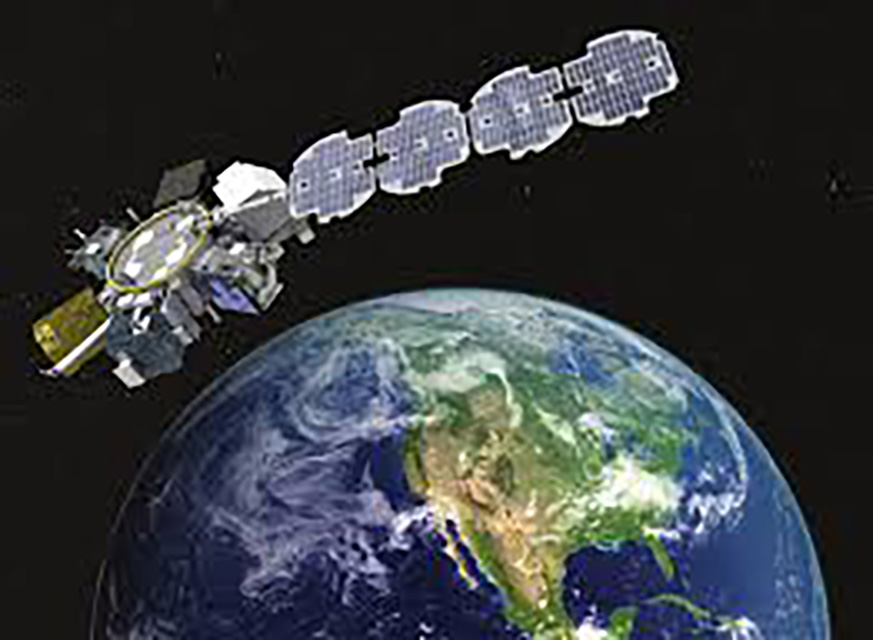
Advancing Resilient Navigation through mHRG Technology
The LR-450 is a direct evolution of Northrop Grumman’s heritage hemispherical resonator gyroscope (HRG) technology, which has accumulated more than 70 million hours in orbit with a 100 percent mission success rate. While the legacy Scalable Space Inertial Reference Unit (SSIRU) is utilized for high-stakes programs like the James Webb Space Telescope and NASA’s Perseverance Mars Rover, the LR-450 provides a modernized, lower-weight solution for the burgeoning small satellite market.
The “milli” variant of the HRG maintains the same critical quartz components as its predecessor—a high-Q resonator and inner electrode assembly—but in a significantly reduced form factor. This enables the LR-450 to deliver high-precision pointing and stabilization for missions that require long-life performance but have stringent Size, Weight, and Power (SWaP) constraints.
LR-450 Configuration and Technical Specifications
The system is designed for autonomous operation, utilizing inertial measurement to maintain orientation during periods of signal loss or in deep space environments where Global Navigation Satellite System (GNSS) coverage is unavailable.
- Sensor Core: Three mHRGs arranged as an orthonormal set for three-axis tracking.
- Design Life: Engineered to operate for millions of hours without maintenance.
- Expandability: Optional configurations include a fourth “guard” gyro and a set of three accelerometers for full Inertial Measurement Unit (IMU) capability.
- Integration: Single integrated interface for power, digital processing, and communications bus.
- Reliability: Naturally radiation-hardened quartz construction, impervious to aging effects and extreme temperature shifts.
“By integrating our proven sensor technology with a compact, rugged design featuring the innovative mHRG system, the LR-450 delivers unmatched precision, reliability and zero-maintenance operation,” said Ryan Arrington, Vice President of Navigation and Cockpit Systems at Northrop Grumman. “The system is designed to support missions ranging from low Earth orbit to planetary exploration.“
Operational Deployment and Availability
Northrop Grumman confirmed that the LR-450 is now available for global purchase and integration. The system is ideally suited for platform attitude control and pointing for deep space probes, lunar landers, and proliferated LEO constellations. By providing an alternative to first-generation ring laser gyroscopes (RLG), the LR-450 sets a new benchmark for duration and accuracy in the commercial and military space sectors.
The system’s modular interface allows it to be tailored to specific mission profiles, including those for the upcoming NASA Nancy Grace Roman Space Telescope and future Artemis-related lunar infrastructure.
