

In a statement released on Friday, May 15, 2026, BAE Systems announced the delivery of critical flight hardware to support the U.S. Space Force’s Next Generation Overhead Persistent Infrared Polar (NGP) program.
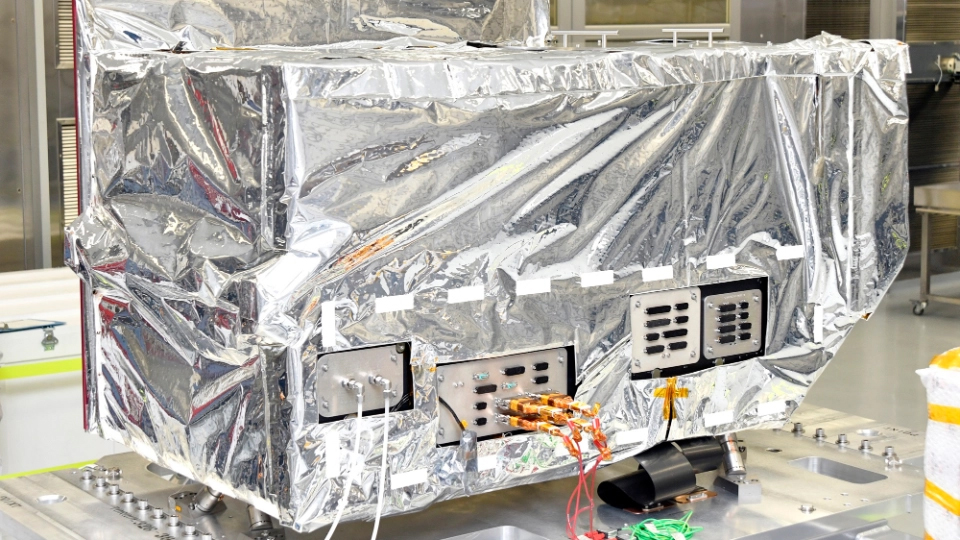
The delivery comprises the sensor subassembly and sensor system controller components designated for the mission payload of Flight Unit 1. The hardware integration keeps the highly classified missile-warning program on schedule for its projected 2028 launch timeline.
The components provided by BAE Systems serve as foundational elements of the strategic sensing payload, which is being assembled under prime contractor Northrop Grumman. The specialized sensor subassembly contains the optics, pointing mechanism, control electronics, and electrical bus interface linking the payload to the main spacecraft body. Operating in tandem, the sensor system controller connects directly to the space vehicle to ingest operational commands, transmit mission telemetry, manage power conversion, and direct high-accuracy mirror alignment for precise target tracking.
Strategic Transition to Polar Coverage
The NGP initiative represents a structural shift away from the legacy Space-Based Infrared System (SBIRS) Highly Elliptical Orbit (HEO) hosted payloads. By focusing specialized infrared tracking on the northern polar regions, the Space Force aims to close coverage gaps over vulnerable transit flight paths, optimizing the detection of rapid, low-signature threats such as hypersonic glide vehicles and advanced ballistic missiles.
This hardware iteration originally was designed for the geosynchronous Earth orbit (GEO) segment of the Next-Gen OPIR architecture. However, engineers leveraged the flexible architecture of the subassemblies to repurpose them for the highly elliptical polar mission parameters, bypassing the standard multi-year redesign loop to protect the program’s schedule. This milestone follows the Space Force’s December 2024 decision allowing Northrop Grumman to proceed with missile-warning satellites for Next-Gen Polar Program manufacturing.
Hardware Integration and Architecture Roadmap
Beyond the physical space segment hardware, BAE Systems is simultaneously addressing the data processing layer for this architecture. The company was selected by Space Systems Command in April 2025 to deliver the FORGE C2 ground system software, an operational frame engineered to consolidate telemetry, tracking, and command functions for both legacy SBIRS and incoming Next-Gen OPIR assets under a singular user interface.
“We met multiple challenges across a multiyear timeframe to successfully deliver our components for the next stage of full payload assembly,” said Thai Sheridan, vice president and general manager of Military Space for BAE Systems Space & Mission Systems. “This program will provide essential next-generation defense and intelligence capabilities for the Space Force.”
Fabrication has already commenced on the second flight unit for the NGP mission footprint. BAE Systems remains on schedule to complete and deliver this subsequent hardware block to support a secondary polar launch currently slated for 2030.
