

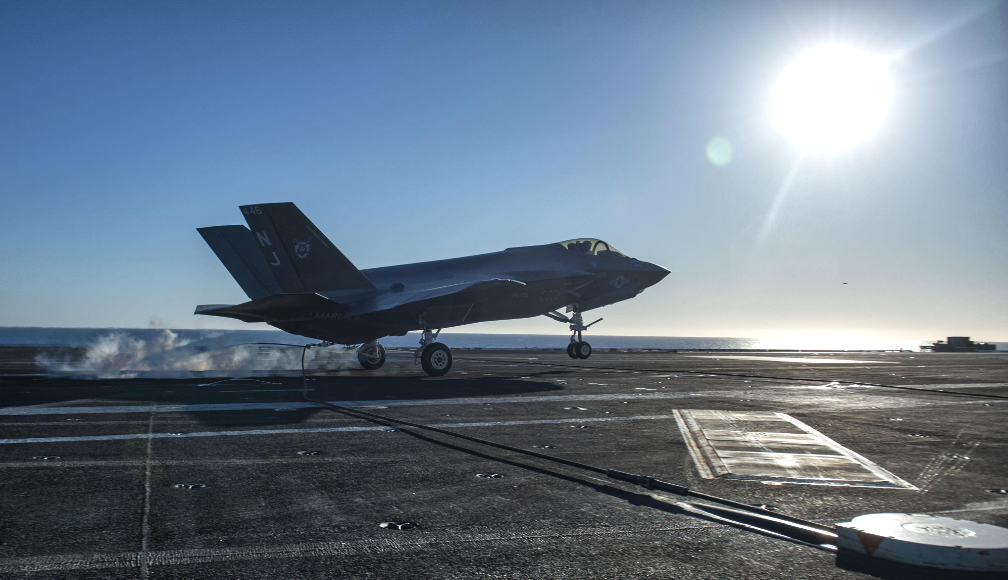
Northrop Grumman and the U.S. Air Force have successfully completed a separation test of the Stand-in Attack Weapon (SiAW) from an F-16 at Eglin Air Force Base. While the F-16 served as the testbed to validate aerodynamic performance and safety, the milestone is a critical precursor to integrating the weapon into the internal carriage of fifth-generation stealth platforms, specifically the F-35 Lightning II and its ability to protect space assets by targeting land based enemy positions.
Strategic Analysis
This test signals the maturity of the U.S. Air Force’s shift from “stand-off” to “stand-in” strike doctrines. Unlike traditional stand-off weapons launched from outside contested zones, the SiAW is designed to ride inside stealth aircraft penetrating Anti-Access/Area Denial (A2/AD) bubbles.
The SiAW (Stand-in Attack Weapon) represents a shift in U.S. Air Force doctrine from “stand-off” (firing from a safe distance) to “stand-in” (penetrating enemy airspace to strike).
The weapon is designed to be carried internally by stealth aircraft (like the F-35) so they can fly inside enemy defense bubbles (A2/AD zones). This allows the aircraft to get close enough to strike time-sensitive targets that are usually hidden or mobile.
The Satellite Connection
The crucial “Satellite approach” in this context is the weapon’s target list. The SiAW is specifically engineered to hunt and destroy the ground-based assets of space warfare:
- ASAT Launchers: Mobile missile trucks capable of shooting down satellites.
- GPS Jammers: Systems designed to disrupt satellite navigation signals.
- Earth Stations: Ground control stations for enemy satellite networks.
- By destroying these targets on the ground, the SiAW effectively “protects” allied satellites in orbit. This is why a satellite news outlet covers an air-to-ground missile test.
Technical Comparison of SiAW vs. AARGM-ER
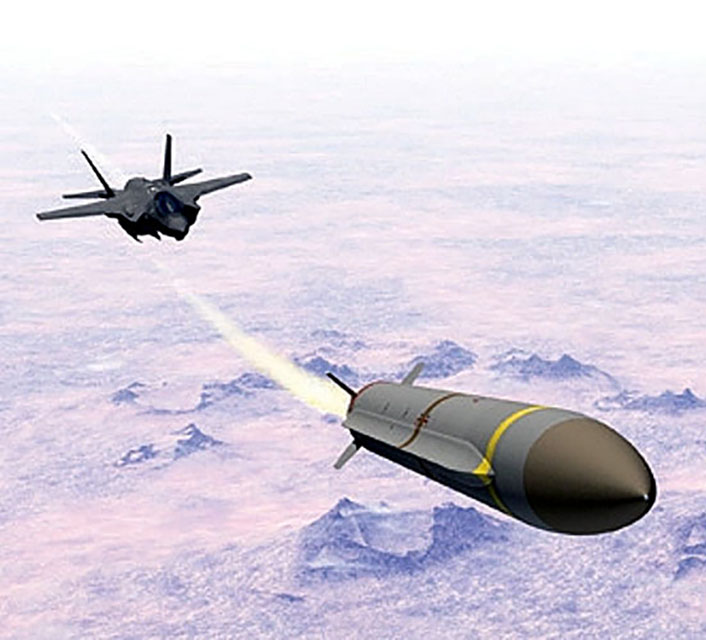
The Stand-in Attack Weapon (SiAW) is directly derived from the AGM-88G Advanced Anti-Radiation Guided Missile-Extended Range (AARGM-ER), sharing the same propulsion and aerodynamic airframe to ensure compatibility with the F-35’s internal weapon bays.
The critical technical divergence lies in the payload and mission software; whereas the AARGM-ER utilizes a warhead optimized to fragment and destroy hardened radar emitters and air defense infrastructure, the SiAW is outfitted with a new, specialized warhead and fusing solution designed for “target shaping.”
This modification allows the SiAW to leverage the AARGM-ER’s kinetic performance to strike non-emitting, time-sensitive, and relocatable targets, such as theater ballistic missile launchers and cruise missile batteries, effectively transforming a dedicated radar-hunter into a flexible, high-speed strike asset for the broader Anti-Access/Area Denial (A2/AD) battlespace.
