

Dublin-based integrated photonic engine developer Pilot Photonics has officially announced the securing of a €1 million contract from the European Space Agency (ESA). Revealed on June 4, 2026, this significant financial agreement is strategically focused on space-proofing the company’s innovative Optical Frequency Generator Unit (OFGU) for deployment within next-generation satellite constellations.
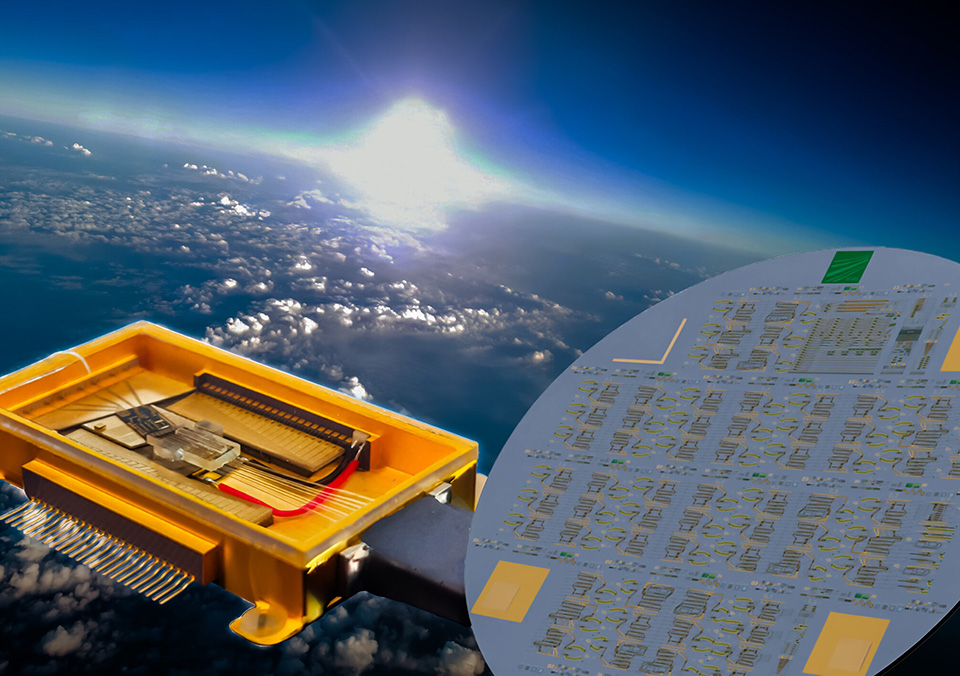
The technological development directly addresses the escalating demands of the modern space economy, where operators are aggressively seeking solutions that provide higher frequency bands, dynamic payload reconfigurability, and substantial reductions in physical footprint. By prioritizing these advancements, the European Space Agency is actively investing in technologies that will define the future of high-bandwidth orbital communications.
Overcoming the Limitations of Traditional RF
For decades, the standard approach to satellite communications has relied heavily on conventional electronic frequency generation units. However, the landscape of global data consumption is shifting rapidly. The exponential growth of data-intensive consumer and enterprise applications—ranging from persistent remote working setups to bandwidth-hungry live streaming and augmented reality platforms—is pushing existing radio frequency infrastructure to its absolute breaking point.
This technological bottleneck places three distinct pressures on satellite network operators: they must access higher frequency bands to avoid spectrum crowding, they need flexible payloads to dynamically rededicate satellite assets on the fly, and they require highly scalable hardware.
Pilot Photonics addresses these exact bottlenecks by migrating signal generation entirely into the optical domain, bypassing the limitations of standard RF electronics. The company’s Optical Frequency Generator Unit is engineered to deliver a massive frequency range spanning from 8GHz all the way up to 220GHz. Crucially, the technology achieves this broad spectrum output with exceptionally low noise and high-power efficiency, and it does so from a single source housed within a highly integrated, compact module.
Optimizing for SWaP-C and Orbital Validation
One of the most critical metrics in modern satellite design is Size, Weight, Power, and Cost, collectively referred to as SWaP-C. In the era of proliferated low Earth orbit constellations, where hundreds or thousands of satellites must be mass-produced and launched economically, reducing the physical burden of any onboard system is paramount.
The highly compact nature of Pilot Photonics’ integrated optical module significantly lowers the SWaP-C profile for satellite manufacturers, directly enhancing the financial and operational scalability of orbital networks. The newly awarded €1 million contract will accelerate the hardware’s readiness for the harsh conditions of space. The project is designed to culminate in rigorous space-environment validation, which will pave the way for early in-orbit demonstrations of the technology.
Strengthening European Strategic Autonomy
Beyond the immediate technical benefits, this contract strongly aligns with the macroeconomic trend of sovereign constellations and strategic autonomy within the European space sector. As global powers race to establish resilient, independent orbital communications architectures, the European Space Agency is increasingly funding highly specialized, homegrown technologies to ensure Europe maintains a competitive edge.
Barry Jennings, the National Delegate to ESA at Enterprise Ireland, noted that this significant contract serves as further evidence of Ireland’s rapidly growing capability within the broader European space economy. By supporting deep-tech companies like Pilot Photonics, European agencies are ensuring that they have the domestic supply chain and technological foundation necessary to build the flexible, high-frequency communication solutions required for the autonomous space networks of the future.
