

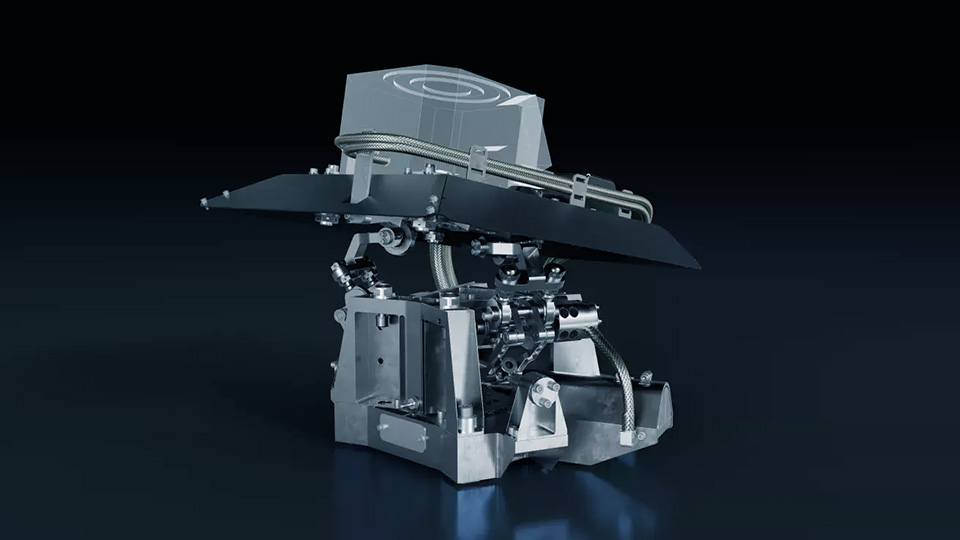
Beyond Gravity has introduced a new two-axis electric propulsion pointing mechanism, designated as the APPMAX2-XS, designed specifically to meet the rigorous demands of the small satellite market operating in Low Earth Orbit.
Targeting the Small Satellite Market
Unveiled on June 3 at the Space Tech Expo USA in Anaheim, California, this latest addition to the company’s proven Advanced Electric Propulsion Pointing Mechanism family directly addresses critical industry needs for reduced mass, cost efficiency, and accelerated delivery timelines for constellation operators.
Key Technical and Operational Advantages
The APPMAX2-XS delivers several distinct operational advantages by utilizing commercial off-the-shelf components and highly industrialized production processes to ensure scalability, which guarantees a remarkably short lead time from order to delivery of less than six months. Weighing less than seven kilograms, this ultra-lightweight mechanism allows for precise two-axis thrust vectoring of small spacecraft and optical payload pointing.
This dynamic maneuverability significantly minimizes the amount of propellant wasted during attitude control maneuvers when compared to traditional fixed-mounted thrusters, ultimately optimizing fuel consumption and extending a satellite’s operational lifetime by up to two years.
Market Availability and Strategic Impact
Wolfgang Pawlinetz, Vice President of Thermal & Mechanisms at Beyond Gravity, emphasized that this low-cost, short-lead-time solution maintains full flexibility across a wide range of electric propulsion systems while delivering an exceptionally compact design. Scheduled to become available for delivery in 2027, the APPMAX2-XS is well-positioned to support the surging demand for agile, highly maneuverable small satellite constellations across both European and United States markets.
In a statement, Dominik Inschlag, director of Marketing & Sales for Beyond Gravity, said, “Our new mechanism is true a New Space enabler. We see a lot of potential for our new mechanism especially in Europe and the United States. Fast availability, low mass, and competitive cost are critical factors for constellation operators. This mechanism directly addresses those priorities,”
